

ADVERTISEMENT

Sandro Marcos bill makes it tougher for public execs' kin to win government contracts

Published Sep 15, 2025 12:43 pm

At A Glance

  • House Majority Leader Ilocos Norte 1st district Rep. Sandro Marcos has filed a bill that seeks to bar relatives of public officials up to the fourth civil degree of consanguinity or affinity from entering into government contracts.
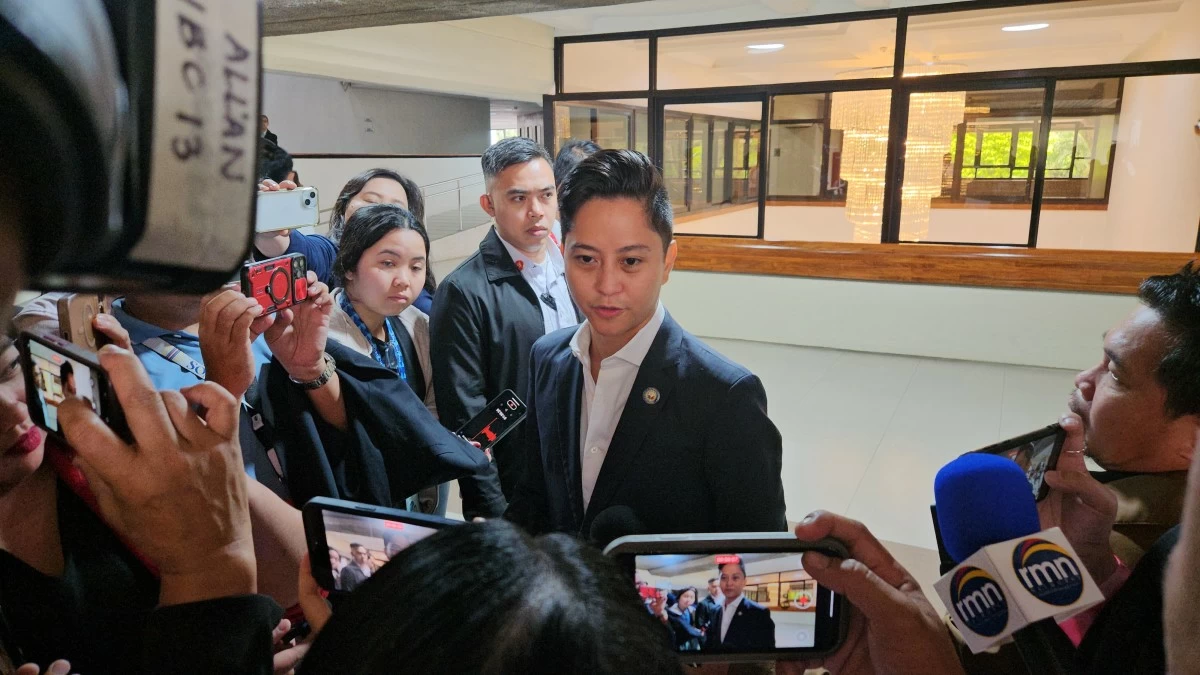
Ilocos Norte 1st district Rep. Sandro Marcos (Ellson Quismorio/ MANILA BULLETIN)


House Majority Leader Ilocos Norte 1st district Rep. Sandro Marcos has filed a bill that seeks to bar relatives of public officials up to the fourth civil degree of consanguinity or affinity from entering into government contracts.
Rep. Marcos, son of President Marcos, posted a copy of the measure designated House Bill (HB) no.3661 on his Facebook Monday noon, Sept. 15. But the bill was officially filed over a month earlier, on Aug. 13.
The 31-year-old said in his post that the measure was meant "to uphold fairness and impartiality in the procurement process".
The bill's explanatory note mentions that the government procurement system provides for the mandatory disclosure of relationship, by consanguinity or affinity up to the third civil degree, between the private bidder and the head of the procuring entity, the procurement agent, members and secretariat of the bids and awards committee, the technical working group (TWG), head of the project management office (PMO), or the end-user or implementing unit, and the project consultants;
It disqualifies bidders related to such persons from participating in the procurement contracts of the procuring entity concerned, Rep. Marcos noted.
"The said regulatory disclosures and corresponding disqualification are designed to uphold fairness and impartiality in the procurement process by preventing undue influence or favoritism. In turn, this is intended to protect public interest and scarce resources," he said in his bill.
"Notwithstanding such guard rail, many instances of irregularities and corruption are still committed that compromise the principles of transparency, accountability and integrity in the government procurement process," the presidential son said.
Rep. Marcos said his proposal seeks to "tighten the process by expanding the ambit of disqualification" so as to prohibit relatives of public officials within the fourth civil degree of consanguinity or affinity from entering into contracts with any government agency or instrumentality, including government owned or controlled corporations (GOCCs) and local government units (LGUs).
Section 1 of HB No.3661 defines "public official" as heads of agency, heads of procuring entity, members of governing board, or any public officer or employee exercising policy-determining, supervisory, or managerial functions, whether in the career or non-career service, including military and uniformed personnel, whether or not they receive compensation, regardless of amount.
"Within sixty (60) days from the effectivity of this Act, the Government Procurement Policy Board, the Department of the Interior and Local Government, the Public-Private Partnership Center, and the Governance Commission for GOCCs, in consultation with government agencies concerned, shall jointly promulgate the rules and regulations to effectively implement the provisions of this Act," it also read.
ADVERTISEMENT
.most-popular .layout-ratio{ padding-bottom: 79.13%; } @media (min-width: 768px) and (max-width: 1024px) { .widget-title { font-size: 15px !important; } }

{{ articles_filter_1561_widget.title }}

.most-popular .layout-ratio{ padding-bottom: 79.13%; } @media (min-width: 768px) and (max-width: 1024px) { .widget-title { font-size: 15px !important; } }

{{ articles_filter_1562_widget.title }}

.most-popular .layout-ratio{ padding-bottom: 79.13%; } @media (min-width: 768px) and (max-width: 1024px) { .widget-title { font-size: 15px !important; } }

{{ articles_filter_1563_widget.title }}

{{ articles_filter_1564_widget.title }}

.mb-article-details { position: relative; } .mb-article-details .article-body-preview, .mb-article-details .article-body-summary{ font-size: 17px; line-height: 30px; font-family: "Libre Caslon Text", serif; color: #000; } .mb-article-details .article-body-preview iframe , .mb-article-details .article-body-summary iframe{ width: 100%; margin: auto; } .read-more-background { background: linear-gradient(180deg, color(display-p3 1.000 1.000 1.000 / 0) 13.75%, color(display-p3 1.000 1.000 1.000 / 0.8) 30.79%, color(display-p3 1.000 1.000 1.000) 72.5%); position: absolute; height: 200px; width: 100%; bottom: 0; display: flex; justify-content: center; align-items: center; padding: 0; } .read-more-background a{ color: #000; } .read-more-btn { padding: 17px 45px; font-family: Inter; font-weight: 700; font-size: 18px; line-height: 16px; text-align: center; vertical-align: middle; border: 1px solid black; background-color: white; } .hidden { display: none; }
function initializeAllSwipers() { // Get all hidden inputs with cms_article_id document.querySelectorAll('[id^="cms_article_id_"]').forEach(function (input) { const cmsArticleId = input.value; const articleSelector = '#article-' + cmsArticleId + ' .body_images'; const swiperElement = document.querySelector(articleSelector); if (swiperElement && !swiperElement.classList.contains('swiper-initialized')) { new Swiper(articleSelector, { loop: true, pagination: false, navigation: { nextEl: '#article-' + cmsArticleId + ' .swiper-button-next', prevEl: '#article-' + cmsArticleId + ' .swiper-button-prev', }, }); } }); } setTimeout(initializeAllSwipers, 3000); const intersectionObserver = new IntersectionObserver( (entries) => { entries.forEach((entry) => { if (entry.isIntersecting) { const newUrl = entry.target.getAttribute("data-url"); if (newUrl) { history.pushState(null, null, newUrl); let article = entry.target; // Extract metadata const author = article.querySelector('.author-section').textContent.replace('By', '').trim(); const section = article.querySelector('.section-info ').textContent.replace(' ', ' '); const title = article.querySelector('.article-title h1').textContent; // Parse URL for Chartbeat path format const parsedUrl = new URL(newUrl, window.location.origin); const cleanUrl = parsedUrl.host + parsedUrl.pathname; // Update Chartbeat configuration if (typeof window._sf_async_config !== 'undefined') { window._sf_async_config.path = cleanUrl; window._sf_async_config.sections = section; window._sf_async_config.authors = author; } // Track virtual page view with Chartbeat if (typeof pSUPERFLY !== 'undefined' && typeof pSUPERFLY.virtualPage === 'function') { try { pSUPERFLY.virtualPage({ path: cleanUrl, title: title, sections: section, authors: author }); } catch (error) { console.error('ping error', error); } } // Optional: Update document title if (title && title !== document.title) { document.title = title; } } } }); }, { threshold: 0.1 } ); function showArticleBody(button) { const article = button.closest("article"); const summary = article.querySelector(".article-body-summary"); const body = article.querySelector(".article-body-preview"); const readMoreSection = article.querySelector(".read-more-background"); // Hide summary and read-more section summary.style.display = "none"; readMoreSection.style.display = "none"; // Show the full article body body.classList.remove("hidden"); } document.addEventListener("DOMContentLoaded", () => { let loadCount = 0; // Track how many times articles are loaded const offset = [1, 2, 3, 4, 5, 6, 7, 8, 9, 10]; // Offset values const currentUrl = window.location.pathname.substring(1); let isLoading = false; // Prevent multiple calls if (!currentUrl) { console.log("Current URL is invalid."); return; } const sentinel = document.getElementById("load-more-sentinel"); if (!sentinel) { console.log("Sentinel element not found."); return; } function isSentinelVisible() { const rect = sentinel.getBoundingClientRect(); return ( rect.top < window.innerHeight && rect.bottom >= 0 ); } function onScroll() { if (isLoading) return; if (isSentinelVisible()) { if (loadCount >= offset.length) { console.log("Maximum load attempts reached."); window.removeEventListener("scroll", onScroll); return; } isLoading = true; const currentOffset = offset[loadCount]; window.loadMoreItems().then(() => { let article = document.querySelector('#widget_1690 > div:nth-last-of-type(2) article'); intersectionObserver.observe(article) loadCount++; }).catch(error => { console.error("Error loading more items:", error); }).finally(() => { isLoading = false; }); } } window.addEventListener("scroll", onScroll); });

Sign up by email to receive news.