ADVERTISEMENT

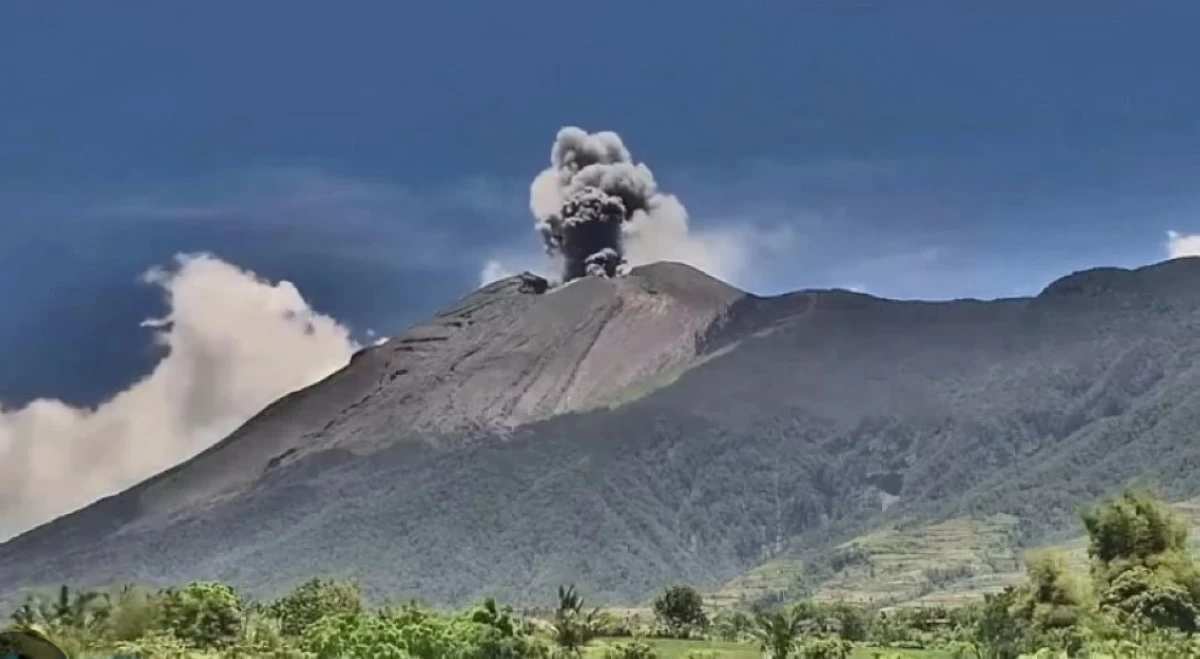
Rock fractures, underground pressure behind 72 quakes at Kanlaon — Phivolcs

Published Sep 15, 2025 04:50 pm
(PHIVOLCS FILE PHOTO)
The 72 earthquakes that shook Kanlaon Volcano on Monday, Sept. 15, were caused by underground rock fracturing as pressure pushed upward beneath the volcano, the Philippine Institute of Volcanology and Seismology (Phivolcs) said.
“Ang ibig lamang sabihin ng pagdami ng volcano-tectonic earthquakes ay may pagbitak o paggalaw po ng bato sa ilalim habang may tumutulak na pressure or gas na pataas (The increase in volcano-tectonic earthquakes means rocks beneath the volcano are fracturing as pressure or gas pushes upward),” Phivolcs Director Dr. Teresito Bacolcol said during an interview with state-controlled PTV-4.
He said that the quakes, recorded between midnight and 8 a.m., were shallow at depths of zero to 12 kilometers on the northwestern flank of the volcano.
Some were felt at Intensity I in La Carlota City and Canlaon City, the agency noted.
Bacolcol explained that unlike tectonic earthquakes triggered by fault movement, volcano-tectonic quakes happen inside or beneath a volcano due to internal unrest.
“Ang volcano-tectonic earthquake po ay lindol sa loob o sa ilalim ng bulkan na dulot ng pagbitak ng bato habang may pressure, init o fluid that could either be gas or magma na gumagalaw (A volcano-tectonic earthquake happens inside or beneath a volcano when rocks crack due to pressure, heat, or fluids that could either be gas or magma),” he said.
Phivolcs noted that Kanlaon remains under Alert Level 2, or “moderate volcanic unrest,” with the four-kilometer permanent danger zone strictly off-limits.
“Even at alert level zero dapat wala po talaga iyong tao doon (Even at Alert Level 0, people should not be inside the danger zone),” Bacolcol stressed.
The Phivolcs director warned that continued rock fracturing, combined with gas buildup underground, increases the likelihood of sudden steam-driven or phreatic eruptions that could eject ash, rocks, and gas without warning.
“So, kapag patuloy ang ganito, kasabay ang pagdami ng ating volcano tectonic earthquakes at pamamaga ng bulkan tumataas ang tsansang maglabas ang bulkan ng singaw o abo o di kaya’y this may lead to a weak or even moderate eruption (So, if this continues, along with the increase in volcano-tectonic earthquakes and swelling of the volcano, the chances of the volcano releasing steam or ash rise, or this may even lead to a weak or moderate eruption),” he said.

Related Tags

KANLAON QUAKE 72 ROCK FRACTURES UNDERGROUND PRESSURE
ADVERTISEMENT
.most-popular .layout-ratio{ padding-bottom: 79.13%; } @media (min-width: 768px) and (max-width: 1024px) { .widget-title { font-size: 15px !important; } }

{{ articles_filter_1561_widget.title }}

.most-popular .layout-ratio{ padding-bottom: 79.13%; } @media (min-width: 768px) and (max-width: 1024px) { .widget-title { font-size: 15px !important; } }

{{ articles_filter_1562_widget.title }}

.most-popular .layout-ratio{ padding-bottom: 79.13%; } @media (min-width: 768px) and (max-width: 1024px) { .widget-title { font-size: 15px !important; } }

{{ articles_filter_1563_widget.title }}

{{ articles_filter_1564_widget.title }}

.mb-article-details { position: relative; } .mb-article-details .article-body-preview, .mb-article-details .article-body-summary{ font-size: 17px; line-height: 30px; font-family: "Libre Caslon Text", serif; color: #000; } .mb-article-details .article-body-preview iframe , .mb-article-details .article-body-summary iframe{ width: 100%; margin: auto; } .read-more-background { background: linear-gradient(180deg, color(display-p3 1.000 1.000 1.000 / 0) 13.75%, color(display-p3 1.000 1.000 1.000 / 0.8) 30.79%, color(display-p3 1.000 1.000 1.000) 72.5%); position: absolute; height: 200px; width: 100%; bottom: 0; display: flex; justify-content: center; align-items: center; padding: 0; } .read-more-background a{ color: #000; } .read-more-btn { padding: 17px 45px; font-family: Inter; font-weight: 700; font-size: 18px; line-height: 16px; text-align: center; vertical-align: middle; border: 1px solid black; background-color: white; } .hidden { display: none; }
function initializeAllSwipers() { // Get all hidden inputs with cms_article_id document.querySelectorAll('[id^="cms_article_id_"]').forEach(function (input) { const cmsArticleId = input.value; const articleSelector = '#article-' + cmsArticleId + ' .body_images'; const swiperElement = document.querySelector(articleSelector); if (swiperElement && !swiperElement.classList.contains('swiper-initialized')) { new Swiper(articleSelector, { loop: true, pagination: false, navigation: { nextEl: '#article-' + cmsArticleId + ' .swiper-button-next', prevEl: '#article-' + cmsArticleId + ' .swiper-button-prev', }, }); } }); } setTimeout(initializeAllSwipers, 3000); const intersectionObserver = new IntersectionObserver( (entries) => { entries.forEach((entry) => { if (entry.isIntersecting) { const newUrl = entry.target.getAttribute("data-url"); if (newUrl) { history.pushState(null, null, newUrl); let article = entry.target; // Extract metadata const author = article.querySelector('.author-section').textContent.replace('By', '').trim(); const section = article.querySelector('.section-info ').textContent.replace(' ', ' '); const title = article.querySelector('.article-title h1').textContent; // Parse URL for Chartbeat path format const parsedUrl = new URL(newUrl, window.location.origin); const cleanUrl = parsedUrl.host + parsedUrl.pathname; // Update Chartbeat configuration if (typeof window._sf_async_config !== 'undefined') { window._sf_async_config.path = cleanUrl; window._sf_async_config.sections = section; window._sf_async_config.authors = author; } // Track virtual page view with Chartbeat if (typeof pSUPERFLY !== 'undefined' && typeof pSUPERFLY.virtualPage === 'function') { try { pSUPERFLY.virtualPage({ path: cleanUrl, title: title, sections: section, authors: author }); } catch (error) { console.error('ping error', error); } } // Optional: Update document title if (title && title !== document.title) { document.title = title; } } } }); }, { threshold: 0.1 } ); function showArticleBody(button) { const article = button.closest("article"); const summary = article.querySelector(".article-body-summary"); const body = article.querySelector(".article-body-preview"); const readMoreSection = article.querySelector(".read-more-background"); // Hide summary and read-more section summary.style.display = "none"; readMoreSection.style.display = "none"; // Show the full article body body.classList.remove("hidden"); } document.addEventListener("DOMContentLoaded", () => { let loadCount = 0; // Track how many times articles are loaded const offset = [1, 2, 3, 4, 5, 6, 7, 8, 9, 10]; // Offset values const currentUrl = window.location.pathname.substring(1); let isLoading = false; // Prevent multiple calls if (!currentUrl) { console.log("Current URL is invalid."); return; } const sentinel = document.getElementById("load-more-sentinel"); if (!sentinel) { console.log("Sentinel element not found."); return; } function isSentinelVisible() { const rect = sentinel.getBoundingClientRect(); return ( rect.top < window.innerHeight && rect.bottom >= 0 ); } function onScroll() { if (isLoading) return; if (isSentinelVisible()) { if (loadCount >= offset.length) { console.log("Maximum load attempts reached."); window.removeEventListener("scroll", onScroll); return; } isLoading = true; const currentOffset = offset[loadCount]; window.loadMoreItems().then(() => { let article = document.querySelector('#widget_1690 > div:nth-last-of-type(2) article'); intersectionObserver.observe(article) loadCount++; }).catch(error => { console.error("Error loading more items:", error); }).finally(() => { isLoading = false; }); } } window.addEventListener("scroll", onScroll); });

Sign up by email to receive news.