







AC Health, AstraZeneca launch lung cancer care center
Published Sep 15, 2025 12:00 am
|
Updated Sep 13, 2025 01:09 pm


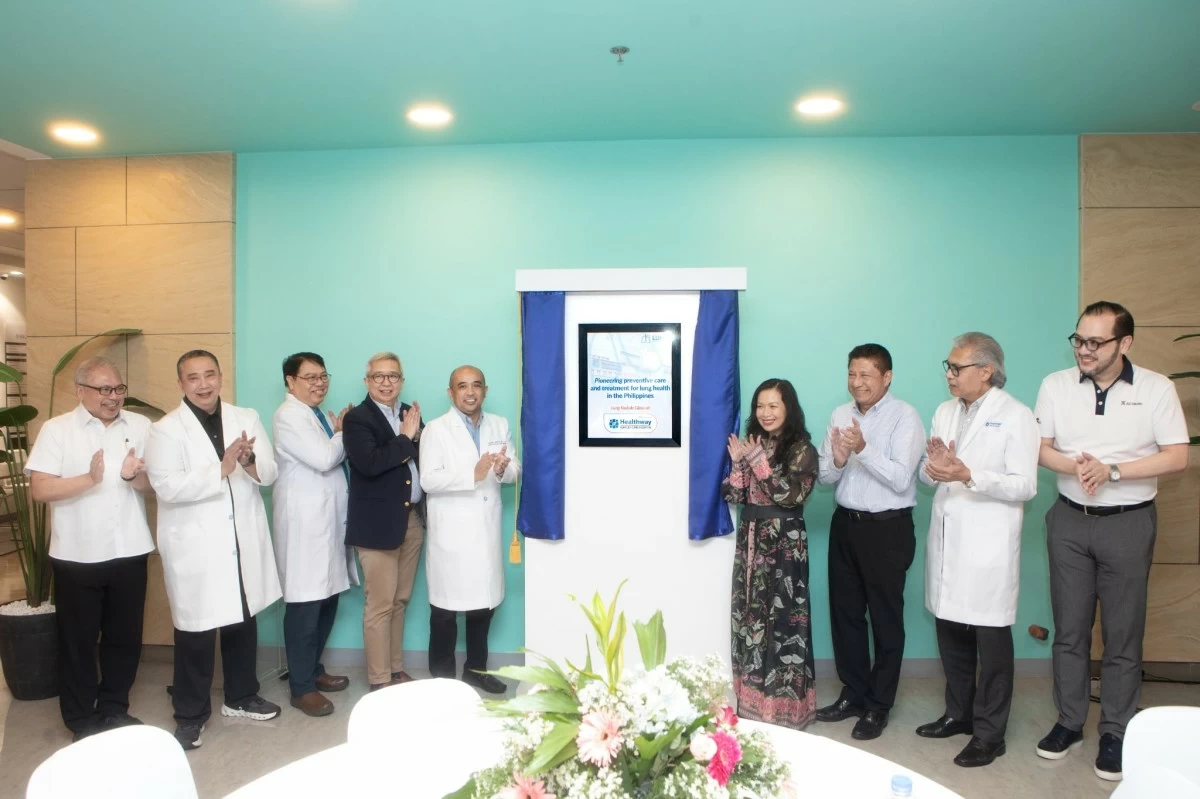
Ayala Healthcare Holdings Inc.’s (AC Health) Healthway Cancer Care Hospital (HCCH), the country’s first cancer specialty hospital, is teaming-up with global pharmaceutical giant AstraZeneca to launch its Lung Center of Excellence (COE) and a dedicated Lung Nodule Clinic.
AC Health said this initiative is designed to provide comprehensive, human-centric care, from early detection and diagnosis to advanced treatment and survivorship.
“The vision of the Lung COE is really to be the leading center for screening, detection, diagnosis, and treatment of thoracic malignancies in the Philippines. And we want to make this bigger, at least in Asia, in the next couple of years,” said HCCH Lung COE Head Dr. Gerardo Cornelio.
The Lung COE offers a full spectrum of services for the two main types of lung cancer: non-small cell lung cancer (NSCLC) and the more aggressive small cell lung cancer (SCLC).
Through a collaboration with AstraZeneca and artificial intelligence (AI) developer Qure.ai, HCCH is enhancing lung cancer detection with AI-powered chest X-rays. For early detection, the center also utilizes low-dose CT (LDCT) scans for effective lung cancer screening.
When a diagnosis is needed, patients have access to advanced diagnostics, including bronchoscopy and various types of biopsies.
The center also offers state-of-the-art treatment options, such as surgery, radiation therapy, chemotherapy, molecular targeted therapy, and immunotherapy.
“Lung cancer incidence is on the rise, and mortality rates are high because the disease is often diagnosed at a late stage,” Cornelio said.
He noted though that, “with screening and early detection, lung cancer is increasingly treatable, improving the chances of a cure and lowering the mortality rate. Advances in therapy have also led to a decline in mortality and improved survival rates.”
Dr. Michael Agustin, head of the Lung Nodule Clinic, shared that the Philippines faces several significant challenges in addressing lung cancer.
The diagnostic process is complicated by the endemic nature of tuberculosis (TB), which often mimics cancer symptoms. Lung cancer screening is just beginning to be introduced, and state-run Philippine Health Insurance Corp. (PhilHealth) has just recently rolled out coverage for LDCT.
These are compounded by a high rate of exposure to cigarette and biomass smoke and limited access to healthcare, all of which contribute to the high burden of the disease.
“As the country’s first dedicated cancer care hospital, we are committed to addressing the leading cause of death among cancer patients.
“Our response is to create a sustainable and efficient program that enables the early diagnosis of cancer. We will target the onset of disease on a platform that utilizes HCCH’s existing services,” said Agustin.
The hospital’s Lung Nodule Clinic is designed to address the challenges of managing lung nodules—small spots that may appear on chest scans. While most are harmless, some can be an early sign of lung cancer.
The clinic provides a quick and efficient way for patients to have these nodules evaluated. Using proven medical guidelines, a team of specialists, including pulmonologists, radiologists, and oncologists, carefully examines each case to determine the next steps.
The cornerstone of the new clinic is its LDCT lung cancer screening program, which can reduce lung cancer deaths by 20 percent compared to chest X-rays.
This quick and painless annual scan uses less radiation than a standard CT and can detect small nodules that may be early signs of cancer before symptoms appear.
Individuals may be eligible for screening if they are between the ages of 50 and 80, have a smoking history of 20 pack-years or more, and are either a current smoker or have quit within the last 15 years.
Other risk factors, such as a family history of lung cancer or exposure to harmful substances like radon or asbestos, are also considered.