






Several members of the diplomatic community in the Philippines stood by Manila as it filed a diplomatic protest against China’s plan to build a national nature reserve in the heavily contested Scarborough Shoal (Bajo de Masinloc) in the West Philippine Sea.
Manila Bulletin
 Philippines
National
Int'l community backs PH protest vs China's nature reserve plan
Philippines
National
Int'l community backs PH protest vs China's nature reserve plan
Philippines
National
Int'l community backs PH protest vs China's nature reserve plan
Int'l community backs PH protest vs China's nature reserve plan
Published Sep 14, 2025 11:12 am
|
Updated Sep 14, 2025 01:08 pm


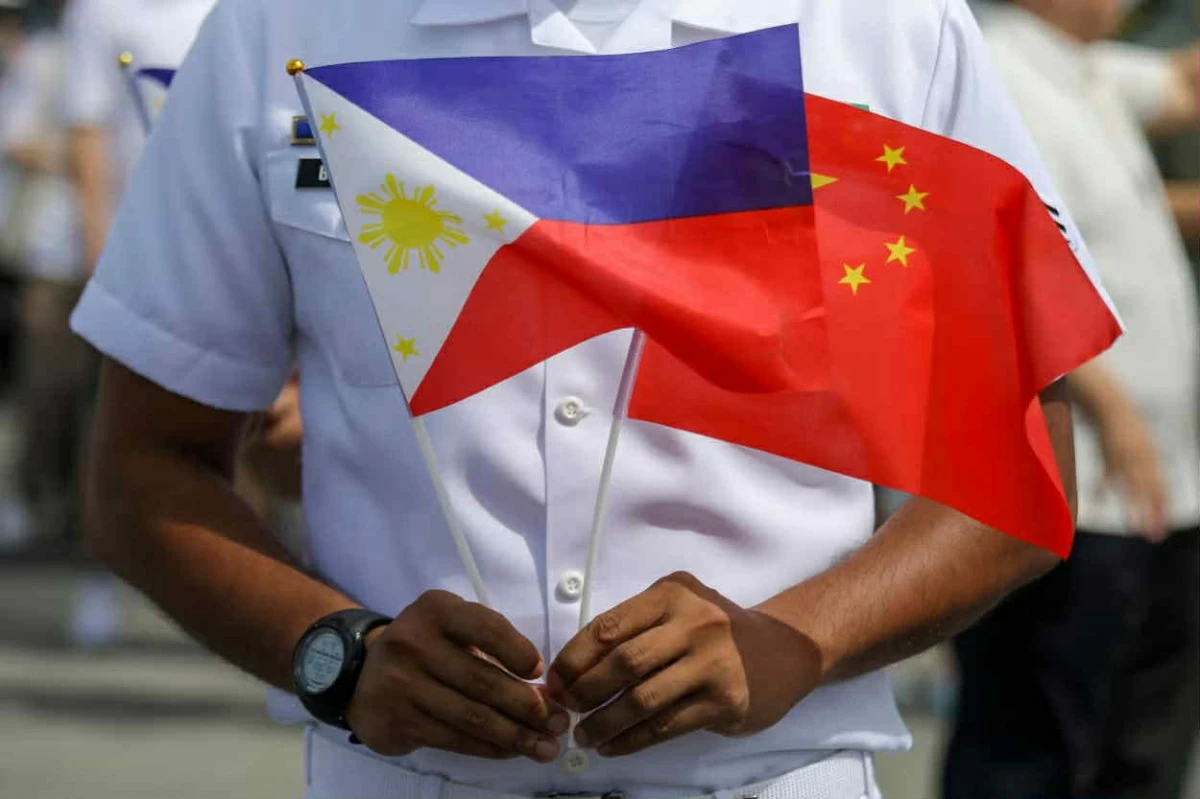
A man holds the flags of China and the Philippines. (AP Photo)
Ambassadors Franz-Michael Skjold Mellbin of Denmark, Endo Kazuya of Japan, David Hartman of Canada, as well as the Delegation of European Union to the Philippines took to social media to raise concern over China latest pronouncement.
“Deeply concerned at #China’s plans to establish a so-called “National Nature Reserve” at Scarborough Reef and call on all parties to respect the 2016 #UNCLOS Tribunal’s unanimous decision that Filipino fishermen have the right to traditional fishing at #Scarborough Reef,” Melbin said on X (formerly Twitter).
Endo also went on X to reiterate the legally binding 2016 Arbitral Award that invalidated the basis of China’s claims in the resource-rich region.
“Seriously concerned over the China's recent announcement that could undermine regional stability in the South China Sea. Reiterate 2016 Arbitral award is final and legally binding, and the parties are required to comply with it,” the envoy wrote.
The EU, resharing the Department of Foreign Affairs’ (DFA) statement on the planned nature reserve, also expressed its support for the Philippines’ “maritime entitlements and sovereign rights under international law” as upheld by the arbitral victory.
“We urge all parties to respect the 2016 Arbitration Award and UNCLOS (United Nations Convention on the Law of the Sea). Disputes should be resolved peacefully and any attempt to alter the status quo in disputed waters by unilateral action must be avoided,” it added.
Hartman shared a post by the Canadian Embassy in Manila, which “recognizes the importance of protecting maritime ecosystems in the South China Sea.”
“We oppose attempts to use environmental protection as a way to take control over the disputed Scarborough Shoal,” the embassy said.
Earlier, United States Secretary of State Marco Rubio described China’s plans as “destabilizing” and “yet another coercive attempt to advance sweeping territorial and maritime claims” in the region “at the expense of its neighbors.”
“China’s actions at Scarborough Reef continue to undermine regional stability,” he said. “The United States calls upon China to abide by the 2016 Arbitral Tribunal’s unanimous decision that China had unlawfully prevented Filipino fishermen from engaging in traditional fishing at Scarborough Reef, which is final and legally binding on both Parties.”
China’s State Council said its establishment of the “Huangyan Island National Nature Reserve” is an “important guarantee for maintaining the diversity, stability and sustainability of the natural ecosystem of Huangyan Island.”
But the shoal—the site of frequent showdowns between Philippine and Chinese vessels—is just 124 nautical miles from the west of the Philippines’ main island of Luzon, well within its exclusive economic zone (EEZ).
In contrast, it is more than 470 nautical miles away from mainland China’s southernmost province of Hainan.
Along with many other South China Sea islands, islets, and reefs, the shoal is being claimed by China and one or more of its neighbors, including Vietnam, Malaysia, Brunei and Taiwan.