






Manila Bulletin
 Philippines
National
Aussie-based firm seeks independent audit, climate change-proofing of all future flood control, infra projects
Philippines
National
Aussie-based firm seeks independent audit, climate change-proofing of all future flood control, infra projects
Philippines
National
Aussie-based firm seeks independent audit, climate change-proofing of all future flood control, infra projects
Aussie-based firm seeks independent audit, climate change-proofing of all future flood control, infra projects
Published Sep 14, 2025 01:23 pm


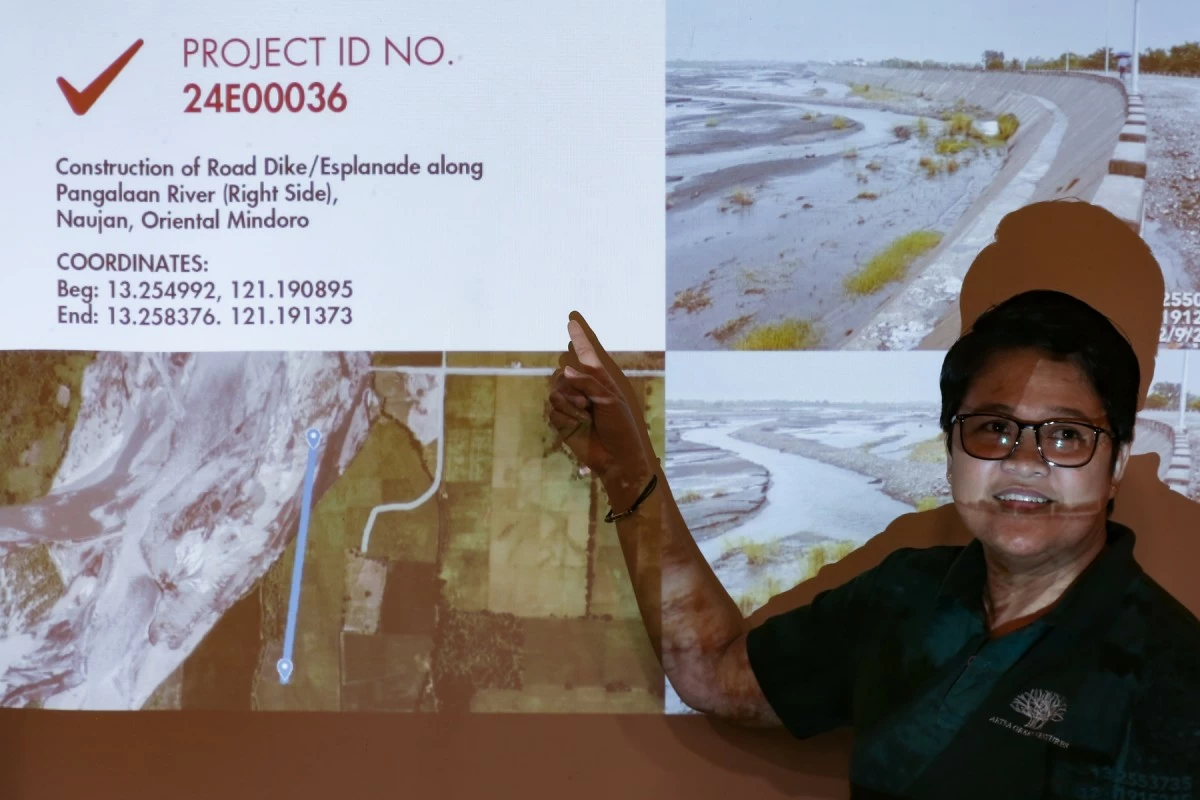
Annabelle S. Tungol, founder of the independent audit and compliance management firm Artea Green Ventures, presents the results of an independent audit on the controversial flood-control projects in Oriental Mindoro, confirming the existence of six such projects during a press conference in Quezon City on Sunday, September 14, 2025. Tungol also recommended that the Department of Public Works and Highways should include independent verifiers and auditors in infrastructure project to help ensure the quality on projects and its environmental impact on communities. (Santi San Juan)
The Filipino people, especially those living in flood-prone areas, should not be held hostage by the ongoing government actions to run after all those who are responsible for the ghost and substandard flood control projects in the country, an Australian-based international independent audit group said.
While stressing the need to hold accountable those responsible for the flood control mess, Artea Green Ventures Annabelle Tungol said the national government should also start initiating policy reforms to improve the quality of road and flood control infrastructure in the country.
“We keep on focusing on identifying the people at fault, we also need to start addressing what needs to be done so that we can save our people and our country,” said Tungol in a press briefing in Quezon City on Sunday, Sept. 14.
After exposing the anomalies in flood control projects, President Marcos created an independent commission to look into all the wrongdoings in the implementation of the projects.
On Saturday, Marcos named former Department of Public Works and Highways (DPWH) secretary Rogelio Singson and SGV country manager Rosanna Fajardo as members, and Baguio City Mayor Benjamin Magalong as special adviser and investigator.
Tungol, however, said that the government should also focus on implementing measures not only to prevent the repeat of the incidents but also in improving all the future flood control projects.
And it starts, he said, with knowing all the necessary information needed on flooding woes in the country.
The main culprit
For Tungol, a good start is updating the flood control impact assessment, flood remodeling and hydrological assessment in all flood-prone areas and other areas that are prone to flooding in the future.
“The flood control project is the control at the end. What we have to look at is the source of the flood. And the source of the flood is climate change,” said Tungol.
She said climate change is one of the reasons why some areas that do not experience flooding suddenly became submerged in deep floodwaters—the recent widespread flooding that some parts of Quezon City experienced.
And this should be the main consideration, according to Tungol, in coming up with the measures to climate change-proof all the flood control and road projects in the country.
Case in point
The Artea Green Ventures, accompanied by Australia-based firm JCM Solutions safety auditor Collin McPherson, earlier conducted flood control projects verification on 15 projects in Oriental Mindoro.
Among those inspected and assessed were the six flood control projects that were earlier reported to be ghost projects but the Artea Green Ventures said were existing and in various stages of completion.
But during the inspections of all projects, the auditing firm reported observing non-compliance to the standards in building flood control projects like unscreened borrow material that include poor compaction; exposed/protruding bars that made them corrosion and safety hazard; concrete defects such as cracks, spalling and honeycombing; and, incomplete structures like stairs and floodgates.
The auditing firm, however, said the defects are correctible.
What needs to be done
Tungol said they proposed two major recommendations in order to climate change-proof future flood control and other infrastructure projects in the country.
The first is to tap independent firms that will conduct regular verification of the entire project—starting from the project conceptualization and design up to the completion of the project.
In this way, Tungol said contractors would be compelled to follow the standard set in ensuring that the projects are strong and reliable—unlike the current practice wherein the inspection is only done after the project completion.
He then cited the case in Australia wherein a project is posted online for one year in all platforms before the project is started in order to ensure that everybody is consulted and would be given the chance to voice out concerns.
Tapping independent construction auditors, Tungol said, is also an anti-corruption measure.
“Independent verification shall provide impartial review of quality and compliance. It would enhance credibility, improve accuracy and transparency as well as boost risk management, deter fraudulent practices as well as improve compliance and implementation,” said Tungol.
“To remove corruption, independent verification is the key,” she emphasized.
Another major recommendation, Tungol said, is to review and update the DPWH standards and Philippine laws.
“To improve infrastructure delivery, initiatives should be taken to review and update the Standard and Philippine Laws to adapt to the changing times and internationally accepted best practices and standards,” she said.