ADVERTISEMENT

OPAPRU commemorates 39th anniversary of Mt. Data peace accord in Cordillera

Published Sep 13, 2025 02:47 pm
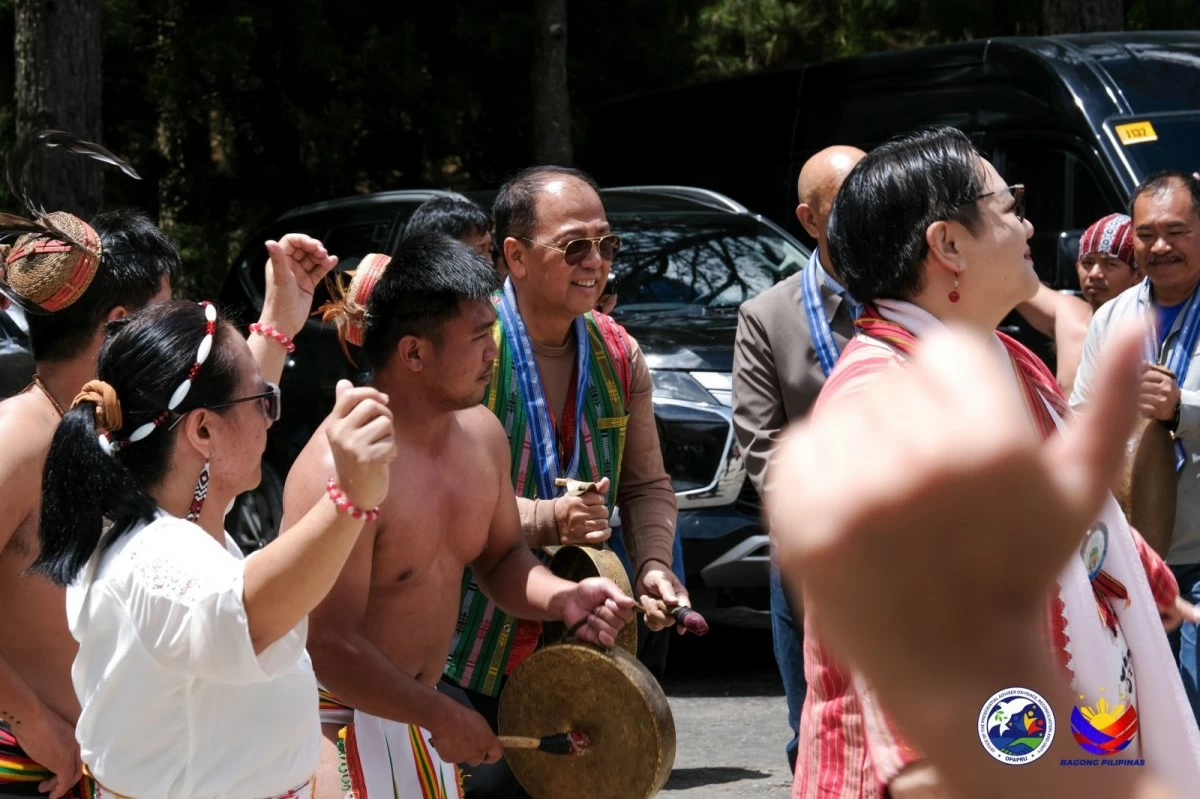
Office of the Presidential Adviser on Peace, Reconciliation and Unity (OPAPRU) Secretary Carlito G. Galvez Jr. (wearing shades at the back) joins a traditional dance with the indigenous people of the Cordillera during the 39th anniversary of the historic Mt. Data Peace Accord, or ‘Sipat,’ in Bauko, Mountain Province, on Sept. 12, 2025. (Photo: OPAPRU)
The Office of the Presidential Adviser on Peace, Reconciliation and Unity (OPAPRU) led the commemoration of the 39th anniversary of the historic “Sipat” or Mt. Data Peace Accord between the Philippine government (GPH) and the Cordillera Bodong Administration – Cordillera People's Liberation Army (CBA-CPLA) on Saturday, Sept. 13.
The peace agreement ended years of hostilities in the Cordillera and paved the way for the creation of the Cordillera Administrative Region (CAR) under Executive Order 220, becoming a cornerstone of the region’s peace journey.
“As we celebrate this year’s National Peace Consciousness Month with the theme ‘Mapayapang Bukas, Abot-Kamay sa Bagong Pilipinas,’ let us be reminded that a peaceful tomorrow is no longer an aspiration but is now within our reach,” OPAPRU Secretary Carlito Galvez Jr. said in a statement.
He urged the public to help foster a culture of peace, mutual understanding, and solidarity.
“Let us remember that peacebuilding is not the task of one institution alone but a shared responsibility. Each of us has an important role to play. In our own way, we can create ripples of peace that begin in our families and radiate to our communities and far beyond,” he added.
The term Sipat, an Ilocano word which means truce, was used to mark the symbolic cessation of hostilities between government forces and the CPLA, a breakaway group of the New People’s Army (NPA).
Along with CBA, its political arm, the group sought to advance the struggle for Cordillera autonomy and self-determination. As the CPLA engaged in armed resistance, the CBA pushed for political dialogue, representing indigenous communities through traditional peace pacts or “bodong”.
Years of negotiation finally bore fruit when the peace agreement was signed on Sept. 13, 1986, at the Mt. Data Hotel in Bauko, Mountain Province, a location deemed as a neutral and symbolic ground in the Cordillera where representatives of the GPH under the administration of then President Corazon Aquino and the CBA-CPLA led by former priest Conrado Balweg could meet.
According to OPAPRU, self-autonomy remains an unfinished aspiration for the Cordillera people but the accord is remembered as a turning point in their history.
Peace and development center
To mark the commemoration of the landmark peace deal, Galvez spearheaded the groundbreaking of a peace and development center at the Mt. Data Hotel on Sept. 12.
Funded through OPAPRU’s Payapa at Masaganang Pamayanan (PAMANA) Program, the P40-million Mt. Data Peace and Development Center will serve as a hub for essential services for former rebels (FRs).
Once completed, Galvez said that the center would create opportunities, improve lives, and serve as a symbol of the government’s commitment to lasting peace and progress in the Mountain Province.

Related Tags

OPAPRU Secretary Carlito Galvez Jr. SIPAT Mt Data Peace Accord Cordillera CBA-CPLA CAR
ADVERTISEMENT
.most-popular .layout-ratio{ padding-bottom: 79.13%; } @media (min-width: 768px) and (max-width: 1024px) { .widget-title { font-size: 15px !important; } }

{{ articles_filter_1561_widget.title }}

.most-popular .layout-ratio{ padding-bottom: 79.13%; } @media (min-width: 768px) and (max-width: 1024px) { .widget-title { font-size: 15px !important; } }

{{ articles_filter_1562_widget.title }}

.most-popular .layout-ratio{ padding-bottom: 79.13%; } @media (min-width: 768px) and (max-width: 1024px) { .widget-title { font-size: 15px !important; } }

{{ articles_filter_1563_widget.title }}

{{ articles_filter_1564_widget.title }}

.mb-article-details { position: relative; } .mb-article-details .article-body-preview, .mb-article-details .article-body-summary{ font-size: 17px; line-height: 30px; font-family: "Libre Caslon Text", serif; color: #000; } .mb-article-details .article-body-preview iframe , .mb-article-details .article-body-summary iframe{ width: 100%; margin: auto; } .read-more-background { background: linear-gradient(180deg, color(display-p3 1.000 1.000 1.000 / 0) 13.75%, color(display-p3 1.000 1.000 1.000 / 0.8) 30.79%, color(display-p3 1.000 1.000 1.000) 72.5%); position: absolute; height: 200px; width: 100%; bottom: 0; display: flex; justify-content: center; align-items: center; padding: 0; } .read-more-background a{ color: #000; } .read-more-btn { padding: 17px 45px; font-family: Inter; font-weight: 700; font-size: 18px; line-height: 16px; text-align: center; vertical-align: middle; border: 1px solid black; background-color: white; } .hidden { display: none; }
function initializeAllSwipers() { // Get all hidden inputs with cms_article_id document.querySelectorAll('[id^="cms_article_id_"]').forEach(function (input) { const cmsArticleId = input.value; const articleSelector = '#article-' + cmsArticleId + ' .body_images'; const swiperElement = document.querySelector(articleSelector); if (swiperElement && !swiperElement.classList.contains('swiper-initialized')) { new Swiper(articleSelector, { loop: true, pagination: false, navigation: { nextEl: '#article-' + cmsArticleId + ' .swiper-button-next', prevEl: '#article-' + cmsArticleId + ' .swiper-button-prev', }, }); } }); } setTimeout(initializeAllSwipers, 3000); const intersectionObserver = new IntersectionObserver( (entries) => { entries.forEach((entry) => { if (entry.isIntersecting) { const newUrl = entry.target.getAttribute("data-url"); if (newUrl) { history.pushState(null, null, newUrl); let article = entry.target; // Extract metadata const author = article.querySelector('.author-section').textContent.replace('By', '').trim(); const section = article.querySelector('.section-info ').textContent.replace(' ', ' '); const title = article.querySelector('.article-title h1').textContent; // Parse URL for Chartbeat path format const parsedUrl = new URL(newUrl, window.location.origin); const cleanUrl = parsedUrl.host + parsedUrl.pathname; // Update Chartbeat configuration if (typeof window._sf_async_config !== 'undefined') { window._sf_async_config.path = cleanUrl; window._sf_async_config.sections = section; window._sf_async_config.authors = author; } // Track virtual page view with Chartbeat if (typeof pSUPERFLY !== 'undefined' && typeof pSUPERFLY.virtualPage === 'function') { try { pSUPERFLY.virtualPage({ path: cleanUrl, title: title, sections: section, authors: author }); } catch (error) { console.error('ping error', error); } } // Optional: Update document title if (title && title !== document.title) { document.title = title; } } } }); }, { threshold: 0.1 } ); function showArticleBody(button) { const article = button.closest("article"); const summary = article.querySelector(".article-body-summary"); const body = article.querySelector(".article-body-preview"); const readMoreSection = article.querySelector(".read-more-background"); // Hide summary and read-more section summary.style.display = "none"; readMoreSection.style.display = "none"; // Show the full article body body.classList.remove("hidden"); } document.addEventListener("DOMContentLoaded", () => { let loadCount = 0; // Track how many times articles are loaded const offset = [1, 2, 3, 4, 5, 6, 7, 8, 9, 10]; // Offset values const currentUrl = window.location.pathname.substring(1); let isLoading = false; // Prevent multiple calls if (!currentUrl) { console.log("Current URL is invalid."); return; } const sentinel = document.getElementById("load-more-sentinel"); if (!sentinel) { console.log("Sentinel element not found."); return; } function isSentinelVisible() { const rect = sentinel.getBoundingClientRect(); return ( rect.top < window.innerHeight && rect.bottom >= 0 ); } function onScroll() { if (isLoading) return; if (isSentinelVisible()) { if (loadCount >= offset.length) { console.log("Maximum load attempts reached."); window.removeEventListener("scroll", onScroll); return; } isLoading = true; const currentOffset = offset[loadCount]; window.loadMoreItems().then(() => { let article = document.querySelector('#widget_1690 > div:nth-last-of-type(2) article'); intersectionObserver.observe(article) loadCount++; }).catch(error => { console.error("Error loading more items:", error); }).finally(() => { isLoading = false; }); } } window.addEventListener("scroll", onScroll); });

Sign up by email to receive news.