






Manila Bulletin
 Technews
Breaking barriers and building trust: How inclusive lending and cybersecurity are driving financial progress
Technews
Breaking barriers and building trust: How inclusive lending and cybersecurity are driving financial progress
Technews
Breaking barriers and building trust: How inclusive lending and cybersecurity are driving financial progress
Breaking barriers and building trust: How inclusive lending and cybersecurity are driving financial progress
As the leading finance super app in the Philippines', GCash leaders share insights on fair lending and digital trust at Manila Tech Summit 2025
By MBrand
Published Sep 13, 2025 04:25 pm


Panelists from the "Credit Without Borders" discussion: from left are Grab Financial Group Head, Martha Borja; Lito Villanueva, Fintech Alliance Ph Founder; Lito Villanueva moderator Zdenek Jankovsky, Chief Business Development Officer of Home Credit Philippines, who served as moderator; Leila Martin, Executive Vice President of Land Bank of the Philippines; Edwin Bautista, President & CEO of the Philippine National Bank; Jose Teodoro Limcaoco, Chairman of the Bankers Association of the Philippines and President and CEO of Bank of the Philippine Islands; Tony Isidro, President and CEO of Fuse Financing (GCash); Georg Steiger, Co-Founder & CEO of Billease; Moritz Gastl, General Manager of Tala Financing Philippines Inc.; and Lawrence Ferrer, President & CEO, CIS Bayad Center, Inc.
At the fifth Manila Tech Summit 2025, the country’s leaders in fintech, banking, and governance gathered to reimagine how technology can shape the nation’s financial future. With the theme “Forging a new global order: Risks and opportunities redefined,” the two-day event hosted by Fintech Alliance Philippines and co-presented by GCash highlighted how innovation and collaboration can bring lasting impact.
On day 2, discussions zeroed in on two urgent imperatives for the Philippines: widening access to fair lending and fortifying digital security. For GCash and its lending arm, Fuse Financing Inc., these are not separate conversations but two pillars of a financial ecosystem built on trust, inclusion, and empowerment.
Financial inclusion and protection for Filipinos
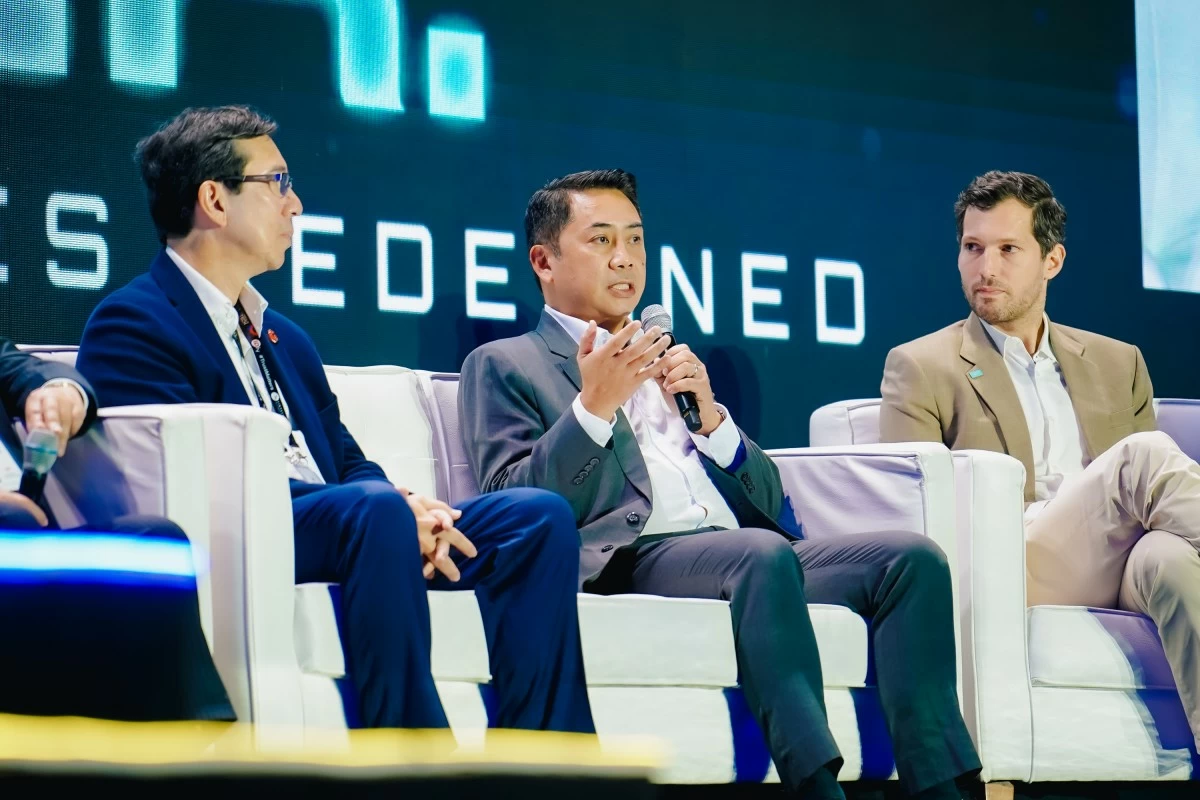
Tony Isidro, President and CEO of Fuse Financing Inc., explains that GCash uses accessible lending products to unlock financial inclusion, allowing individuals without traditional credit histories to benefit from formal financial services.
Access to credit has long been a challenge for millions of Filipinos who remain unbanked or underbanked. Many turn to informal lenders, often trapped in cycles of unfair interest rates and harsh repayment terms. Fuse Financing President and CEO Tony Isidro shared that 90 percent of their customers used to rely on such systems.
“A lot of our countrymen rely on informal lending. They are subjected to high interest rates and abusive collection practices. So we want to imagine credit with Fuse Financing by giving them the opportunity to borrow now with dignity for better every days for themselves and for their families,” he said.
Through data-driven models like GScore, which assesses creditworthiness based on user behavior rather than traditional documents such as bank statements or tax records, GCash has been able to extend lending to 9.5 million Filipinos as of the first half of this year. For many, this means being able to pay tuition fees, purchase a laptop for school, or start a small enterprise.
“The reason why we want to change the game is to make borrowing an enabler rather than a burden to Filipinos,” Isidro added.
But access is only one part of the story. As more Filipinos transact and borrow online, the need for trust and protection becomes paramount. For GCash, protecting users means anticipating threats before they cause harm and have the ability to stop them when it happens
“Post-detection is a little bit of a second tool later. So that’s why, at GCash, when we started doing this, we had to have a sophisticated fraud management system. It’s about handling it real-time as it happens so that you mitigate the risks,” Chief Information Security Officer of Mynt Miguel Geronilla explained.
This dual focus, inclusion and protection, is key for digital finance to truly improve lives. Borrowing becomes a stepping stone for progress, and security ensures that progress is sustainable.
What it means for the fintech and banking industry
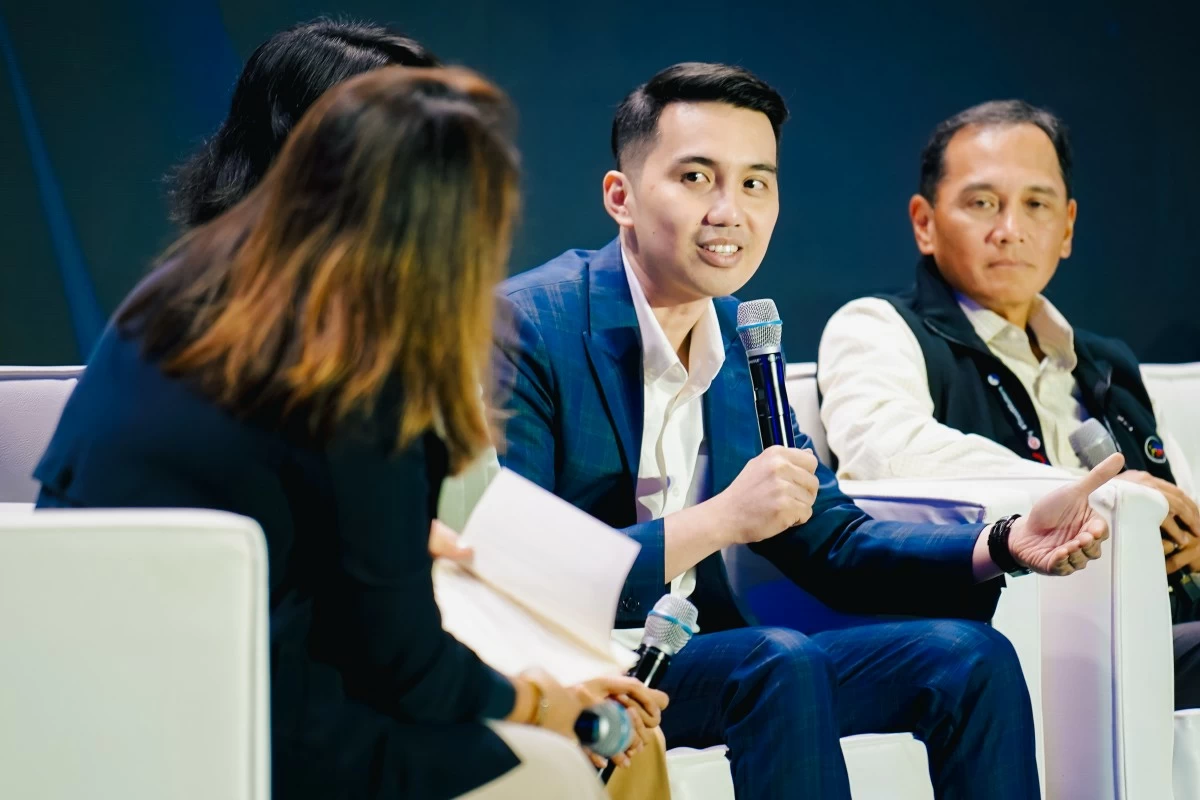
GCash Chief Information Security Officer Miguel Geronilla says that to protect customer data and transactions, GCash is constantly strengthening its defenses by investing in the latest cybersecurity technologies
GCash Chief Information Security Officer Miguel Geronilla says that to protect customer data and transactions, GCash is constantly strengthening its defenses by investing in the latest cybersecurity technologies, says Chief Information Security Officer Miguel Geronilla.
For decades, banks and alternative lenders have served different roles, often in parallel tracks. Today, convergence is no longer optional but necessary. Isidro illustrated how banks are structured to loan in the millions, while fintech platforms like GCash are designed to extend smaller loans, sometimes as little as one hundred pesos, to millions of everyday customers. Together, these complementary models fill critical gaps.
“In lending, our underwriting backbone is GScore… it enables customers who previously didn’t have access to formal lending because of not having bank statements or ITRs,” he said.
This kind of innovation highlights how fintechs bring agility, while banks contribute scale and stability. Both, however, share responsibility in ensuring fair, transparent systems that can reach more Filipinos.
On the security front, the Anti-Financial Account Scamming Act (AFASA) is setting the standard for industry-wide safeguards. Geronilla emphasized the importance of moving from discussion to action: “AFASA is already here, we have a framework and standard that we need to follow… now we should just move into action and execution.”
For the industry, trust is the most valuable currency. By embedding strong protections and collaborating across players, banks and fintechs alike can expand their role from financial service providers to partners in securing our growing digital nation.
Addressing the credit gap in the Philippines
The Philippines has one of the widest credit gaps in Asia. Based on the Bangko Sentral ng Pilipinas (BSP) Financial Inclusion Survey, most Filipino adult borrowers still rely on informal sources at 57%. For the longest time, predatory lenders like 5-6 schemes with interest rates as high as 20% per repayment cycle were the first recourse of borrowers especially from low-income households (classes D and E), due to the perceived convenience and short payment term cycles which they find less burdensome on their budget but in reality can lead to exorbitantly high interest rates and abusive collection practices.
Closing it is not just about individual empowerment but also about national growth. Formal lending helps families invest in education and livelihood, which in turn fuels productivity and consumption. Each borrower who moves away from informal lenders toward regulated systems represents a step toward financial stability.
“The credit gap in the Philippines is too big that no one company alone can solve it overnight. The way forward is partnerships,” Isidro stressed.
This spirit of collaboration was evident at the summit, where policymakers and regulators from the Senate, BSP, Securities and Exchange Commission (SEC), and Department of Information and Communications and Technology (DICT) joined industry leaders to map the way forward. By working together, the public and private sectors can build a more inclusive and cyber-resilient financial ecosystem.
Geronilla underscored the broader vision: “Beyond the discussions, everybody is now working to make sure fintech becomes a safe space for everybody.”
Strong cybersecurity not only shields Filipinos from fraud but also strengthens global confidence in the Philippine digital economy, making trust a national asset.
Toward financial progress
The Manila Tech Summit 2025 showed that the future of finance is about creating an ecosystem of innovations where access and protection move hand in hand. For GCash, that means transforming everyday transactions into opportunities and ensuring that every digital step forward is taken with security in place.
“Lending is an enabler,” Isidro noted. “It gives Filipinos opportunities not only for everyday needs but for a better future for themselves and their families.” With trust as the foundation, that future becomes one where no Filipino is left behind, and the country itself grows stronger, more resilient, and more confident in the digital age.