

ADVERTISEMENT

Matas Buzelis out to prove he's more than just a dunker for Chicago Bulls

Published Sep 12, 2025 11:40 am

At A Glance

  • After a promising rookie year, Chicago Bulls forward Matas Buzelis isn't content with just being decent. The 21-year-old Lithuanian, who finished 7th in the Rookie of the Year race, is determined to raise his game in his sophomore season and prove he can be a cornerstone for the Bulls.
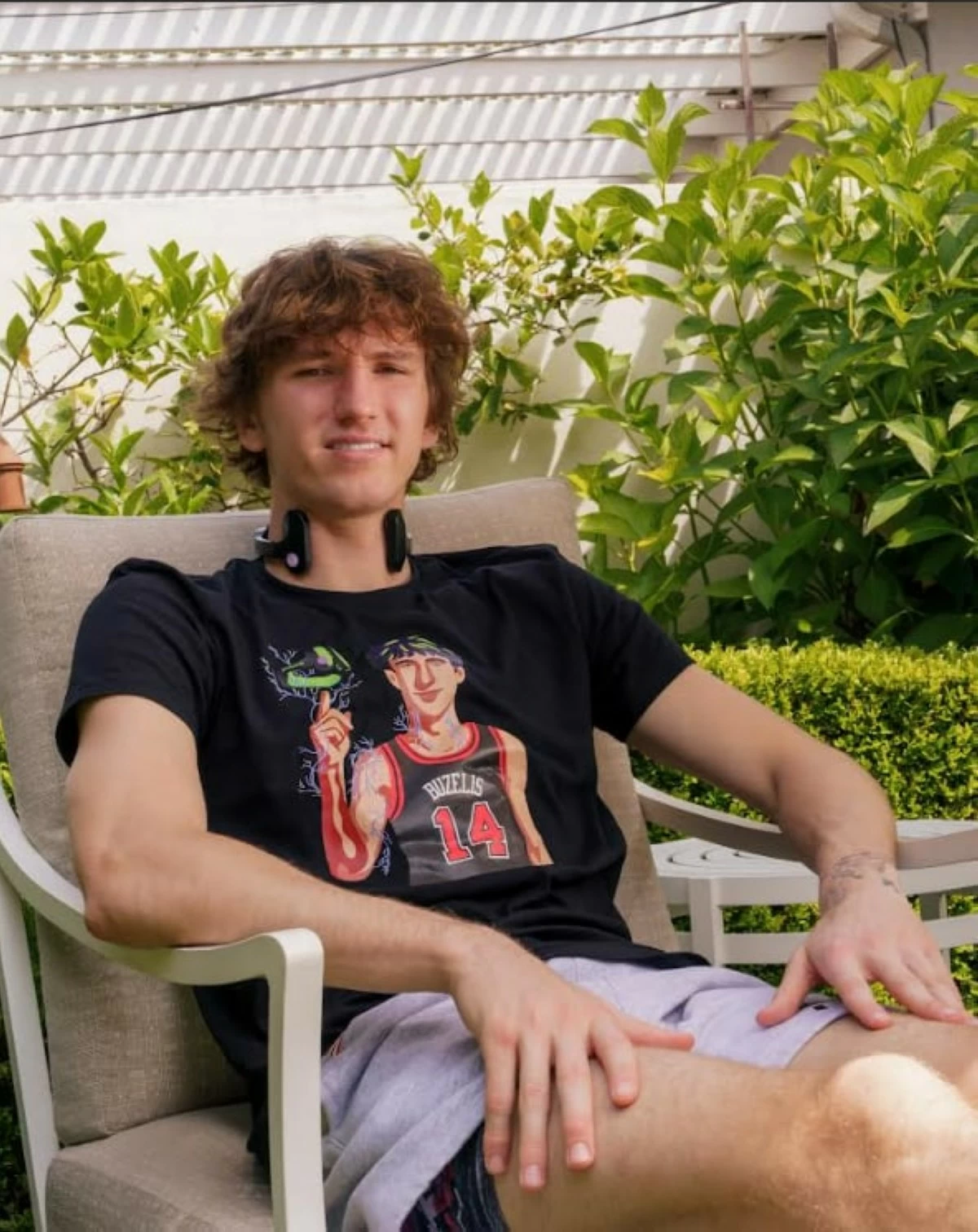
Matas Buzelis balances rest and preparation as he looks to elevate his game in Year 2 with the Bulls. (Pulsetto)
Beyond the Game 
Matas Buzelis out to prove he’s more than just a dunker for Chicago Bulls
By Brian Yalung
After a promising rookie year, Chicago Bulls forward Matas Buzelis isn’t content with just being decent. The 21-year-old Lithuanian, who finished 7th in the Rookie of the Year race, is determined to raise his game in his sophomore season and prove he can be a cornerstone for the Bulls.
In an exclusive interview, the 11th overall pick of the 2024 Draft admitted that he hopes to put on a better showing. He understands that he is a player whom the Bulls consider a key piece of the team, and Buzelis knows he has to do his part.
Among the things that Matas mentioned as important for him to keep his level of play high is recovery—mentally and physically. To help him, Buzelis has turned to technology.
The Bulls forward explained how a wearable known as Pulsetto has helped him with his mental and physical needs. The device is a hands-free, bilateral vagus nerve stimulator that aids his recovery, especially when it comes to improving sleep and reducing stress.
“Every time I use Pulsetto, it helps me relax because of the adrenaline rush. You get to sleep quickly and that helps a lot. That helps you realize that you don’t want to be staying up later than you should after games, especially after travel too,” Buzelis explained.
Influenced and Driven to Be Better
Aside from Buzelis, another NBA player who uses Pulsetto is Domantas Sabonis. The Lithuanian-American admitted that the Sacramento Kings encouraged him to use the device since it is something that can help him elevate his game.
“He had a little influence on me to work with Pulsetto. He’s a big star in the NBA, so him being able to use it helped a lot. I took his guidance on that, and that influenced me a bit,” Buzelis shared.
Matas admits that adding the wearable to his routine has been helpful. It has helped prepare him, especially before a game. He feels that through this, he gets a bit of an edge before he actually plays.
“It helps me mentally to be relaxed. I’d say I also feel like I have the mental edge out there. That’s all it takes for me to compete,” Buzelis shared.
Bracing for Buzelis and the Bulls
Buzelis had a decent rookie season, although the 21-year-old feels he can do better. Aside from relying on technology, he admits that his mindset is bent on giving everyone a better performance.
Matas has quietly been preparing for the 2025-26 season. He is aching to play again, vowing he will be better and sharper.
“I know how hard I work and you’ll definitely see a different player. Not a different, exactly different player, but just sharper. So you can expect that,” he said.
When asked if he could be more specific, Matas responded with a short response: “Put on a show.”
It wasn’t hard to figure out what Buzelis was referring to. He plays above the rim, and Matas admitted that fans can expect to see more strong slams from him.
“You’ll definitely see that,” he responded firmly when asked about potentially showing more fancy dunks in the coming season.
Being with the Bulls and showing he can execute fancy dunks, Buzelis admitted that he gets motivation knowing his team was once led by Michael Jordan. For as long as he is with the Bulls, he hopes to use Jordan’s mindset moving forward.
“Playing for the Bulls means a lot to me. I’m born and raised here. So it’s bigger than basketball to me. I wanna change the city. I wanna change the people. I want everything in Chicago to be good. I wanna bring championships,” Buzelis explained. “Especially with Michael Jordan being here, all those guys, it helps me thrive and strive for greatness. So it’s truly an honor.”
Buzelis averaged 8.6 points, 3.5 rebounds, and 1 assist in only 18.9 minutes of action in 80 games last season. It remains to be seen if he will be given more playing time.
With his talent and drive, Buzelis has the tools to become more than just a highlight-reel dunker. If he can turn potential into consistency, the Bulls have a young star ready to help lead Chicago back into contention.
ADVERTISEMENT
.most-popular .layout-ratio{ padding-bottom: 79.13%; } @media (min-width: 768px) and (max-width: 1024px) { .widget-title { font-size: 15px !important; } }

{{ articles_filter_1561_widget.title }}

.most-popular .layout-ratio{ padding-bottom: 79.13%; } @media (min-width: 768px) and (max-width: 1024px) { .widget-title { font-size: 15px !important; } }

{{ articles_filter_1562_widget.title }}

.most-popular .layout-ratio{ padding-bottom: 79.13%; } @media (min-width: 768px) and (max-width: 1024px) { .widget-title { font-size: 15px !important; } }

{{ articles_filter_1563_widget.title }}

{{ articles_filter_1564_widget.title }}

.mb-article-details { position: relative; } .mb-article-details .article-body-preview, .mb-article-details .article-body-summary{ font-size: 17px; line-height: 30px; font-family: "Libre Caslon Text", serif; color: #000; } .mb-article-details .article-body-preview iframe , .mb-article-details .article-body-summary iframe{ width: 100%; margin: auto; } .read-more-background { background: linear-gradient(180deg, color(display-p3 1.000 1.000 1.000 / 0) 13.75%, color(display-p3 1.000 1.000 1.000 / 0.8) 30.79%, color(display-p3 1.000 1.000 1.000) 72.5%); position: absolute; height: 200px; width: 100%; bottom: 0; display: flex; justify-content: center; align-items: center; padding: 0; } .read-more-background a{ color: #000; } .read-more-btn { padding: 17px 45px; font-family: Inter; font-weight: 700; font-size: 18px; line-height: 16px; text-align: center; vertical-align: middle; border: 1px solid black; background-color: white; } .hidden { display: none; }
function initializeAllSwipers() { // Get all hidden inputs with cms_article_id document.querySelectorAll('[id^="cms_article_id_"]').forEach(function (input) { const cmsArticleId = input.value; const articleSelector = '#article-' + cmsArticleId + ' .body_images'; const swiperElement = document.querySelector(articleSelector); if (swiperElement && !swiperElement.classList.contains('swiper-initialized')) { new Swiper(articleSelector, { loop: true, pagination: false, navigation: { nextEl: '#article-' + cmsArticleId + ' .swiper-button-next', prevEl: '#article-' + cmsArticleId + ' .swiper-button-prev', }, }); } }); } setTimeout(initializeAllSwipers, 3000); const intersectionObserver = new IntersectionObserver( (entries) => { entries.forEach((entry) => { if (entry.isIntersecting) { const newUrl = entry.target.getAttribute("data-url"); if (newUrl) { history.pushState(null, null, newUrl); let article = entry.target; // Extract metadata const author = article.querySelector('.author-section').textContent.replace('By', '').trim(); const section = article.querySelector('.section-info ').textContent.replace(' ', ' '); const title = article.querySelector('.article-title h1').textContent; // Parse URL for Chartbeat path format const parsedUrl = new URL(newUrl, window.location.origin); const cleanUrl = parsedUrl.host + parsedUrl.pathname; // Update Chartbeat configuration if (typeof window._sf_async_config !== 'undefined') { window._sf_async_config.path = cleanUrl; window._sf_async_config.sections = section; window._sf_async_config.authors = author; } // Track virtual page view with Chartbeat if (typeof pSUPERFLY !== 'undefined' && typeof pSUPERFLY.virtualPage === 'function') { try { pSUPERFLY.virtualPage({ path: cleanUrl, title: title, sections: section, authors: author }); } catch (error) { console.error('ping error', error); } } // Optional: Update document title if (title && title !== document.title) { document.title = title; } } } }); }, { threshold: 0.1 } ); function showArticleBody(button) { const article = button.closest("article"); const summary = article.querySelector(".article-body-summary"); const body = article.querySelector(".article-body-preview"); const readMoreSection = article.querySelector(".read-more-background"); // Hide summary and read-more section summary.style.display = "none"; readMoreSection.style.display = "none"; // Show the full article body body.classList.remove("hidden"); } document.addEventListener("DOMContentLoaded", () => { let loadCount = 0; // Track how many times articles are loaded const offset = [1, 2, 3, 4, 5, 6, 7, 8, 9, 10]; // Offset values const currentUrl = window.location.pathname.substring(1); let isLoading = false; // Prevent multiple calls if (!currentUrl) { console.log("Current URL is invalid."); return; } const sentinel = document.getElementById("load-more-sentinel"); if (!sentinel) { console.log("Sentinel element not found."); return; } function isSentinelVisible() { const rect = sentinel.getBoundingClientRect(); return ( rect.top < window.innerHeight && rect.bottom >= 0 ); } function onScroll() { if (isLoading) return; if (isSentinelVisible()) { if (loadCount >= offset.length) { console.log("Maximum load attempts reached."); window.removeEventListener("scroll", onScroll); return; } isLoading = true; const currentOffset = offset[loadCount]; window.loadMoreItems().then(() => { let article = document.querySelector('#widget_1690 > div:nth-last-of-type(2) article'); intersectionObserver.observe(article) loadCount++; }).catch(error => { console.error("Error loading more items:", error); }).finally(() => { isLoading = false; }); } } window.addEventListener("scroll", onScroll); });

Sign up by email to receive news.