






Manila Bulletin
 Philippines
National
'Hindi naman inyo iyan!' NSC rejects China's plan for nature reserve at Bajo de Masinloc
Philippines
National
'Hindi naman inyo iyan!' NSC rejects China's plan for nature reserve at Bajo de Masinloc
Philippines
National
'Hindi naman inyo iyan!' NSC rejects China's plan for nature reserve at Bajo de Masinloc
'Hindi naman inyo iyan!' NSC rejects China's plan for nature reserve at Bajo de Masinloc
Published Sep 12, 2025 11:33 am


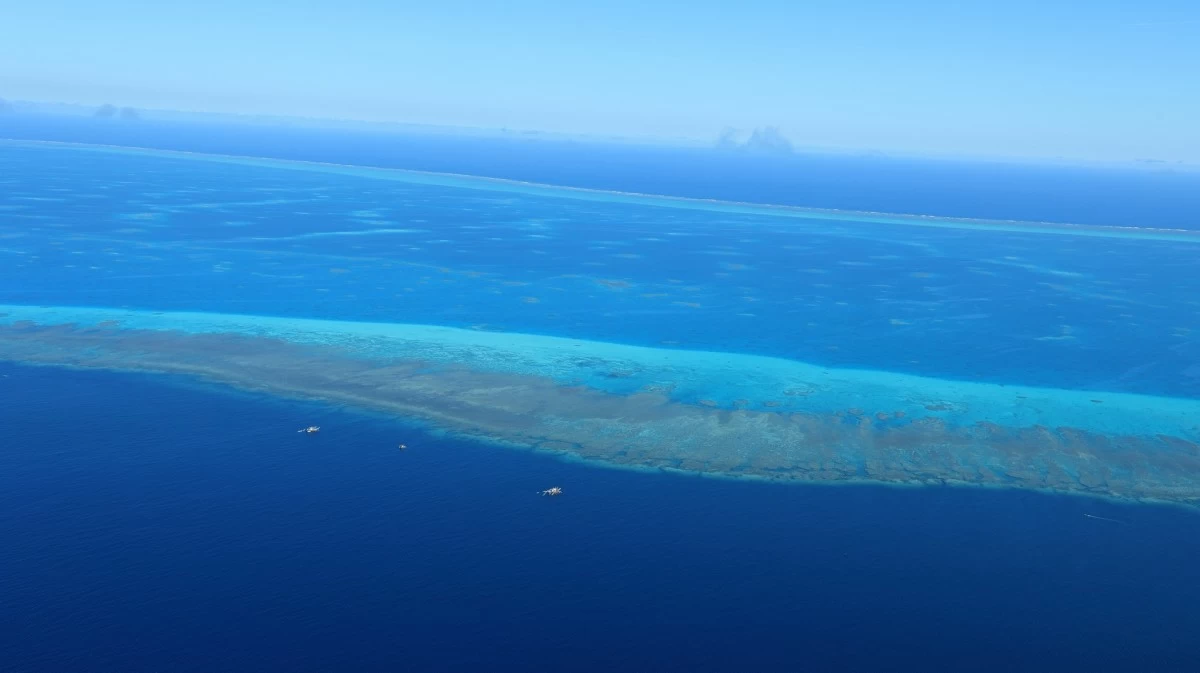
Filipino fishing boats are monitored at Bajo de Masinloc in the West Philippine Sea during an aerial search of the Philippine Coast Guard (PCG) on Oct. 6, 2022. (Photo: PCG)
The National Security Council (NSC) firmly opposed the newly announced plan of the People’s Republic of China (PRC) to establish a national nature reserve at Bajo de Masinloc (Scarborough or Panatag Shoal) in the West Philippine Sea (WPS).
National Security Adviser (NSA) Eduardo Año said the “Huangyan Island National Nature Reserve” is “patently illegal” as it runs counter to international law by disregarding the Philippines’ sovereign rights under the United Nations Convention on the Law of the Sea (UNCLOS).
Bajo de Masinloc, called by the PRC as Huangyan Island, is located well within the 200-nautical-mile exclusive economic zone (EEZ) of Manila.
Año argued that by unilaterally establishing a “nature reserve,” Beijing asserts administrative control over an area where it has no legal entitlement, in direct violation of the 2016 arbitral tribunal ruling that invalidated China’s expansive “nine-dash line” claim and reaffirmed the Philippines’ rights in its EEZ.
He said it also undermines regional commitments, specifically the 2002 Declaration on the Conduct of Parties in the South China Sea (DOC), which prohibits actions that escalate tensions or alter the status quo in disputed waters.
“This move by the PRC is less about protecting the environment and more about justifying its control over a maritime feature that is part of the territory of the Philippines and its waters lie within the exclusive economic zone of the Philippines,” Año said.
“It is a clear pretext towards eventual occupation. The irony is clear: since 2016, evidence has shown large-scale harvesting of endangered species and reef destruction by Chinese fishermen, activities even cited by the Arbitral Tribunal. To now claim stewardship over an ecosystem that they themselves has damaged is both contradictory and misleading,” he added.
The NSA asserted that genuine protection of Bajo de Masinloc requires collaboration, openness, and adherence to international law, not one-sided pronouncements that, under the pretext of conservation, limit the access of Filipino fishermen.
Año said the NSC fully supports the filing by the Department of Foreign Affairs (DFA) of a formal diplomatic protest against the “illegal and illegitimate act” by the PRC.
China’s State Council recently approved the creation of what it calls the Huangyan Island National Nature Reserve, citing ecological protection, particularly for coral reef systems, at the disputed shoal which lies 124 nautical miles west of Zambales.
For generations, Filipino fishermen have relied on the shoal as a traditional fishing ground and a safe haven during storms.
However, Filipino fisherfolk have noted a steep drop in their catch in recent years, citing repeated harassment from Chinese coast guard and maritime militia ships. They have also raised concerns over environmental destruction caused by harmful fishing methods such as cyanide use.
They said Chinese vessels have even placed floating barriers to block entry into the lagoon, although some of these were eventually dismantled.