






Manila Bulletin
 Environment and Sustainability
Floods and the hidden cost of corruption and mismanagement
Environment and Sustainability
Floods and the hidden cost of corruption and mismanagement
Environment and Sustainability
Floods and the hidden cost of corruption and mismanagement
Floods and the hidden cost of corruption and mismanagement
Published Sep 12, 2025 03:58 pm


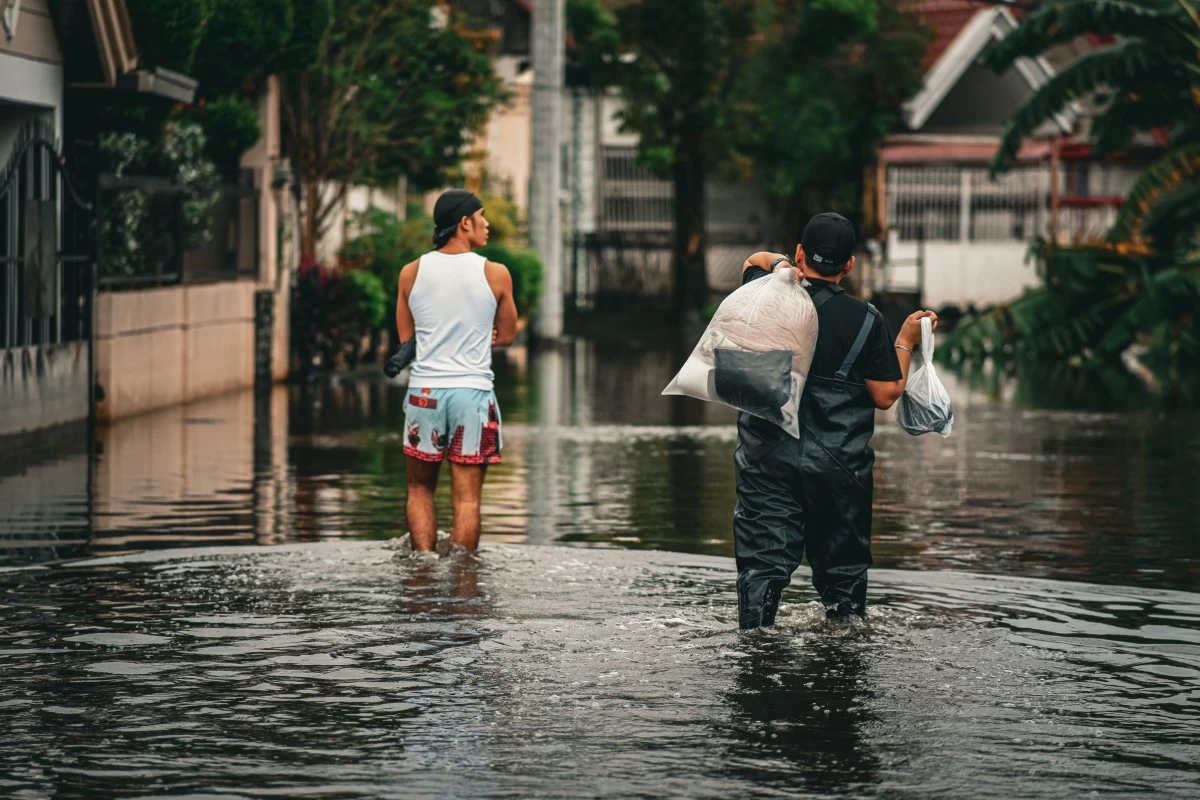
Two residents of Marilao, Bulacan traverse the flooded streets of their town last July 25, 2025. Shutterstock/Cherish Gonzales
Knee-deep in Caloocan’s floodwaters, Dion Angelo dela Rosa risked his health and safety in search of his missing father, who had not come home on July 22, 2025.
He found him three days later, detained in a police substation for the alleged crime of illegal gambling, for playing kara y krus, unable to contact his family. By then, the odds were not in Dion’s favor.
Days of wading through polluted waters left Dion with leptospirosis, an infection that quickly worsened and claimed his life just two days after their reunion.
It was a tragic wager Dion should not have been forced to make — one that revealed how the negligence of those meant to protect us can be as lethal as the floods themselves.
Dion’s story is not an isolated tragedy, but part of a larger pattern: a country where every storm reveals the same failures, and where the same familiar culprits emerge dry.
The usual suspects— climate change and floods
In the last week of August, Quezon City and Marikina were overwhelmed by floods unlike anything residents had ever seen. Images of Katipunan Avenue, submerged like a swimming pool, circulated widely on social media.
According to Dr. Mahar Lagmay, Quezon City experienced hyperlocalized rainfall of 121 mm/hour, far heavier than the 90 mm/hour recorded during Typhoon Ondoy in 2009.
Just a month earlier, the successive arrival of Tropical Storms Crising, Dante, and Emong had paralyzed communities nationwide. Crising alone inundated 43 areas across 14 regions, despite billions supposedly poured into flood control projects.
With a warming climate, we should expect wetter and stronger typhoons, carrying more rain into already burdened flood channels. Flooding is no longer a rare occurrence, but a hand that every storm continues to deal with.
The fallguy— unmanaged trash and undisciplined Filipinos
Like clockwork, every time heavy rains inundate Metro Manila, the Metro Manila Development Authority (MMDA) is quick to attribute the flooding to the lack of discipline of Filipinos. The agency claims that irresponsible waste disposal clogs waterways, rendering its 71 pumping stations less effective.
Yes, garbage contributes to the problem, but the government’s fixation on “Filipino indiscipline” reduces a systemic crisis to a morality tale.
The MMDA itself admits that Metro Manila’s “drainage systems are antiquated, more than 50 years old.” These systems are narrow and incapable of carrying today’s volumes of floodwater. Urbanization has outpaced infrastructure upgrades, and climate change has made rainfall more extreme.
Yet despite decades of billion-peso budgets supposedly earmarked for flood control, Metro Manila continues to flood with the same intensity year after year.
Scrutinizing the billions— flood control projects under review
President Marcos himself revealed that of the Department of Public Works and Highways’ ₱545.64 billion flood control projects from July 2022 to May 2025, approximately ₱100 billion was allocated to just 15 contractors. This concentration of contracts has prompted scrutiny over procurement practices and raised concerns about transparency and accountability.
Despite the scale of investment, many flood-prone areas continue to suffer. Questions arise and persist on the efficiency and integrity of project implementation, especially in light of reports of substandard or non-existent works (ghost projects).
Now, these ghost projects have become a primetime spectacle, dissected on television in the form of a Senate probe. Here, testimonies have revealed systemic irregularities. Witnesses have described practices such as bidding on the same projects using multiple companies, a clear violation of procurement rules. Several admitted their payouts doubled as campaign contributions to the very lawmakers investigating the corruption.
Public reaction has been intense, especially as images circulated online showing individuals linked to the controversy displaying signs of wealth. These displays have amplified public frustration over the perceived misuse of taxpayer funds.
But despite the overwhelming evidence, will there be true accountability, or will this scandal, like the floodwaters, eventually recede without resolution?
The double-edged nature of infrastructure solutions
A major conglomerate recently offered to help solve Metro Manila’s persistent flooding problem “at no cost to the [Filipino] people, at no cost to the government.” However, questions have been raised about whether such promises can be separated from the environmental impact of the company’s own large-scale projects.
For instance, the New Manila International Airport has drawn criticism from environmental groups and local communities for its impact on coastal ecosystems. The airport’s construction involved the clearing of mangrove forests in Hagonoy and Malolos that once served as natural flood barriers, while displacing fishing communities and eroding local livelihoods.
According to Global Witness, an international watchdog on environmental abuses, NMIA is vulnerable to natural disasters, which risks it being non-operational within just 30 years. The bitter irony is that it is the clearing of mangroves and the reckless reclamation of this flood-prone coast that have made the airport's foundations so fragile.
Concerns have also been raised on the ongoing construction of the Metro Rail Transit-Line 7 (MRT-7). It was cited by the Metropolitan Manila Development Authority (MMDA) as contributing to flooding along Commonwealth Avenue during the Tropical Storm Crising. A single misplaced post of the elevated track obstructed existing drainage systems, turning the thoroughfare into a waterway.
In short, while infrastructure projects are often framed as progress, they can also introduce unintended risks that aggravate the very problems they aim to solve.
The silent threat
Whether through allegations of padded contracts in flood control projects or the unintended environmental impacts of large-scale infrastructure, the outcome is the same: public welfare takes a back seat.
Flood control programs that fail to deliver results drain public resources while leaving communities exposed, just as projects that clear rivers, wetlands, and mangroves weaken natural defenses against rising seas and stronger storms.
The tragedy is not only the loss of funds, but what is stolen is our very chance to adapt to a changing climate. Corruption, inefficiency, and poor planning deepen vulnerabilities at a time when resilience is most needed.
As long as greed continues to flood this country, Filipinos will continue to face the brunt of seasonal floods with limited protection. Climate change may bring heavier rains and stronger typhoons, but it is corruption that ensures we are defenseless when they arrive. For every Dion lost to the waters, we are reminded that what drowns us is not rain, but neglect.
Every storm deals its cards, and it is always the poor who get the losing hand.
-----------
This piece is written by Pocholo Enriquez, Energy Program Lead at The Climate Reality Project Philippines, where he leads the RE Energize PH program to strengthen access to renewable energy through policy research, stakeholder engagement, and public advocacy.