







DA backs Philippines' ratification of high seas treaty
Published Sep 12, 2025 02:31 pm


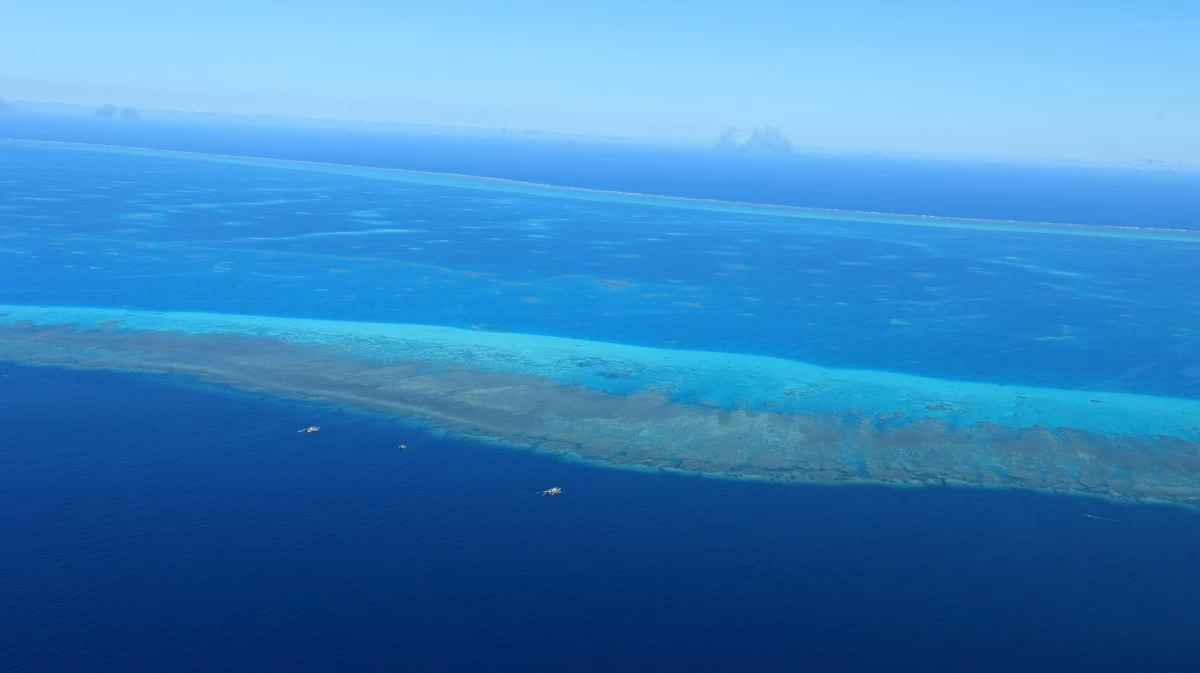
Filipino fishing boats are monitored at Bajo de Masinloc in the West Philippine Sea during an aerial search of the Philippine Coast Guard (PCG) on Oct. 6, 2022. (Photo: PCG)
The Department of Agriculture (DA) has expressed its support for the Philippines’ ratification of a treaty under the United Nations Convention on the Law of the Sea (UNCLOS), which promotes the conservation and sustainable use of marine resources.
In a statement, the DA said it will support the Department of Foreign Affairs’ (DFA) push to promote the ratification of the Agreement on the Conservation and Sustainable Use of Marine Biological Diversity of Areas Beyond National Jurisdiction (BBNJ Agreement), also known as the High Seas Treaty.
An implementing agreement under UNCLOS, the treaty addresses conservation and sustainable use of marine biodiversity in areas beyond national jurisdiction, such as the high seas.
Adopted in June 2023, the agreement also covers environmental impact assessments, capacity-building, and the transfer of marine technology and area-based management tools, including marine protected areas.
President Ferdinand “Bongbong” Marcos Jr. ratified the treaty a year later, but it failed to secure Senate concurrence.
Under the Constitution, no treaty or international agreement shall be effective unless concurred in by at least two-thirds of all the members of the Senate.
The BBNJ Agreement has since been resubmitted to the 20th Congress and is awaiting concurrence from the new slate of senators.
Once approved by the Senate, the country’s instrument of ratification will be deposited with the UN Secretary-General.
Agriculture Secretary Francisco Tiu Laurel said he is pushing for the Philippines’ ratification of the treaty, citing its strategic importance to the country as an archipelago and its role in protecting global marine resources.
“The BBNJ Agreement is crucial for conserving and sustainably managing marine biodiversity in areas beyond the Philippines’ jurisdiction, allowing the country to safeguard its rich marine ecosystems while ensuring fair access to and equitable sharing of benefits from marine genetic resources,” said Tiu Laurel.
According to the DA, participation in the agreement will affirm the country’s support for local coastal communities and marine biodiversity conservation aligned with the historic 2016 arbitral award.
To recall, the Permanent Court of Arbitration (PCA) ruled in favor of the Philippines in its case against China’s claim of the entire South China Sea, including the West Philippine Sea or the waters within the Philippines’ exclusive economic zone (EEZ).
The BBNJ Agreement would reinforce this legal victory by strengthening the UNCLOS framework, providing measures for the protection of marine resources in areas beyond national jurisdiction, including the fair and equitable sharing of benefits.
Meanwhile, Agriculture Undersecretary for Fisheries Drusila Esther Bayate said the ratification will strengthen the country’s ability to influence global policy-making.
Bayate said once the treaty is ratified, it will allow the Philippines to participate in the first Conference of the Parties (COP1), which is expected to convene after the 60th instrument is deposited.
A total of 60 states must ratify the BBNJ Agreement for the treaty to enter into force before Sept. 20.
To date, 57 states have deposited their instruments of ratification.