ADVERTISEMENT

PIDS urges refinements as pending House bills aim to make TUPAD jobs program permanent

Published Sep 11, 2025 01:46 pm
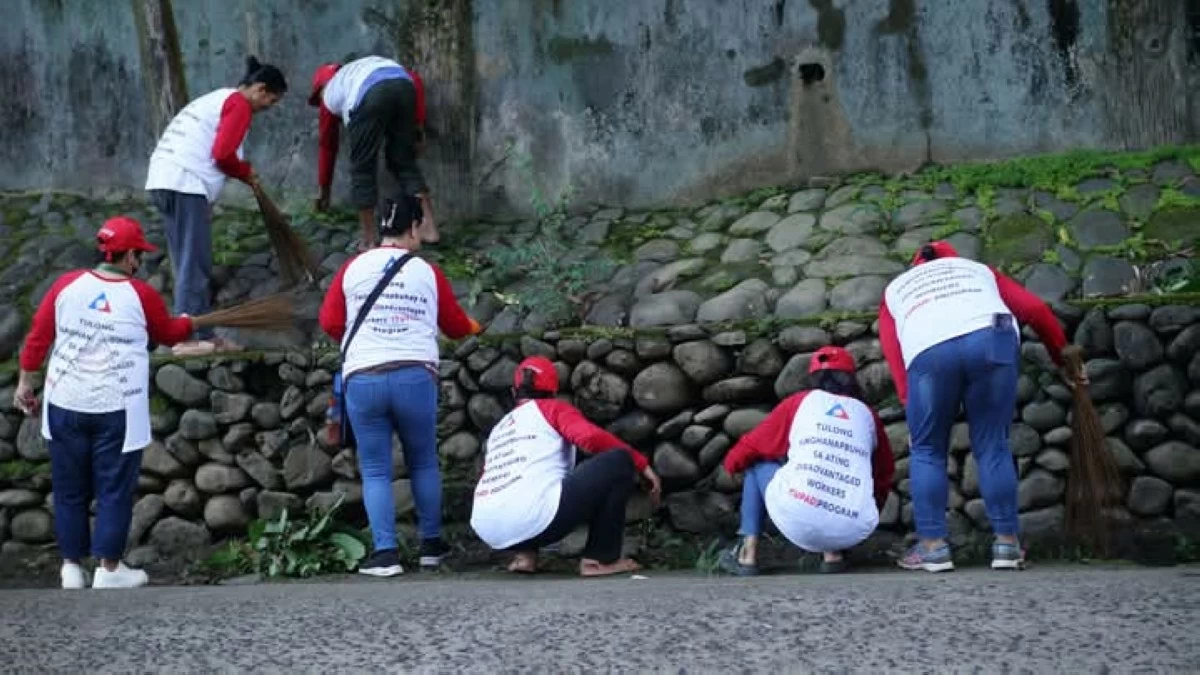
Beneficiaries of the Department of Labor and Employment’s (DOLE) TUPAD program are shown participating in community projects across Olongapo City and Zambales municipalities, providing temporary employment and financial assistance to more than 1,800 residents. (Photo: DOLE Zambales Field Office)
State-run think tank Philippine Institute for Development Studies (PIDS) is backing up bills pending in the Lower House aimed at making the currently short-term and temporary Tulong Panghanapbuhay sa Ating Disadvantaged/Displaced Workers (TUPAD) a permanent government program, as long as refined to ensure that it will be “promotive and transformative.
“Institutionalizing the TUPAD program is a good initiative for workers’ welfare and protection,” PIDS senior research fellow Connie B. Dacuycuy said in her comments on House Bill (HB) Nos. 86, 1730, 2605, 2985, and 4155 on Wednesday, Sept. 10.
TUPAD grants the Department of Labor and Employment (DOLE) authority to implement initiatives that generate jobs and support displaced workers.
If the program would be institutionalized, Dacuycuy urged broadening the range of eligible projects to cater to the varied skill sets of displaced workers, as the existing list is limited to activities that involve low-skilled or manual labor.
“Include social enterprises, which have a strong sense of social and environmental responsibility, in the list of potential co-partners,” Dacuycuy said.
To encourage sustainable employment, Dacuycuy stressed the need to provide incentives—monetary or non-monetary—to partner organizations that eventually hire program beneficiaries as full-time workers.
Dacuycuy also emphasized the establishment of a nationwide TUPAD information management system (TIMS) containing data on beneficiaries, projects, and partner organizations, describing it as “critical to program monitoring, reporting, and evaluation.”
Dacuycuy further highlighted the importance of collecting PhilSys or national ID numbers, which would allow for more efficient monitoring and effective program evaluation.
At the barangay level, Dacuycuy proposed using the term “artisan” to distinguish skilled non-manual workers.
However, she cautioned against limiting data collection to barangays, warning that it may lead to siloed information.
Instead, she suggested that city or municipal offices maintain the registry and cascade the lists to their barangays.
To protect worker privacy, Dacuycuy said personal information such as addresses and IDs should remain confidential, while only service area data of artisans should be made publicly accessible.
Lastly, Dacuycuy underscored the need to address discrimination under related bills, such as HBs 257 and 2228, recommending provisions that recognize diverse gender identities and prohibit age-based discrimination.
(Ricardo M. Austria)
ADVERTISEMENT
.most-popular .layout-ratio{ padding-bottom: 79.13%; } @media (min-width: 768px) and (max-width: 1024px) { .widget-title { font-size: 15px !important; } }

{{ articles_filter_1561_widget.title }}

.most-popular .layout-ratio{ padding-bottom: 79.13%; } @media (min-width: 768px) and (max-width: 1024px) { .widget-title { font-size: 15px !important; } }

{{ articles_filter_1562_widget.title }}

.most-popular .layout-ratio{ padding-bottom: 79.13%; } @media (min-width: 768px) and (max-width: 1024px) { .widget-title { font-size: 15px !important; } }

{{ articles_filter_1563_widget.title }}

{{ articles_filter_1564_widget.title }}

.mb-article-details { position: relative; } .mb-article-details .article-body-preview, .mb-article-details .article-body-summary{ font-size: 17px; line-height: 30px; font-family: "Libre Caslon Text", serif; color: #000; } .mb-article-details .article-body-preview iframe , .mb-article-details .article-body-summary iframe{ width: 100%; margin: auto; } .read-more-background { background: linear-gradient(180deg, color(display-p3 1.000 1.000 1.000 / 0) 13.75%, color(display-p3 1.000 1.000 1.000 / 0.8) 30.79%, color(display-p3 1.000 1.000 1.000) 72.5%); position: absolute; height: 200px; width: 100%; bottom: 0; display: flex; justify-content: center; align-items: center; padding: 0; } .read-more-background a{ color: #000; } .read-more-btn { padding: 17px 45px; font-family: Inter; font-weight: 700; font-size: 18px; line-height: 16px; text-align: center; vertical-align: middle; border: 1px solid black; background-color: white; } .hidden { display: none; }
function initializeAllSwipers() { // Get all hidden inputs with cms_article_id document.querySelectorAll('[id^="cms_article_id_"]').forEach(function (input) { const cmsArticleId = input.value; const articleSelector = '#article-' + cmsArticleId + ' .body_images'; const swiperElement = document.querySelector(articleSelector); if (swiperElement && !swiperElement.classList.contains('swiper-initialized')) { new Swiper(articleSelector, { loop: true, pagination: false, navigation: { nextEl: '#article-' + cmsArticleId + ' .swiper-button-next', prevEl: '#article-' + cmsArticleId + ' .swiper-button-prev', }, }); } }); } setTimeout(initializeAllSwipers, 3000); const intersectionObserver = new IntersectionObserver( (entries) => { entries.forEach((entry) => { if (entry.isIntersecting) { const newUrl = entry.target.getAttribute("data-url"); if (newUrl) { history.pushState(null, null, newUrl); let article = entry.target; // Extract metadata const author = article.querySelector('.author-section').textContent.replace('By', '').trim(); const section = article.querySelector('.section-info ').textContent.replace(' ', ' '); const title = article.querySelector('.article-title h1').textContent; // Parse URL for Chartbeat path format const parsedUrl = new URL(newUrl, window.location.origin); const cleanUrl = parsedUrl.host + parsedUrl.pathname; // Update Chartbeat configuration if (typeof window._sf_async_config !== 'undefined') { window._sf_async_config.path = cleanUrl; window._sf_async_config.sections = section; window._sf_async_config.authors = author; } // Track virtual page view with Chartbeat if (typeof pSUPERFLY !== 'undefined' && typeof pSUPERFLY.virtualPage === 'function') { try { pSUPERFLY.virtualPage({ path: cleanUrl, title: title, sections: section, authors: author }); } catch (error) { console.error('ping error', error); } } // Optional: Update document title if (title && title !== document.title) { document.title = title; } } } }); }, { threshold: 0.1 } ); function showArticleBody(button) { const article = button.closest("article"); const summary = article.querySelector(".article-body-summary"); const body = article.querySelector(".article-body-preview"); const readMoreSection = article.querySelector(".read-more-background"); // Hide summary and read-more section summary.style.display = "none"; readMoreSection.style.display = "none"; // Show the full article body body.classList.remove("hidden"); } document.addEventListener("DOMContentLoaded", () => { let loadCount = 0; // Track how many times articles are loaded const offset = [1, 2, 3, 4, 5, 6, 7, 8, 9, 10]; // Offset values const currentUrl = window.location.pathname.substring(1); let isLoading = false; // Prevent multiple calls if (!currentUrl) { console.log("Current URL is invalid."); return; } const sentinel = document.getElementById("load-more-sentinel"); if (!sentinel) { console.log("Sentinel element not found."); return; } function isSentinelVisible() { const rect = sentinel.getBoundingClientRect(); return ( rect.top < window.innerHeight && rect.bottom >= 0 ); } function onScroll() { if (isLoading) return; if (isSentinelVisible()) { if (loadCount >= offset.length) { console.log("Maximum load attempts reached."); window.removeEventListener("scroll", onScroll); return; } isLoading = true; const currentOffset = offset[loadCount]; window.loadMoreItems().then(() => { let article = document.querySelector('#widget_1690 > div:nth-last-of-type(2) article'); intersectionObserver.observe(article) loadCount++; }).catch(error => { console.error("Error loading more items:", error); }).finally(() => { isLoading = false; }); } } window.addEventListener("scroll", onScroll); });

Sign up by email to receive news.