







Olivarez vows food, livelihood security
Published Sep 11, 2025 10:46 am


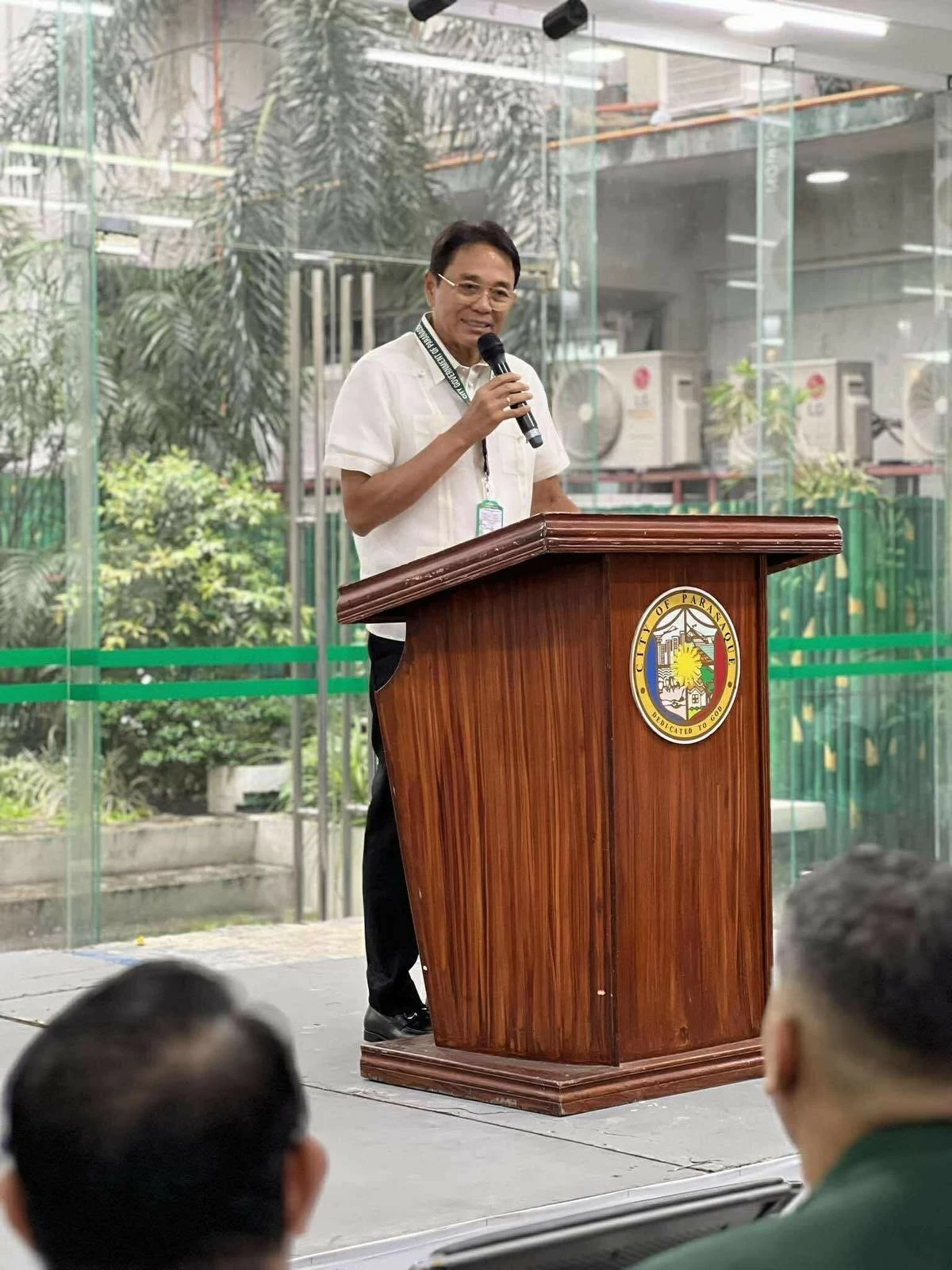
Mayor Edwin L. Olivarez lauds the city’s farmers and fisherfolk, who are the heart of food sustainability, nurturing the land and seas to feed communities.(Photo courtesy of Parañaque PIO)
Parañaque City Mayor Edwin L. Olivarez has vowed to provide stronger support for the city government's agricultural programs, emphasizing the crucial role of local farmers and fisherfolk in ensuring food security and sustainability.
Olivarez said Parañaque has grown from humble beginnings into one of the country's top business districts, continuing to shape the country's economy.
"Iyon pong kahabaan ng ating shoreline, meron tayong [iba't-]ibang barangay na [nasa] shoreline ng Manila Bay particularly ang Baclaran, Tambo, Don Galo, La Huerta at San Dionisio — 'yan po and ating mga barangay na nasa shoreline ng Manila Bay, at marami po tayong mga kababayan na mangingisda until now dito po sa ating Lungsod ng Parañaque," Olivarez said.
(Along our shoreline, we have several barangays situated along Manila Bay -- particularly Baclaran, Tambo, Don Galo, La Huerta, and San Dionisio. These are our shoreline barangays, and many of our fellow residents continue to work as fisherfolk to this day in the City of Parañaque.)
The mayor noted that major parts of the now bustling Ninoy Aquino Avenue -- from the LRT Line 1 station to the Ninoy Aquino International Airport Terminal 1 -- used to be an "irasan" or saltbeds. These areas supported a growing salt industry during the summer season and turned into fishponds during the rainy season, even before Paranaque became a city.
Amelia Hernandez, chief of the City Agricultural, Fisheries, and Aquatic Resources Office, said it was Dr. Pablo A. Olivarez, a former city mayor, who recognized the need for agricultural reforms in Parañaque as the pandemic struck the country.
As a highly urbanized city, many believed Parañaque had outgrown the need for an agriculture office. But Dr. Olivarez envisioned a future where a modern city could still cultivate food security, green spaces, and sustainability from within.
Hernandez said Dr. Olivarez saw a critical opportunity to integrate urban resilience with food sovereignty, recognizing that sustainability is not just a rural concern but an urban imperative.
"May kahalagahan pa rin para sa seguridad sa pagkain, kabuhayan – para sa ating mga mangingisda at kaalaman para sa urban farming (It still plays an important role in food security, livelihood – especially for our fishermen – and in promoting knowledge about urban farming)," Hernandez said, quoting the former city mayor.
She recalled that during the first term of Mayor Edwin Olivarez in 2013, the FAITH program, or Food Always In The Home, was launched through its urban farming initiative, aimed at cultivating a sense of sustainable livelihoods among city's residents.
"This program is grounded in the belief that even in a highly urbanized environment such as Paranaque, food sustainability can and must begin at home," said Hernandez.
He added that the program seeks to empower communities by providing residents with knowledge and tools to grow and harvest their own vegetables, promoting nutrition, food security, and environmental awareness.
Hernandez also highlighted the city's 'fisheries management' initiative, which she described as an equally important responsibility. Guided by City Ordinance No. 0602 of 2005 -- commonly known as the Comprehensive Fisheries Ordinance of Paranaque -- it ensures peace and order in the city's waters and generates income through licenses, registrations, permits, and more.
"We adopt a broad and inclusive definition of fisherfolk, encompassing not only those who fish in our waters, but also those who gather marine resources, trade and sell fish, process seafood, transport the catch, and support the entire fisheries value chain," she added.
Since January 2025, the City Agriculture Office has trained more than 300 individuals, including members of homeowners' associations, learning institutions, state agencies, as well as animal raisers, helpers, porters, tahungan farmers, and vendors.
It has also partnered with relevant city government agencies to foster a culture of self-reliance, environmental stewardship and community resilience.