






Manila Bulletin
 Business
Banking & Finance
Flood control project scandals may pressure peso, deter foreign investments
Business
Banking & Finance
Flood control project scandals may pressure peso, deter foreign investments
Business
Banking & Finance
Flood control project scandals may pressure peso, deter foreign investments
Flood control project scandals may pressure peso, deter foreign investments
By Derco Rosal
Published Sep 11, 2025 03:43 pm


At A Glance
- Japanese financial giant MUFG said the ongoing political turmoil over anomalies in flood control projects could weigh on the Philippine peso, while other economists expect foreign investments to steer clear of the Philippines.
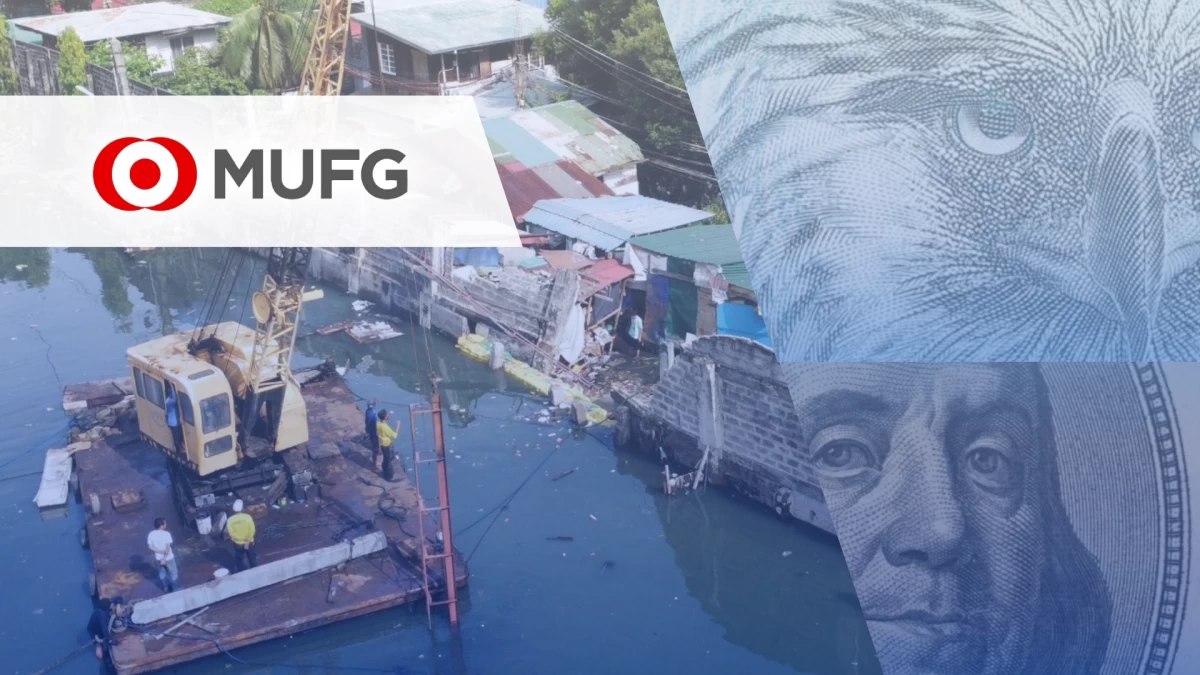
Japanese financial giant MUFG said the ongoing political turmoil over anomalies in flood control projects could weigh on the Philippine peso, while other economists expect foreign investments to steer clear of the Philippines.
“We also see increasing headlines out of the Philippines around corruption charges on bogus flood control infrastructure projects, and this is certainly one area to watch for in terms of risk for Philippine peso,” MUFG senior currency analyst Michael Wan said in a report published on Thursday, Sept. 11.
For local economists, this stretch of a spectacle in Congress over corruption that has delayed infrastructure projects could emerge as the red flag waving for foreign investors, warning them of the risks of investing in the Philippines.
John Paolo Rivera, senior research fellow at state policy think tank Philippine Institute for Development Studies (PIDS), stressed that besides external developments such as United States (US) monetary policy or trade uncertainties, domestic issues especially about “governance and credibility” could also impact the strength of the local currency.
“Flood control scandals and budget anomalies send worrying signals to investors about transparency, fiscal discipline, and the broader risk environment,” Rivera said.
“If left unresolved, these issues can erode investor confidence, delay FDI, and prompt capital flight from the Philippines to safer jurisdictions, thereby weakening the Philippine peso further,” Rivera added.
Concurring with Rivera’s view, Oikonomia Advisory and Research Inc. economist Reinielle Matt Erece, also said the hot corruption scandals alleged involving high-profile government officials, “can induce pessimism with regard to investing in the Philippines.”
“Foreign investors may decrease their investments going towards the country, causing a reduction in dollar inflows. While already existing investors may start pulling out their investments if they fear the risk of low returns and slow growth due to inefficient use of public funds,” Erece said.
“Both of which will cause the peso to depreciate as the currency may see lower demand due to potentially lower activity,” he added.
To recover the looming erosion of investor confidence, Erece said the government “must strive to achieve not just economic reforms, but also political reforms.” He argued that if investments, considered as the “seed of growth,” is beginning to falter, it would become an uphill climb for the Philippine economy to flourish.
“Anti-corruption platforms would ironically be good for the local economy and financial markets,” Rizal Commercial Banking Corp. chief economist Michael Ricafort said, asserting that this would help increase confidence in the economy and financial markets.
Ricafort said government spending on infrastructure may slow down. However, looming weakness could be “offset by crackdown on ghost or anomalous flood control projects” that only waste money.
MUFG earlier forecast the local currency to modestly strengthen against the US dollar through the second quarter of 2026 as the greenback is seen to bear the brunt of US President Donald Trump’s attack on the Federal Reserve’s independence.
In particular, the Japanese bank sees the peso trading with the US dollar at ₱57: $1 by the end of this month, ₱56.5:$1 by December, before settling at ₱56:$1 through the first semester of 2026.