






Manila Bulletin
 World
Departure timeline for Korean workers detained in immigration raid uncertain after flight canceled
World
Departure timeline for Korean workers detained in immigration raid uncertain after flight canceled
World
Departure timeline for Korean workers detained in immigration raid uncertain after flight canceled
Departure timeline for Korean workers detained in immigration raid uncertain after flight canceled
Published Sep 11, 2025 08:27 am


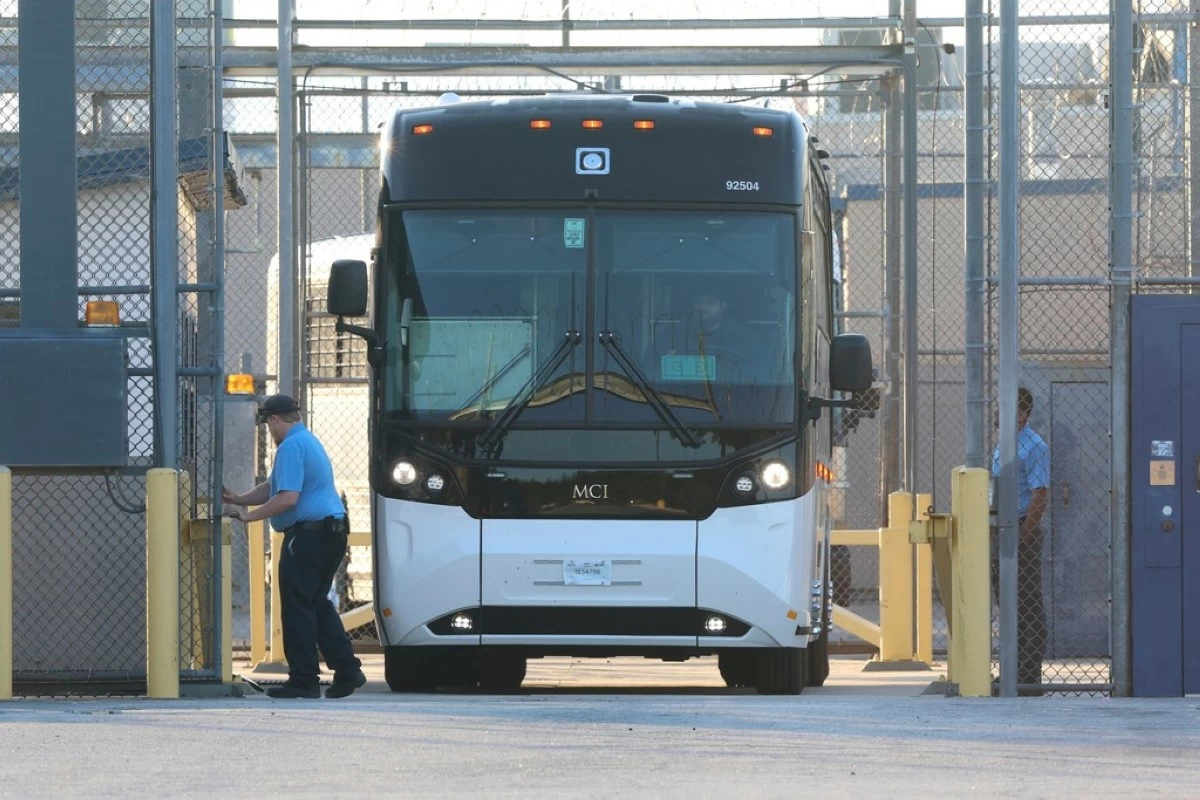
A bus leave the Folkston Immigration and Customs Enforcement processing center, Wednesday, Sept. 10, 2025, in Folkston, Ga. (AP Photo/Gary McCullough)
ATLANTA (AP) — After the detention of more than 300 South Korean workers in an immigration raid at a Georgia battery plant last week, a charter plane arrived in Atlanta on Wednesday to bring them home. But its planned return with workers in the afternoon was canceled, an airport spokesperson said.
South Korea’s Foreign Ministry said the plane was not able to make the return trip that day, as the country had wished, due to an unspecified reason involving the U.S. side. South Korean media reported that it would leave Atlanta on Thursday.
The Koreans were among some 475 workers detained during last week's raid at the battery factory under construction on the campus of Hyundai’s sprawling auto plant west of Savannah.
During a visit to Washington, South Korean Foreign Minister Cho Hyun met U.S. Secretary of State Marco Rubio and told him that his people were left with “big pains and shocks” because the video of the workers’ arrests was publicly disclosed, the ministry said in a statement.
Cho called for the U.S. administration to help the workers leave as soon as possible — without being handcuffed — and make sure they do not face problems in future reentries to the U.S., the statement said.
Here are some things to know about the raid and its aftermath:
What efforts have been made to get the South Koreans home?
A Korean Air Boeing 747-8i departed from Seoul for the U.S. to bring back the detained Korean workers and landed in Atlanta. As of Wednesday afternoon, airport officials were not clear on when it would leave.
“As of now, it is canceled. We don’t have any further updates right now,” airport spokesperson Jennifer Walters said via email.
The workers were being held at an immigration detention center in Folkston, in southeast Georgia, near the state line with Florida. It’s a 285-mile (460-kilometer) drive from there to Atlanta. Three buses were parked at the detention center Wednesday.
South Korean officials said they have been negotiating with the U.S. to win “voluntary” departures for the workers, rather than deportations, which could make them ineligible to return to the U.S. for up to 10 years.
During his meeting with Rubio, Cho proposed the creation of a joint South Korea-U.S. working group to introduce a new visa category for workers from the Asian nation, according to Cho’s ministry.
South Korean TV showed Cho Ki-joong, consul general at the Korean Embassy in Washington, speaking outside the detention center. He said some administrative steps remained but things were going smoothly. The Foreign Ministry declined to comment on media reports that he and other diplomats met with detained workers.
What are the immigration consequences for the workers?
U.S. authorities have said that those detained during the raid were “unlawfully working” at the plant. But Charles Kuck, a lawyer representing several of the detained South Koreans, said the “vast majority” of the workers from South Korea were doing work that is authorized under the B-1 business visitor visa program.
A B-1 visitor for business visa allows foreign workers to stay for up to six months, getting reimbursed for expenses while collecting a paycheck back home. There are limits — for example, they can supervise construction projects but can’t build anything themselves — but if it’s spelled out in a contract, they can install equipment, Los Angeles immigration lawyer Angelo Paparelli said.
Also, South Korea is one of 41 countries whose citizens can use the U.S. Electronic System for Travel Authorization (ESTA), which provides visa waivers to those who can provide “a legitimate reason’’ for their visit. This basically gives them B-1 visa status for up to 90 days, according to Los Angeles immigration attorney Rita Sostrin.
Georgia officials reaffirm relationship with South Korea
The raid targeted one of the Georgia's largest and most high-profile manufacturing sites, touted by the governor and other officials as the largest economic development project in state history. Hyundai Motor Group began manufacturing EVs a year ago at the $7.6 billion plant, which employs about 1,200 people.
In a statement Wednesday, the governor's office stressed its “strong relationship with the Republic of Korea and Korean partners like Hyundai, stretching back 40 years to the establishment of Georgia's trad office in Seoul.”
“We are thankful they are reiterating their commitment to adhere to all state and federal laws, just as we remain committed to not allowing this unfortunate incident to undo the decades of mutually beneficial partnerships we've built together,” a spokesperson said.