

ADVERTISEMENT

BSP credit scoring system seen to lift MSME lending after falling short of quota in Q2

Published Sep 11, 2025 11:48 am

At A Glance

  • Following the central bank's rollout of a web-based credit scoring system in August, loans to micro, small and medium enterprises (MSMEs) could see improvement in the coming quarters as it continued to fall below the mandated level in the second quarter amid limited credit information.
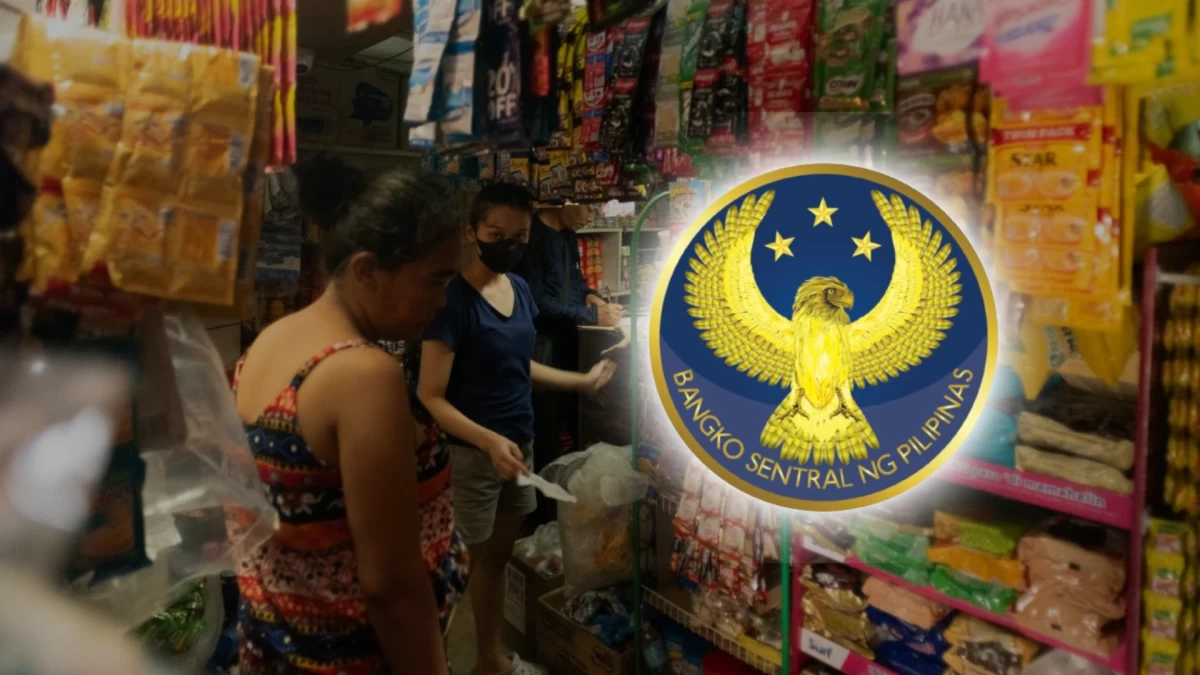
Following the central bank’s rollout of a web-based credit scoring system in August, loans to micro, small and medium enterprises (MSMEs) could see improvement in the coming quarters as lending continued to fall below the mandated level in the second quarter amid limited credit information.
The latest data from the Bangko Sentral ng Pilipinas (BSP) showed that total loans to MSMEs reached ₱540.9 billion as of end-June, 10.8-percent higher than the ₱488.1 billion recorded in the same period last year.
However, this amount only accounted for 4.6 percent of the banking industry’s ₱11.78-trillion lending portfolio, still well below the prescribed ratio of 10 percent.
Under the Magna Carta for MSMEs, which took effect in June 2008, banks are required to set aside eight percent of their lending portfolio for micro and small enterprises (MSEs), while two percent must be allocated to medium-sized enterprises.
However, most banks choose to pay penalties for missing the MSME lending quota rather than take on the risks of lending to small businesses.
Broken down, loans disbursed to MSEs stood at ₱220.6 billion during the period. This is equivalent to just 1.9 percent of their total loan book, falling short of the eight-percent lending requirement.
To meet this requirement, BSP figures indicate that lenders should have set aside a minimum of ₱942.6 billion for MSEs to borrow.
To note, the end-June figure was 12.1-percent higher than the previous year’s level but slightly lower than the ₱220.8 billion recorded at end-March.
Meanwhile, loans to medium enterprises reached ₱320.4 billion as of end-June. This accounted for 2.7 percent of their loan book, surpassing the two-percent requirement.
It was 10-percent higher than last year’s level of ₱291.3 billion but 1.7-percent lower than the previous quarter’s level.
In terms of bank types, universal and commercial banks (U/KBs) or big banks extended ₱139.7 billion in loans to MSEs during the second quarter, equivalent to 1.3 percent of their ₱10.74-trillion loan portfolio.
Their loans to medium enterprises amounted to ₱260.2 billion, or 2.4 percent of their total loan book.
Thrift banks lent ₱47 billion to MSEs, making up 5.6 percent of their ₱846.6-billion loan book. Loans to medium enterprises reached ₱39.8 billion, or 4.7 percent of their portfolio.
Notably, rural and cooperative banks were the only industry that was compliant to the overall MSME lending quota. They disbursed ₱33.4 billion to MSEs, or 20.5 percent of their ₱163.1-billion portfolio, and ₱20.3 billion to medium enterprises, or 12.5 percent of their total loans.
Loans disbursed by digital banks to MSEs stood at ₱590 million at end-June, accounting for 1.7 percent of their ₱34.7-billion loan book, while lending to medium enterprises amounted to ₱60 million, or just 0.2 percent of total.
Banks repeatedly missing the lending quota could be attributed to the industry’s “need to have shared credit information for some MSMEs, especially the relatively newer ones, amid the lack of track record as another source of asymmetric information on credit risk management,” said Rizal Commercial Banking Corp. (RCBC) chief economist Michael Ricafort.
Ricafort said the credit risk scoring system that was recently launched by the BSP in partnership with the Japan International Cooperation Agency (JICA) could help improve this trend.
Last month, the Credit Risk Database Philippines Web-based Scoring System (CRDPh System) went live to help banks and other lenders assess the creditworthiness of SMEs, which is also seen to make loans more accessible to SMEs.
For Ricafort, the adoption of this system holds greater importance moving forward “amid tighter capitalization standards for banks locally and internationally in recent years when it comes to loans and investments that entail higher risks.”
Apart from this reform, “there may also be a need for more credit guarantees for some MSMEs to further mitigate credit risks and encourage more lending while managing the risks for additional MSME lending,” Ricafort said.
ADVERTISEMENT
.most-popular .layout-ratio{ padding-bottom: 79.13%; } @media (min-width: 768px) and (max-width: 1024px) { .widget-title { font-size: 15px !important; } }

{{ articles_filter_1561_widget.title }}

.most-popular .layout-ratio{ padding-bottom: 79.13%; } @media (min-width: 768px) and (max-width: 1024px) { .widget-title { font-size: 15px !important; } }

{{ articles_filter_1562_widget.title }}

.most-popular .layout-ratio{ padding-bottom: 79.13%; } @media (min-width: 768px) and (max-width: 1024px) { .widget-title { font-size: 15px !important; } }

{{ articles_filter_1563_widget.title }}

{{ articles_filter_1564_widget.title }}

.mb-article-details { position: relative; } .mb-article-details .article-body-preview, .mb-article-details .article-body-summary{ font-size: 17px; line-height: 30px; font-family: "Libre Caslon Text", serif; color: #000; } .mb-article-details .article-body-preview iframe , .mb-article-details .article-body-summary iframe{ width: 100%; margin: auto; } .read-more-background { background: linear-gradient(180deg, color(display-p3 1.000 1.000 1.000 / 0) 13.75%, color(display-p3 1.000 1.000 1.000 / 0.8) 30.79%, color(display-p3 1.000 1.000 1.000) 72.5%); position: absolute; height: 200px; width: 100%; bottom: 0; display: flex; justify-content: center; align-items: center; padding: 0; } .read-more-background a{ color: #000; } .read-more-btn { padding: 17px 45px; font-family: Inter; font-weight: 700; font-size: 18px; line-height: 16px; text-align: center; vertical-align: middle; border: 1px solid black; background-color: white; } .hidden { display: none; }
function initializeAllSwipers() { // Get all hidden inputs with cms_article_id document.querySelectorAll('[id^="cms_article_id_"]').forEach(function (input) { const cmsArticleId = input.value; const articleSelector = '#article-' + cmsArticleId + ' .body_images'; const swiperElement = document.querySelector(articleSelector); if (swiperElement && !swiperElement.classList.contains('swiper-initialized')) { new Swiper(articleSelector, { loop: true, pagination: false, navigation: { nextEl: '#article-' + cmsArticleId + ' .swiper-button-next', prevEl: '#article-' + cmsArticleId + ' .swiper-button-prev', }, }); } }); } setTimeout(initializeAllSwipers, 3000); const intersectionObserver = new IntersectionObserver( (entries) => { entries.forEach((entry) => { if (entry.isIntersecting) { const newUrl = entry.target.getAttribute("data-url"); if (newUrl) { history.pushState(null, null, newUrl); let article = entry.target; // Extract metadata const author = article.querySelector('.author-section').textContent.replace('By', '').trim(); const section = article.querySelector('.section-info ').textContent.replace(' ', ' '); const title = article.querySelector('.article-title h1').textContent; // Parse URL for Chartbeat path format const parsedUrl = new URL(newUrl, window.location.origin); const cleanUrl = parsedUrl.host + parsedUrl.pathname; // Update Chartbeat configuration if (typeof window._sf_async_config !== 'undefined') { window._sf_async_config.path = cleanUrl; window._sf_async_config.sections = section; window._sf_async_config.authors = author; } // Track virtual page view with Chartbeat if (typeof pSUPERFLY !== 'undefined' && typeof pSUPERFLY.virtualPage === 'function') { try { pSUPERFLY.virtualPage({ path: cleanUrl, title: title, sections: section, authors: author }); } catch (error) { console.error('ping error', error); } } // Optional: Update document title if (title && title !== document.title) { document.title = title; } } } }); }, { threshold: 0.1 } ); function showArticleBody(button) { const article = button.closest("article"); const summary = article.querySelector(".article-body-summary"); const body = article.querySelector(".article-body-preview"); const readMoreSection = article.querySelector(".read-more-background"); // Hide summary and read-more section summary.style.display = "none"; readMoreSection.style.display = "none"; // Show the full article body body.classList.remove("hidden"); } document.addEventListener("DOMContentLoaded", () => { let loadCount = 0; // Track how many times articles are loaded const offset = [1, 2, 3, 4, 5, 6, 7, 8, 9, 10]; // Offset values const currentUrl = window.location.pathname.substring(1); let isLoading = false; // Prevent multiple calls if (!currentUrl) { console.log("Current URL is invalid."); return; } const sentinel = document.getElementById("load-more-sentinel"); if (!sentinel) { console.log("Sentinel element not found."); return; } function isSentinelVisible() { const rect = sentinel.getBoundingClientRect(); return ( rect.top < window.innerHeight && rect.bottom >= 0 ); } function onScroll() { if (isLoading) return; if (isSentinelVisible()) { if (loadCount >= offset.length) { console.log("Maximum load attempts reached."); window.removeEventListener("scroll", onScroll); return; } isLoading = true; const currentOffset = offset[loadCount]; window.loadMoreItems().then(() => { let article = document.querySelector('#widget_1690 > div:nth-last-of-type(2) article'); intersectionObserver.observe(article) loadCount++; }).catch(error => { console.error("Error loading more items:", error); }).finally(() => { isLoading = false; }); } } window.addEventListener("scroll", onScroll); });

Sign up by email to receive news.