






Manila Bulletin
 Philippines
National
Marcos: PH-US ties remain 'beacon of stability' amid global uncertainty
Philippines
National
Marcos: PH-US ties remain 'beacon of stability' amid global uncertainty
Philippines
National
Marcos: PH-US ties remain 'beacon of stability' amid global uncertainty
Marcos: PH-US ties remain 'beacon of stability' amid global uncertainty
Published Sep 10, 2025 10:29 am


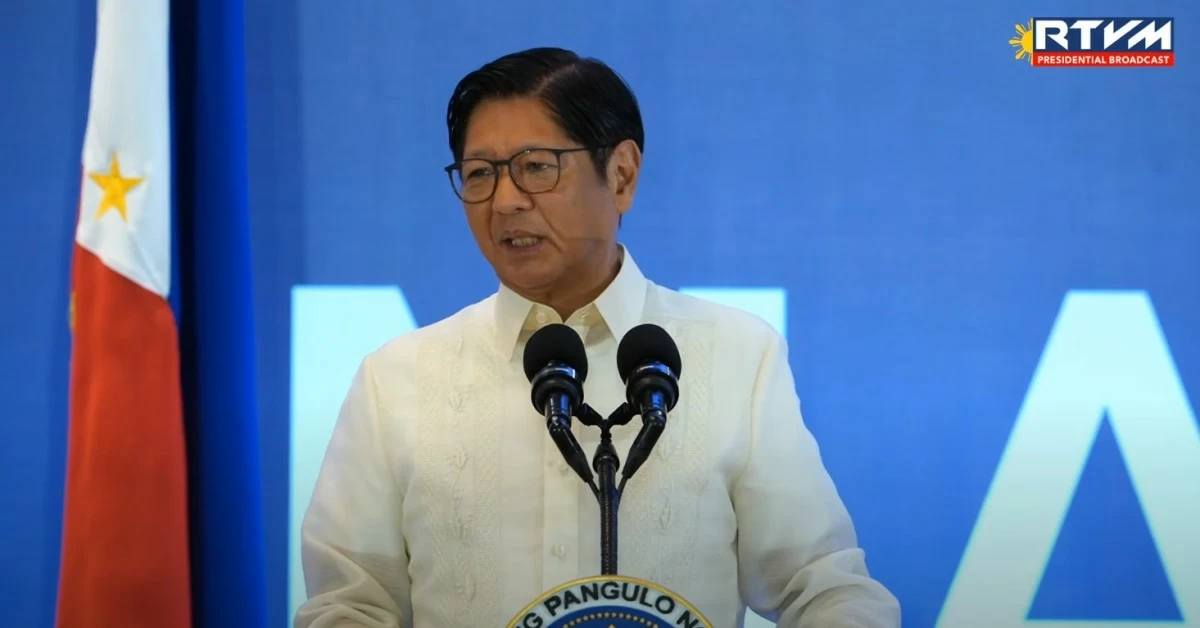
President Marcos has described the Philippines’ alliance with the United States as a “beacon of stability,” saying it continues to stand firm in the face of global uncertainty and challenges in the Indo-Pacific region.
Speaking at the inaugural Manila Strategy Forum in Pasay City, Marcos said the alliance serves regional peace and the rule of law, complements defense with joint economic security, and has “stood the test of time” while adapting to new challenges.
“Now midway into my term, and having seen our cooperation with the United States reach new heights, I can say, with confidence, that the Philippines-United States relations remain a beacon of stability,” Marcos said on Wednesday, Sept. 10.
“This is true not only today, but it certainly will be true for the years to come. Together, we continue to stand firm on solid ground,” he added.
According to the President, the strength of the alliance is rooted in more than a century of shared history and must continue as the Indo-Pacific faces aggressive actions in contested waters.
“Today, the most significant threat to the peace and stability we strive for is right here in our own neighborhood, here in the Indo-Pacific region. And this is not just an opinion. It is a fact,” he said.
Marcos laid out three points to characterize the current status of relations between Manila and Washington: their alliance upholds the rule of law and regional peace, their economic security complements mutual defense, and their partnership has stood the test of time and continues to adapt to new challenges.
First point: Upholding rule of law, peace, and security
The President emphasized that the Philippines-US alliance remains vital in protecting democracy, international law, and maritime rights. He noted that Filipino vessels and fisherfolk continue to face “illegal, coercive, aggressive, and dangerous actions” in the South China Sea.
“We strongly believe that the protection of our marine resources and heritage is underpinned by a strict adherence to the rule of law,” he said.
He thanked the US for supporting the Philippines’ maritime domain awareness and defense modernization, citing joint efforts to boost cooperation in unmanned systems, ship and aircraft maintenance, and energetics.
Second point: Linking economic strength and security
The President cited the need to balance security cooperation with economic resilience.
“We do not take our mature security alliance as a license to remain on autopilot, to be complacent,” he said.
“We are committed to pursuing our growth targets and providing better opportunities for our people, ensuring that economic strength and resilience deliver the dividends for enduring stability and security,” he added.
Marcos pointed to joint projects, such as the Subic-Clark-Manila-Batangas freight railway, funded under a US Trade and Development Agency grant, and the expansion of cooperation in semiconductors, critical minerals, and civil nuclear power.
“Strengthening our common security requires strengthening our economies,” he said, noting such projects have both economic and strategic importance.
Third point: From bilateral to multilateral cooperation
Marcos said the alliance is evolving into broader trilateral and multilateral partnerships, including with Japan, Australia, Canada, and New Zealand.
“Our annual Balikatan Exercises continue to grow with more partners and observers,” he noted, adding that trilateral projects like the Luzon Economic Corridor show how infrastructure, cyber, and digital cooperation are advancing beyond defense.
“These have resulted from the firm commitment of three maritime democracies to a free and open Indo-Pacific that is connected, inclusive, and prosperous,” he said.
Call for continued US role in Indo-Pacific
With this, President Marcos urged the United States to maintain its place in the region despite internal changes and global pressures.
“The place of the United States is here with us in the Indo-Pacific,” he said.
“It will be crucial to the free and open nature of our region that your vigor, inventiveness, and resilience, essential drivers of the great American nation, continue to play a leading role in nurturing a strong and peaceful Indo-Pacific,” he added.
The President likewise noted that next year marks the 75th anniversary of the Mutual Defense Treaty, the 80th anniversary of the Philippines-US diplomatic relations, and the 250th anniversary of US nationhood.
He also said that the Philippines’ chairmanship of the Association of Southeast Asian Nations (ASEAN) in 2026 will provide another platform to demonstrate Manila’s leadership and regional engagement.
“We have achieved so much together throughout history. I am humbled that there is still so much to be accomplished in the future,” Marcos said.
The Manila Strategy Forum, which runs from Sept. 9 to 10, brings together US and Philippine leaders to address the future of the alliance, global trade tensions, crises abroad, and cooperation in defense, infrastructure, and technology.
It also marks the launch of the Center for Strategic and International Studies US-Philippines Initiative, an effort to establish Washington as a leading platform for building bilateral consensus and developing future leaders of the alliance.
Marcos said the gathering is “timely,” as the Indo-Pacific remains the most consequential region in global politics, with the Philippines at the “frontline of it all.”