






Manila Bulletin
 Business
Banking & Finance
Ex-finance chief: Philippine cash-based system breeds corruption
Business
Banking & Finance
Ex-finance chief: Philippine cash-based system breeds corruption
Business
Banking & Finance
Ex-finance chief: Philippine cash-based system breeds corruption
Ex-finance chief: Philippine cash-based system breeds corruption
Published Sep 10, 2025 10:26 am


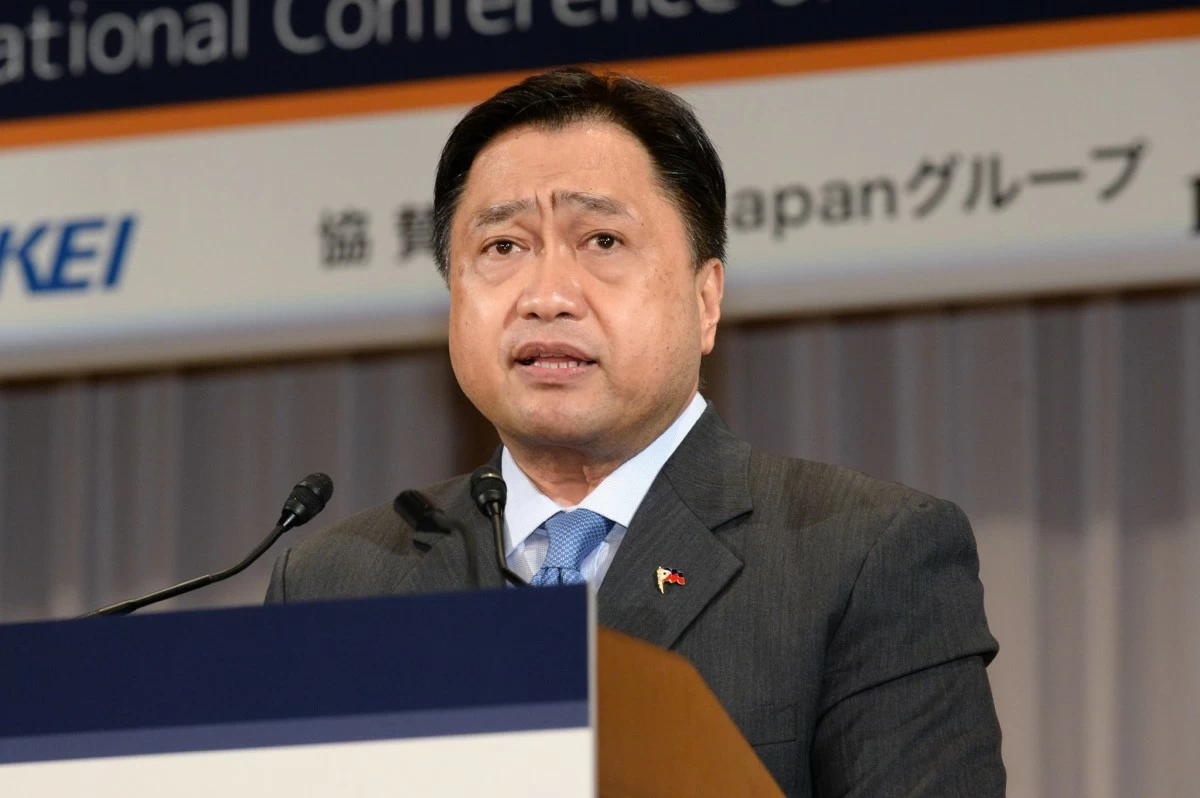
Former Finance Secretary Cesar V. Purisima
To combat what he calls “systemic weakness,” former Finance Secretary Cesar V. Purisima is urging the government to adopt bold financial reform agenda, including cash transaction limits and demonetization, to fight corruption at its source.
In a recent social media post, Purisima, who served as finance chief under the Aquino administration, argued that the country’s cash-centric financial system is major enabler of graft, making it easy for bribes and kickbacks to go undetected.
“The recent corruption scandals in the Department of Public Works and Highways (DPWH) have once again laid bare a systemic weakness in the Philippines’ fight against graft: the role of cash," Purisima wrote on his Facebook.
He said that as long as cash remains “untraceable, untaxed, and invisible to regulators,” corruption will “always find a way.” The former finance chief added that superficial reforms like administrative reshuffles are not enough.
"If we are serious about curbing corruption, not just in DPWH but across government, we need to go beyond administrative reshuffles and lifestyle checks,” he stated. “We must target the financial lifeblood of corruption: the ease with which large sums of money can be moved around in cash.”
Purisima proposed a five-point plan, drawing on anti-corruption measures successfully implemented in other countries. These include setting legal limits on high-value cash transactions, mandating the reporting of large cash withdrawals, and reducing the highest denomination of currency in circulation.
He noted that in the European Union, cash payments are capped at €10,000, and in some countries like France and Spain, the limit is even lower.
“These restrictions make it significantly harder to deliver bribes in plain envelopes or bags of cash,” Purisima said, urging the Philippines to follow suit to “force large transactions into the banking system, where they leave an audit trail.”
Purisima also called for an update to the country’s Anti-Money Laundering Act (AMLA) to close a critical “blind spot”: large cash withdrawals.
He cited the United States (US) Bank Secrecy Act, which requires financial institutions to automatically flag withdrawals or deposits above $10,000. Implementing a similar system in the Philippines, he said, would allow regulators to “monitor the outflows that often precede corruption payoffs.”
To make large-scale payoffs more logistically difficult, Purisima also suggested that the Bangko Sentral ng Pilipinas (BSP) consider reducing the highest denomination from ₱1,000 to ₱500 or even ₱200.
“Moving ₱10 million in ₱1,000 bills requires just 10,000 notes,” he explained, “but in ₱200 bills, it requires 50,000, dramatically increasing the logistical risk and visibility of large-scale corruption.”
He cited the European Central Bank’s decision to phase out the €500 note, nicknamed the “Bin Laden note” for its popularity in illicit trade, as a successful precedent.
The former finance secretary also proposed regular “demonetization cycles,” as practiced in countries like Singapore and Switzerland, to prevent cash from being hoarded indefinitely.
A periodic recall and redesign of old notes, perhaps every seven to 10 years, would compel individuals with undeclared funds to either exchange them or lose their value, he said.
Ultimately, Purisima said the most powerful long-term solution is to shift away from cash altogether.
“For the Philippines, encouraging digital payments, particularly in government procurement and infrastructure projects, would ensure transactions are auditable, transparent, and far harder to manipulate,” he stated.
He also called for a “unique unified digital ID number” to help modernize the economy and “starve corruption of its favorite currency.”
However, Purisima admitted that critics might argue such reforms would inconvenience ordinary citizens.
"Critics will argue that such reforms may inconvenience ordinary citizens who rely on cash,” Purisima said.
“But the truth is that everyday Filipinos rarely deal with transactions in the tens of thousands, much less millions. It is precisely the politically connected and those engaged in large-scale illicit deals who benefit most from an unrestricted cash system,” he concluded.