






Manila Bulletin
 Business
Trade & Industry
Electronic exports to see modest growth despite tariff threats
Business
Trade & Industry
Electronic exports to see modest growth despite tariff threats
Business
Trade & Industry
Electronic exports to see modest growth despite tariff threats
Electronic exports to see modest growth despite tariff threats
Published Sep 10, 2025 03:05 pm


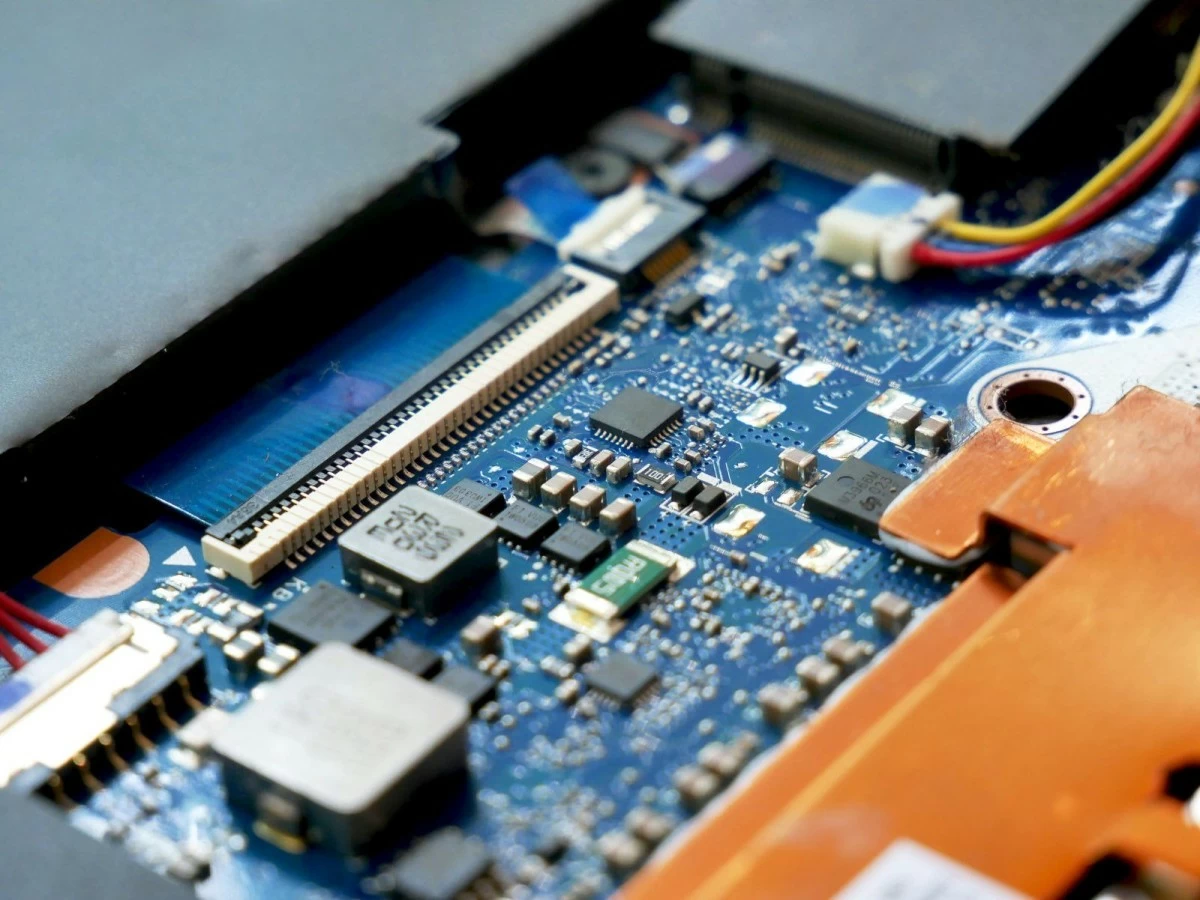
The country’s electronic exports is projected to remain flat with a potential to undergo a modest one to two percent growth this year, even if the United States (US) moves to impose high tariffs against foreign-made conductors.
Semiconductor and Electronics Industries in the Philippines Foundation Inc. (SEIPI) President Danilo Lachica told reporters that the group is sticking to its initial projection of a flat growth from last year’s electronic exports valued at $42.6 billion.
Lachica, however, said that it could also grow by at least two percent this year.
He said this optimism was based on the export performance in the first half, which stood at $23.56 billion or six percent higher than $22.34 billion in the same period last year.
Based on data from the Philippine Statistics Authority (PSA), electronic exports accounted for 57.12 percent of the country’s total exports.
“If you linearize that to the end of the year, it's going to be more than the $42.6 billion,” said Lachica.
“But then again, a lot of things can happen. With all the geopolitical uncertainties and [US President Donald] Trump, so I’d be prudent to just say it's flat with some optimism for modest growth,” he added.
Last week, Trump once again floated the prospect of imposing tariffs on companies that would not shift their operations to the US. Without giving an exact date, he said this will be imposed “very shortly.”
Trump earlier announced that he will impose 100 percent tariffs on semiconductor imports, with exceptions for companies that manufacture in the US or have committed to doing so.
He later adjusted this threat by saying that it could potentially reach 200 percent and even 300 percent.
The tariffs are part of the US’ hard pivot to protectionist policies since Trump returned to power earlier this year. Philippine goods are currently facing a 19-percent reciprocal tariff.
HSBC Asia Economics Associate Director Ines Lam said during the 23rd International CEO Conference that the impact of such tariffs will be “significant” on the country, given that electronics are half of its exports.
Lam noted that exports have only been performing well because they are still currently exempt from higher taxes.
She said front-loading also played a key role in boosting exports as American companies rushed to bring in the crucial components before the export-wide tariffs took effect last month.
“That was what’s pushing Asian exports higher in the past few months,” she said.
Special Assistant to the President for Investment and Economic Affairs Secretary Frederick Go said last month that the government will negotiate for zero tariffs on the country’s semiconductor exports.
Go is hoping that the US will view the local industry’s focus on assembly, testing, and packaging of semiconductors as something that it “may not really want to do.”
Remaining optimistic, Lachica said he is confident that the US will not impose the tariffs this year.
“I don't think it'll happen this year. So we'll just continue doing what we do, producing the chips based on the demand,” he said.
Nonetheless, if the tariffs are imposed, the official said the impact of the new taxes will not immediately dampen the industry’s outlook this year.
He explained that the levy, which could reach as high as 300 percent, would not be felt overnight but rather over the course of three to six months.
As such, the impact would likely be felt by the country’s electronic exports next year.
Lachica said the local industry has been actively engaging the country’s trade partners to diversify its market beyond the US and into Europe and Southeast Asia.
He said this would also require the government to ramp up its investment promotion to entice foreign capital into the country, making sure that the domestic industry can meet the demand of rising technologies.
Lam said in her presentation that artificial intelligence (AI) has been driving up demand for electronics within Asia.
Lachica said the industry could continue growing if it could compete for the semiconductor needs of companies engaged with AI and other technologies.