ADVERTISEMENT

CanvasCon Philippines 2025 highlights AI in higher education, digital learning, and edtech innovation

Published Sep 10, 2025 01:09 pm
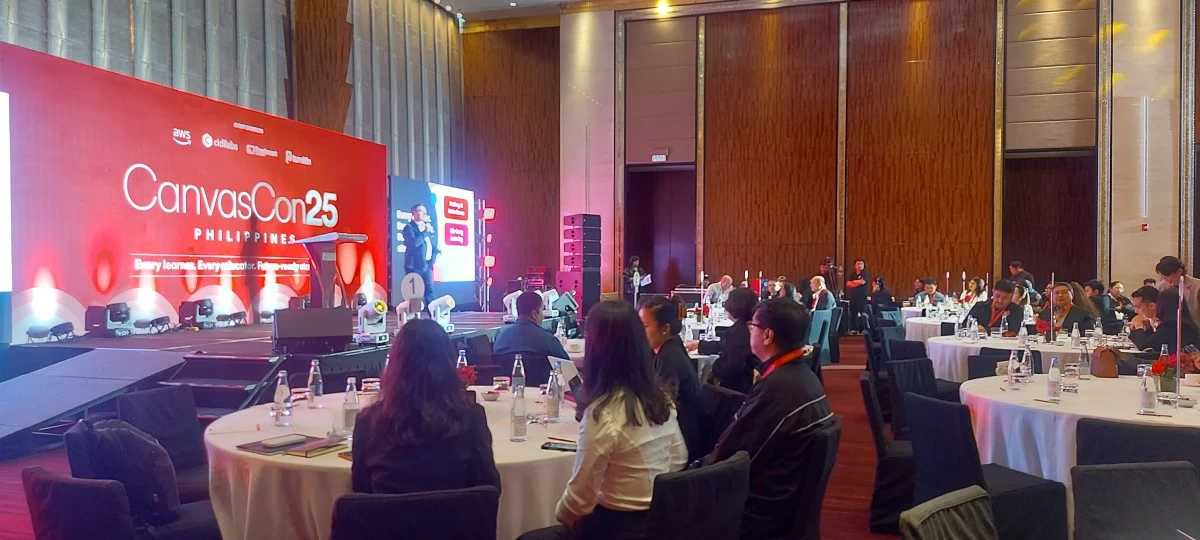
Instructure hosts CanvasCon Philippines 2025 at the Grand Hyatt Manila on September 10, 2025 spotlighting AI, digital learning, and future-ready education with top global and local experts. (Merlina Hernando-Malipot / Manila Bulletin)
Educators, administrators, and thought leaders from across the Philippines and abroad gathered on Wednesday, September 10, for CanvasCon Philippines 2025 to explore the future of AI in higher education, digital learning trends, and education technology innovation.
The one-day event, hosted by Instructure, the global edtech company behind the widely used Canvas Learning Management System (LMS), took place at the Grand Hyatt Manila in Bonifacio Global City, Taguig.
The program featured keynote addresses, panel discussions, and networking sessions focused on building future-ready, inclusive, and technology-driven education systems.
Key themes and discussions
CanvasCon 2025 emphasized clarity—cutting through buzzwords to deliver practical insights, real educator experiences, and proven digital learning solutions.
One major theme was the rise of agentic AI, showcasing how learning management systems like Canvas LMS can harness artificial intelligence to transform learning experiences.
The conference also addressed the future of work.  With the World Economic Forum projecting that 39% of workers’ core skills will change by 2030, education leaders discussed how universities and vocational institutions can integrate AI, rethink assessment, and strengthen student competitiveness both locally and globally.
Another important discussion focused on inclusive learner pathways—designing flexible, student-centered systems that adapt to evolving learner needs.
Distinguished speakers and panelists
The conference brought together top education and technology leaders.
Commission on Higher Education (CHED) Commissioner Dr. Ethel Agnes Pascua-Valenzuela delivered the opening keynote.
“When we talk about AI, it often feels like we're standing in the middle of a whirlwind—things are moving fast,” Valenzuela said.
She explained that in the Philippines, as in most countries, AI is already embedded in multiple aspects of daily life—not just in education.
Recognizing that AI is “no longer the future, it’s here,” Valenzuela highlighted the Philippine government’s AI Workforce Development Plan.
Despite rapid technological developments, she stressed: “We cannot be replaced by AI, but it can empower us. AI can help us.”
Instructure Vice President for Global Academic Strategy Ryan Lufkin echoed this message, noting that “AI can never replace educators.”
Other distinguished speakers included Instructure Managing Director for APAC Harrison Kelly, The Bean Center CEO Martin Bean, Holy Angel University OIC President Leopoldo Valdez and FEU Roosevelt Senior Vice President Alma Emerita V. De La Cruz.
The highlight panel, “Today’s Learner Journey, Reimagined,” to be held later in the afternoon will explore how technology enables more connected, flexible, and inclusive learning experiences for diverse student populations.
Event highlights
Participants joined sessions on AI in education, digital transformation, and innovative assessment strategies.
They also engaged in networking with innovators across Asia, explored practical strategies to simplify education systems, and enjoyed interactive activities and exclusive CanvasCon 2025 merchandise.
As the maker of Canvas LMS, Kelly explained that Instructure continues to lead digital transformation in Philippine education by supporting scalable, inclusive, and innovative learning solutions trusted by top universities worldwide.

Related Tags

CanvasCon Philippines 2025 AI in higher education Philippines digital learning trends 2025 Canvas LMS Philippines education technology conference Manila agentic AI in education future of work skills 2030
ADVERTISEMENT
.most-popular .layout-ratio{ padding-bottom: 79.13%; } @media (min-width: 768px) and (max-width: 1024px) { .widget-title { font-size: 15px !important; } }

{{ articles_filter_1561_widget.title }}

.most-popular .layout-ratio{ padding-bottom: 79.13%; } @media (min-width: 768px) and (max-width: 1024px) { .widget-title { font-size: 15px !important; } }

{{ articles_filter_1562_widget.title }}

.most-popular .layout-ratio{ padding-bottom: 79.13%; } @media (min-width: 768px) and (max-width: 1024px) { .widget-title { font-size: 15px !important; } }

{{ articles_filter_1563_widget.title }}

{{ articles_filter_1564_widget.title }}

.mb-article-details { position: relative; } .mb-article-details .article-body-preview, .mb-article-details .article-body-summary{ font-size: 17px; line-height: 30px; font-family: "Libre Caslon Text", serif; color: #000; } .mb-article-details .article-body-preview iframe , .mb-article-details .article-body-summary iframe{ width: 100%; margin: auto; } .read-more-background { background: linear-gradient(180deg, color(display-p3 1.000 1.000 1.000 / 0) 13.75%, color(display-p3 1.000 1.000 1.000 / 0.8) 30.79%, color(display-p3 1.000 1.000 1.000) 72.5%); position: absolute; height: 200px; width: 100%; bottom: 0; display: flex; justify-content: center; align-items: center; padding: 0; } .read-more-background a{ color: #000; } .read-more-btn { padding: 17px 45px; font-family: Inter; font-weight: 700; font-size: 18px; line-height: 16px; text-align: center; vertical-align: middle; border: 1px solid black; background-color: white; } .hidden { display: none; }
function initializeAllSwipers() { // Get all hidden inputs with cms_article_id document.querySelectorAll('[id^="cms_article_id_"]').forEach(function (input) { const cmsArticleId = input.value; const articleSelector = '#article-' + cmsArticleId + ' .body_images'; const swiperElement = document.querySelector(articleSelector); if (swiperElement && !swiperElement.classList.contains('swiper-initialized')) { new Swiper(articleSelector, { loop: true, pagination: false, navigation: { nextEl: '#article-' + cmsArticleId + ' .swiper-button-next', prevEl: '#article-' + cmsArticleId + ' .swiper-button-prev', }, }); } }); } setTimeout(initializeAllSwipers, 3000); const intersectionObserver = new IntersectionObserver( (entries) => { entries.forEach((entry) => { if (entry.isIntersecting) { const newUrl = entry.target.getAttribute("data-url"); if (newUrl) { history.pushState(null, null, newUrl); let article = entry.target; // Extract metadata const author = article.querySelector('.author-section').textContent.replace('By', '').trim(); const section = article.querySelector('.section-info ').textContent.replace(' ', ' '); const title = article.querySelector('.article-title h1').textContent; // Parse URL for Chartbeat path format const parsedUrl = new URL(newUrl, window.location.origin); const cleanUrl = parsedUrl.host + parsedUrl.pathname; // Update Chartbeat configuration if (typeof window._sf_async_config !== 'undefined') { window._sf_async_config.path = cleanUrl; window._sf_async_config.sections = section; window._sf_async_config.authors = author; } // Track virtual page view with Chartbeat if (typeof pSUPERFLY !== 'undefined' && typeof pSUPERFLY.virtualPage === 'function') { try { pSUPERFLY.virtualPage({ path: cleanUrl, title: title, sections: section, authors: author }); } catch (error) { console.error('ping error', error); } } // Optional: Update document title if (title && title !== document.title) { document.title = title; } } } }); }, { threshold: 0.1 } ); function showArticleBody(button) { const article = button.closest("article"); const summary = article.querySelector(".article-body-summary"); const body = article.querySelector(".article-body-preview"); const readMoreSection = article.querySelector(".read-more-background"); // Hide summary and read-more section summary.style.display = "none"; readMoreSection.style.display = "none"; // Show the full article body body.classList.remove("hidden"); } document.addEventListener("DOMContentLoaded", () => { let loadCount = 0; // Track how many times articles are loaded const offset = [1, 2, 3, 4, 5, 6, 7, 8, 9, 10]; // Offset values const currentUrl = window.location.pathname.substring(1); let isLoading = false; // Prevent multiple calls if (!currentUrl) { console.log("Current URL is invalid."); return; } const sentinel = document.getElementById("load-more-sentinel"); if (!sentinel) { console.log("Sentinel element not found."); return; } function isSentinelVisible() { const rect = sentinel.getBoundingClientRect(); return ( rect.top < window.innerHeight && rect.bottom >= 0 ); } function onScroll() { if (isLoading) return; if (isSentinelVisible()) { if (loadCount >= offset.length) { console.log("Maximum load attempts reached."); window.removeEventListener("scroll", onScroll); return; } isLoading = true; const currentOffset = offset[loadCount]; window.loadMoreItems().then(() => { let article = document.querySelector('#widget_1690 > div:nth-last-of-type(2) article'); intersectionObserver.observe(article) loadCount++; }).catch(error => { console.error("Error loading more items:", error); }).finally(() => { isLoading = false; }); } } window.addEventListener("scroll", onScroll); });

Sign up by email to receive news.