ADVERTISEMENT

PH shipbuilding: Rising from skilled hands to global competitiveness

Published Sep 9, 2025 12:05 am  |  Updated Sep 8, 2025 06:14 pm
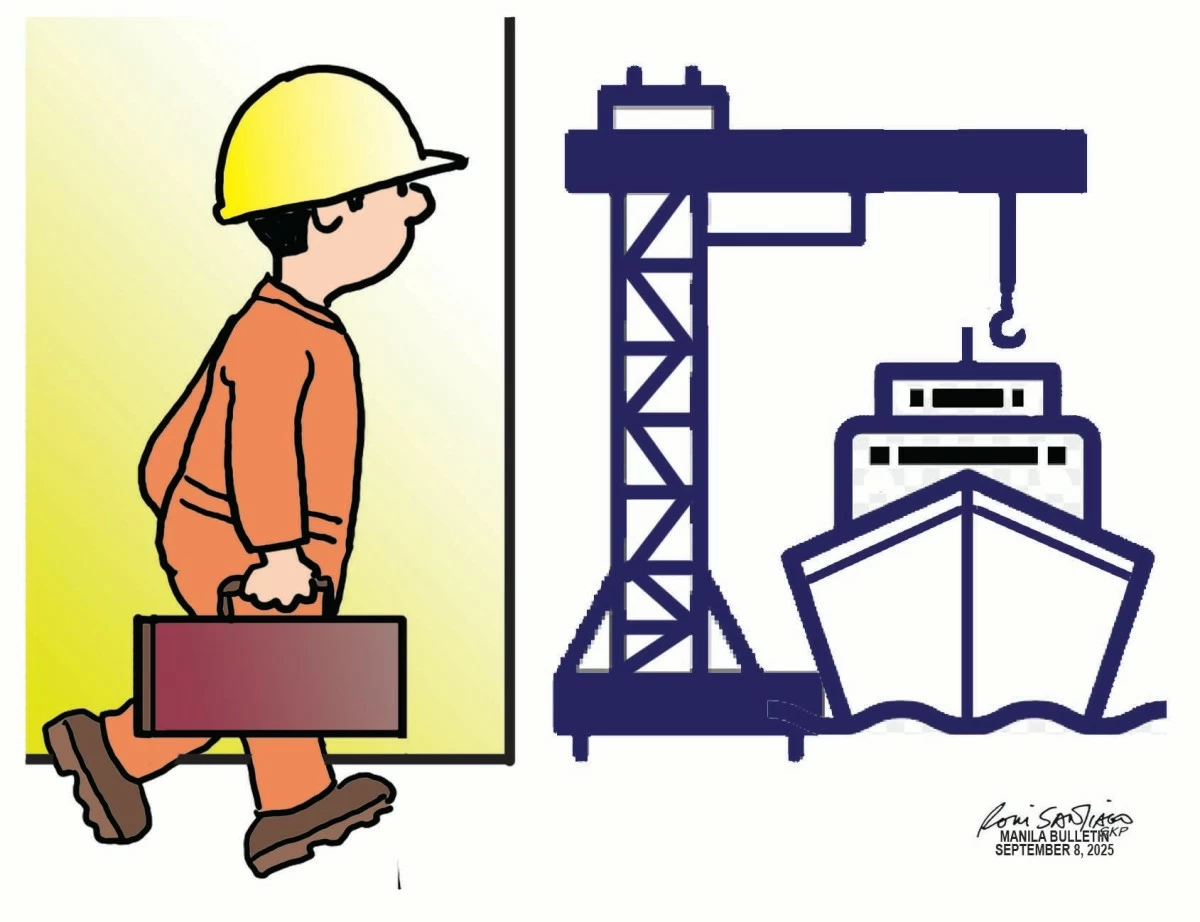
Last week, President Marcos proclaimed at the inauguration of the HD Hyundai Shipyard in Subic, Zambales, that aside from having talented seafarers, the Philippines is back on track toward reviving its shipbuilding industry and raising its caliber to world class competitiveness. Indeed, the country’s lofty aspirations must reach beyond its vaunted strength in skilled labor.
The Chief Executive recalled that from 2014 to 2018, the Philippines had been producing up to two million gross tons of ships annually, before the industry’s momentum slowed in 2019. As he welcomed Hyundai Heavy Industries’ investment, he pointed out that the Subic shipyard’s capacity will be doubled from 1.3 million to 2.5 million deadweight tons. This translates into a shipbuilding capacity of up to eight massive oil tankers yearly.
Indeed, the establishment of state-of-the -art infrastructure and modernized shipyards is imperative. These yards must mobilize their modular block construction capabilities, real time workflow monitoring, augmented and digital design systems, and streamlined logistics processes that are the hallmarks of leading shipbuilding nations like South Korea and Japan.
Closely tied to physical infrastructure is the need for tech enabled shipyards that integrate Industry 4.0 innovations. Automation, augmented reality assistance, smart tracking systems, and digital process control are redefining efficiency and precision in global ship production.
A strong, resilient supply chain is equally critical. The Philippines’ shipbuilders depend heavily on imported materials and parts, as vetted by the International Association of Certified Suppliers (IACS), considering that qualified local suppliers are sparse. Nurturing local ancillary industries — namely steel fabrication, component manufacturing, and maritime electronics — through supplier clustering and incentives would create cost effective, reliable domestic support.
Moreover, financial incentives and investment policy are critically important. To modernize shipyards and attract foreign partners, the government must streamline fiscal support—promoting tax relief, VAT exemptions, reduced duties, and access to long term capital—under laws such as the Corporate Recovery and Tax Incentives for Enterprises (CREATE) Act and similar legislative bills that are still in the pipeline.
Our natural geography is a priceless asset. With over 36,000 kilometers of coastline, deep water ports, sheltered straits ideal for sea trials, and proximity to shipping giants Japan, Korea, and China, the Philippines is strategically positioned to develop into a regional shipbuilding hub.
Yet efficiency alone is not enough. Standards, quality, and global trust must be ingrained. Establishing and enforcing shipyard safety, environmental, and quality standards — such as ISO-certification, safety management, quality assurance — is a non-negotiable step toward attaining international credibility.
Long-term sustainability must be grounded in institutional and human capital development. Continuous professional training—especially in welding, marine electricity, naval architecture, and computer-aided design — and retaining talent must be complemented by robust coordination among TESDA, CHED, MARINA, and industry partners like Hyundai. Additionally, transferring and optimizing experiential knowledge through digital tools can mitigate attrition of skilled professionals.
Finally, we must niche strategically. Instead of competing with giants in bulk carriers, the Philippines can focus on areas like small- to medium-size vessels, component systems, hull design, or green and emission-friendly craft. This is simply leveraging what we do best.
In sum, while our nation’s skilled workforce is the bedrock, true global competitiveness in shipbuilding hinges on comprehensive modernization: infrastructure, digital transformation, supply chain integrity, financial enabling environment, high standards, workforce development, and strategic specialization.
ADVERTISEMENT
.most-popular .layout-ratio{ padding-bottom: 79.13%; } @media (min-width: 768px) and (max-width: 1024px) { .widget-title { font-size: 15px !important; } }

{{ articles_filter_1561_widget.title }}

.most-popular .layout-ratio{ padding-bottom: 79.13%; } @media (min-width: 768px) and (max-width: 1024px) { .widget-title { font-size: 15px !important; } }

{{ articles_filter_1562_widget.title }}

.most-popular .layout-ratio{ padding-bottom: 79.13%; } @media (min-width: 768px) and (max-width: 1024px) { .widget-title { font-size: 15px !important; } }

{{ articles_filter_1563_widget.title }}

{{ articles_filter_1564_widget.title }}

.mb-article-details { position: relative; } .mb-article-details .article-body-preview, .mb-article-details .article-body-summary{ font-size: 17px; line-height: 30px; font-family: "Libre Caslon Text", serif; color: #000; } .mb-article-details .article-body-preview iframe , .mb-article-details .article-body-summary iframe{ width: 100%; margin: auto; } .read-more-background { background: linear-gradient(180deg, color(display-p3 1.000 1.000 1.000 / 0) 13.75%, color(display-p3 1.000 1.000 1.000 / 0.8) 30.79%, color(display-p3 1.000 1.000 1.000) 72.5%); position: absolute; height: 200px; width: 100%; bottom: 0; display: flex; justify-content: center; align-items: center; padding: 0; } .read-more-background a{ color: #000; } .read-more-btn { padding: 17px 45px; font-family: Inter; font-weight: 700; font-size: 18px; line-height: 16px; text-align: center; vertical-align: middle; border: 1px solid black; background-color: white; } .hidden { display: none; }
function initializeAllSwipers() { // Get all hidden inputs with cms_article_id document.querySelectorAll('[id^="cms_article_id_"]').forEach(function (input) { const cmsArticleId = input.value; const articleSelector = '#article-' + cmsArticleId + ' .body_images'; const swiperElement = document.querySelector(articleSelector); if (swiperElement && !swiperElement.classList.contains('swiper-initialized')) { new Swiper(articleSelector, { loop: true, pagination: false, navigation: { nextEl: '#article-' + cmsArticleId + ' .swiper-button-next', prevEl: '#article-' + cmsArticleId + ' .swiper-button-prev', }, }); } }); } setTimeout(initializeAllSwipers, 3000); const intersectionObserver = new IntersectionObserver( (entries) => { entries.forEach((entry) => { if (entry.isIntersecting) { const newUrl = entry.target.getAttribute("data-url"); if (newUrl) { history.pushState(null, null, newUrl); let article = entry.target; // Extract metadata const author = article.querySelector('.author-section').textContent.replace('By', '').trim(); const section = article.querySelector('.section-info ').textContent.replace(' ', ' '); const title = article.querySelector('.article-title h1').textContent; // Parse URL for Chartbeat path format const parsedUrl = new URL(newUrl, window.location.origin); const cleanUrl = parsedUrl.host + parsedUrl.pathname; // Update Chartbeat configuration if (typeof window._sf_async_config !== 'undefined') { window._sf_async_config.path = cleanUrl; window._sf_async_config.sections = section; window._sf_async_config.authors = author; } // Track virtual page view with Chartbeat if (typeof pSUPERFLY !== 'undefined' && typeof pSUPERFLY.virtualPage === 'function') { try { pSUPERFLY.virtualPage({ path: cleanUrl, title: title, sections: section, authors: author }); } catch (error) { console.error('ping error', error); } } // Optional: Update document title if (title && title !== document.title) { document.title = title; } } } }); }, { threshold: 0.1 } ); function showArticleBody(button) { const article = button.closest("article"); const summary = article.querySelector(".article-body-summary"); const body = article.querySelector(".article-body-preview"); const readMoreSection = article.querySelector(".read-more-background"); // Hide summary and read-more section summary.style.display = "none"; readMoreSection.style.display = "none"; // Show the full article body body.classList.remove("hidden"); } document.addEventListener("DOMContentLoaded", () => { let loadCount = 0; // Track how many times articles are loaded const offset = [1, 2, 3, 4, 5, 6, 7, 8, 9, 10]; // Offset values const currentUrl = window.location.pathname.substring(1); let isLoading = false; // Prevent multiple calls if (!currentUrl) { console.log("Current URL is invalid."); return; } const sentinel = document.getElementById("load-more-sentinel"); if (!sentinel) { console.log("Sentinel element not found."); return; } function isSentinelVisible() { const rect = sentinel.getBoundingClientRect(); return ( rect.top < window.innerHeight && rect.bottom >= 0 ); } function onScroll() { if (isLoading) return; if (isSentinelVisible()) { if (loadCount >= offset.length) { console.log("Maximum load attempts reached."); window.removeEventListener("scroll", onScroll); return; } isLoading = true; const currentOffset = offset[loadCount]; window.loadMoreItems().then(() => { let article = document.querySelector('#widget_1690 > div:nth-last-of-type(2) article'); intersectionObserver.observe(article) loadCount++; }).catch(error => { console.error("Error loading more items:", error); }).finally(() => { isLoading = false; }); } } window.addEventListener("scroll", onScroll); });

Sign up by email to receive news.