






Manila Bulletin
 Business
Trade & Industry
HSBC: Philippines' advantage lies in its people, not factories
Business
Trade & Industry
HSBC: Philippines' advantage lies in its people, not factories
Business
Trade & Industry
HSBC: Philippines' advantage lies in its people, not factories
HSBC: Philippines' advantage lies in its people, not factories
Published Sep 9, 2025 03:43 pm


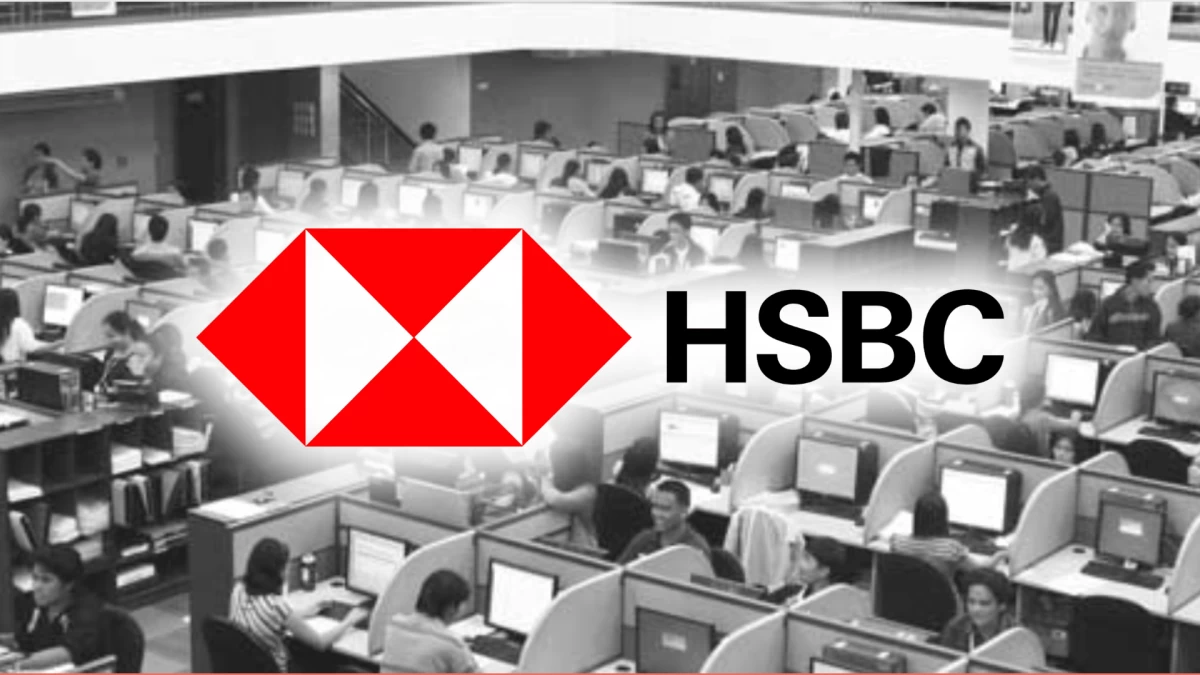
The Philippines should leverage its services sector to stand out in the global investment landscape, as competition with manufacturing-led economies is well out of reach, according to an HSBC economist.
The country has been lagging behind its peers in Southeast Asia in terms of attracting foreign investments.
Last year, the Philippines secured the sixth spot in the region, trailing behind Singapore, Indonesia, Vietnam, Malaysia, and Thailand, according to the report from the United Nations Conference on Trade and Development (UNCTAD).
This trend is expected to continue this year amid uncertainties in global trade and especially due to the country’s relatively low manufacturing activity.
HSBC Asia Economics Associate Director Ines Lam said the limited scale of the manufacturing sector in the Philippines hinders its ability to draw foreign capital.
Lam explained that attempting to be competitive in manufacturing at this late stage could ultimately be ineffective and counter to the government’s efforts to secure investments.
“Everyone wants to get a piece of the global supply chain. Everyone wants to be a supplier to Apple. But for the Philippines, I think the Philippines' unique value proposition is its people and soft skills,” she said during the 23rd International CEO Conference hosted by the Management Association of the Philippines (MAP).
Instead of trying to catch up in manufacturing, Lam said the country could instead shift its focus to strengthening its services sector, in which it has an advantage compared to regional partners.
The economist said upskilling the country’s talented pool of workers is a critical component in boosting the sector. She noted that the educational proficiency and English expertise of Filipino workers are the top qualities sought by global employers and investors.
“I'm not saying that manufacturing is not important, but because the Philippines has already found its advantage, I think it's important that the Philippines does not lose this,” said Lam.
“You provide something new and you improve your offerings in terms of BPO (business process outsourcing) and exports of services. Then, that will help the Philippines to stand out in this world,” she added.
British research firm BMI said last month that the country’s BPO industry accounts for 7.5 percent of the local economy and 15 percent of the global outsourcing market.
BMI noted that this heavy reliance makes the country highly exposed to a weak global services environment or when demand for BPO dips. The growing popularity of artificial intelligence (AI) is another threat to the industry.
Lam posited that the threat of AI should compel the industry to further refine its services to meet the demands of a fast-changing world.
For instance, she said AI could help the industry increase specialization in certain sectors, upskill workers, and transition to higher-value-added sectors instead of relying solely on customer service.
Data from the Philippine Statistics Authority (PSA) showed that the services sector posted a 6.9 percent growth in the second quarter, maintaining the same growth rate as in the same period last year.
Lam is expecting a decline in foreign direct investments (FDI) in the second half of the year largely due to uncertainties involving the tariff policy of the United States (US).
As such, aside from improving its services sector, she said it is critical for the government to secure new free trade agreements to facilitate the entry of more investments into other countries. To recall, the US is imposing a 19 percent tariff rate on Philippine goods.
From January to May, net inflows of FDI fell 27 percent to $2.96 billion from $4.04 billion during the same period last year, according to the Bangko Sentral ng Pilipinas (BSP).
MAP President Al Panlilio acknowledged that developing the services sector is critical in making the Philippines an attractive investment hub.
However, he argued that concentrating only on the sector could be counterproductive for the country, as it is vulnerable to sudden shifts, unlike manufacturing facilities, which are built for long-term stability.
“I don't completely agree that you shouldn't focus on [manufacturing]. I think we should try to have companies invest because when you say manufacturing, they invest in the country. And once they invest billions in the country, it's long-term,” Panlilio told reporters.