ADVERTISEMENT

Why Paraiba tourmaline is the next must-have gem in your jewelry box

Coveted for its neon blue glow and unmatched rarity, Paraiba is redefining modern luxury

Published Sep 8, 2025 03:55 pm  |  Updated Sep 14, 2025 01:05 pm
When it comes to truly opulent Hollywood fashion, nothing beats the spectacle of the awards season red carpet. It’s where glamour reigns supreme through elegant gowns and sharp tuxedos. Equally hard to miss are the dazzling statement jewels adorning the stars. At this year’s Golden Globes, one piece that stole the spotlight was the Bulgari necklace draped around Zendaya’s neck. The design featured 48 carats of diamonds, highlighted by a striking 31-carat Paraiba tourmaline that added both color and sparkle.

Zendaya wearing a Bulgari necklace featuring Paraiba tourmaline
In recent years, Paraiba tourmalines have appeared in many fine jewelry collections—from Dior’s “Diorama” and “Diorigami” high jewelry lines to Swiss jeweler Boghossian’s “Palace Voyages” collection. According to London jeweler David Morris, the Paraiba tourmaline was first discovered in the 1980s, unearthed in a rugged hill in Paraiba, Brazil—hence the gemstone’s name. Later, deposits were also found in Nigeria and Mozambique, but those sourced in Brazil remain the most coveted of all.
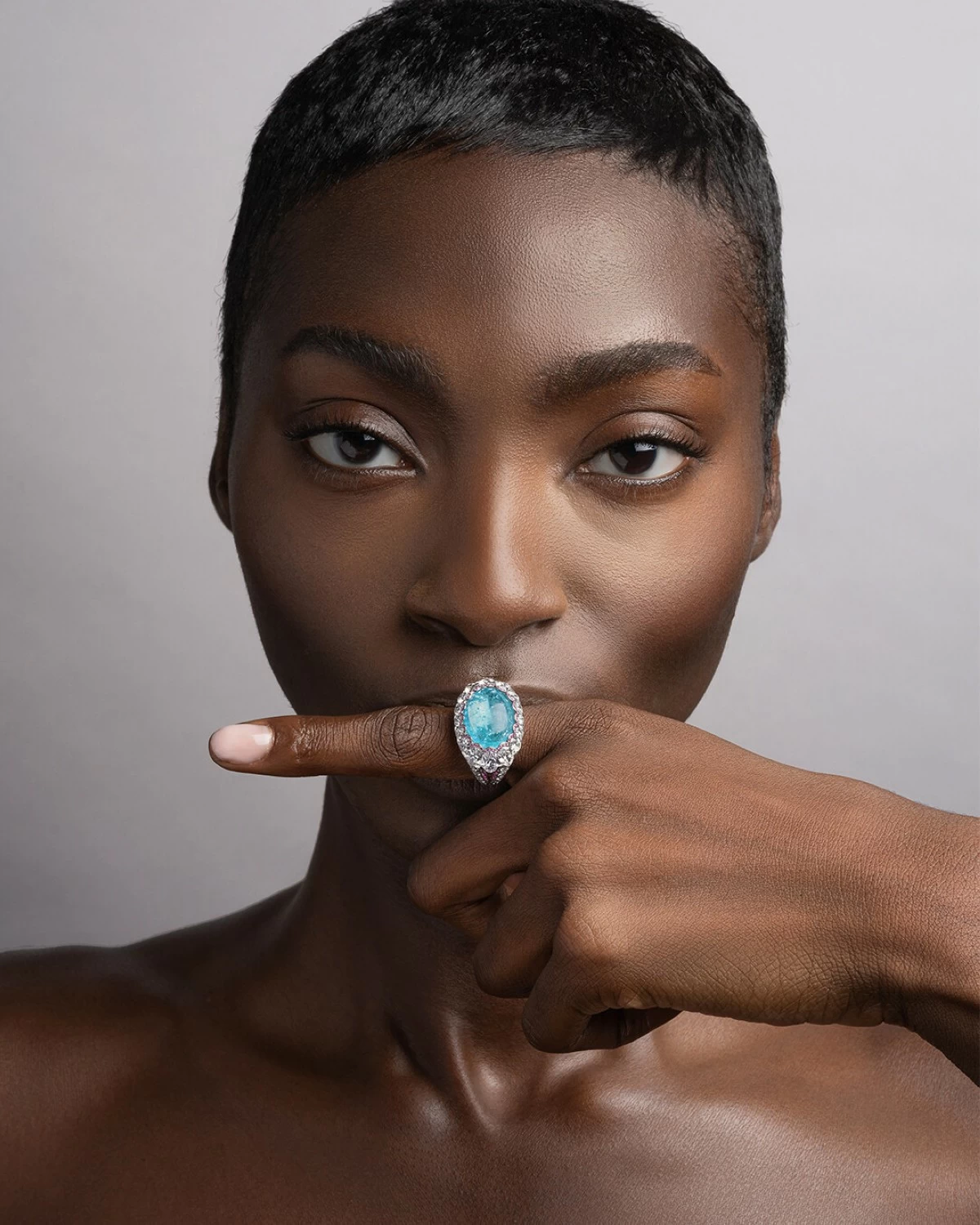
David Morris' Neptune High Jewellery ring
What makes Paraiba stand out among other tourmaline varieties is its electric blue hue, caused by copper and manganese in its crystal structure. Its color is so captivating that many have described it as “a piece of the Caribbean Sea trapped in a gemstone.” Adding to its allure is its extreme rarity, with some reports estimating just one is found for every 10,000 diamonds.
With such scarcity, owning a natural Paraiba tourmaline comes with an equally striking price tag. But one homegrown jewelry brand is now offering a lab-created alternative that mirrors the vibrant hues of the earth-mined gem.
For its second anniversary, Davao-based brand Pristine Paradigm unveiled its latest collection, showcasing three new lab-grown gemstones: Lab Alexandrite, Lab Aquamarine, and Lab Paraiba. Co-founded by Katriana Batu and Juni Rollan, the brand continues to pursue its mission of building a movement rooted in community and sustainability.
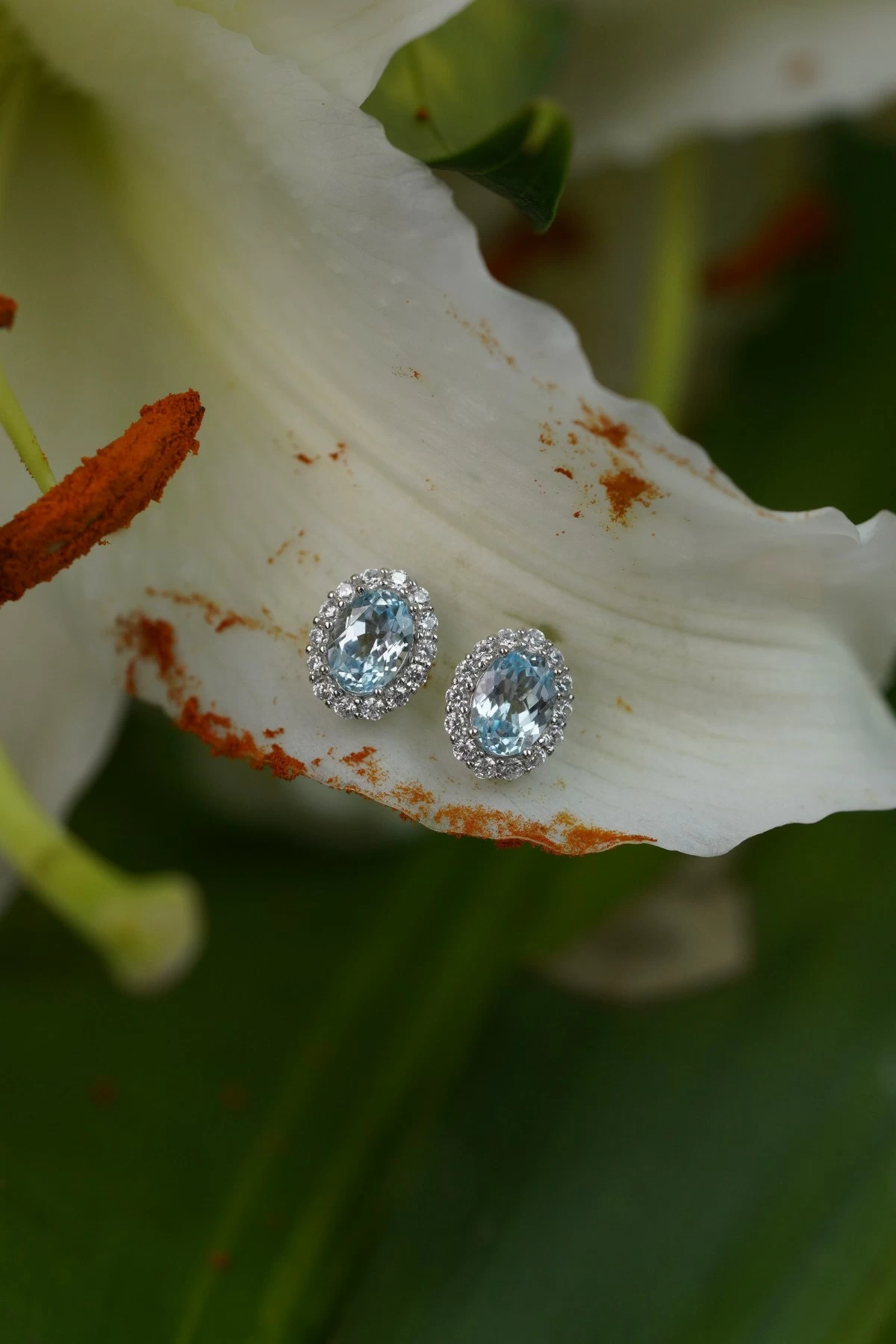
Pristine Paradigm's Lab Aquamarine
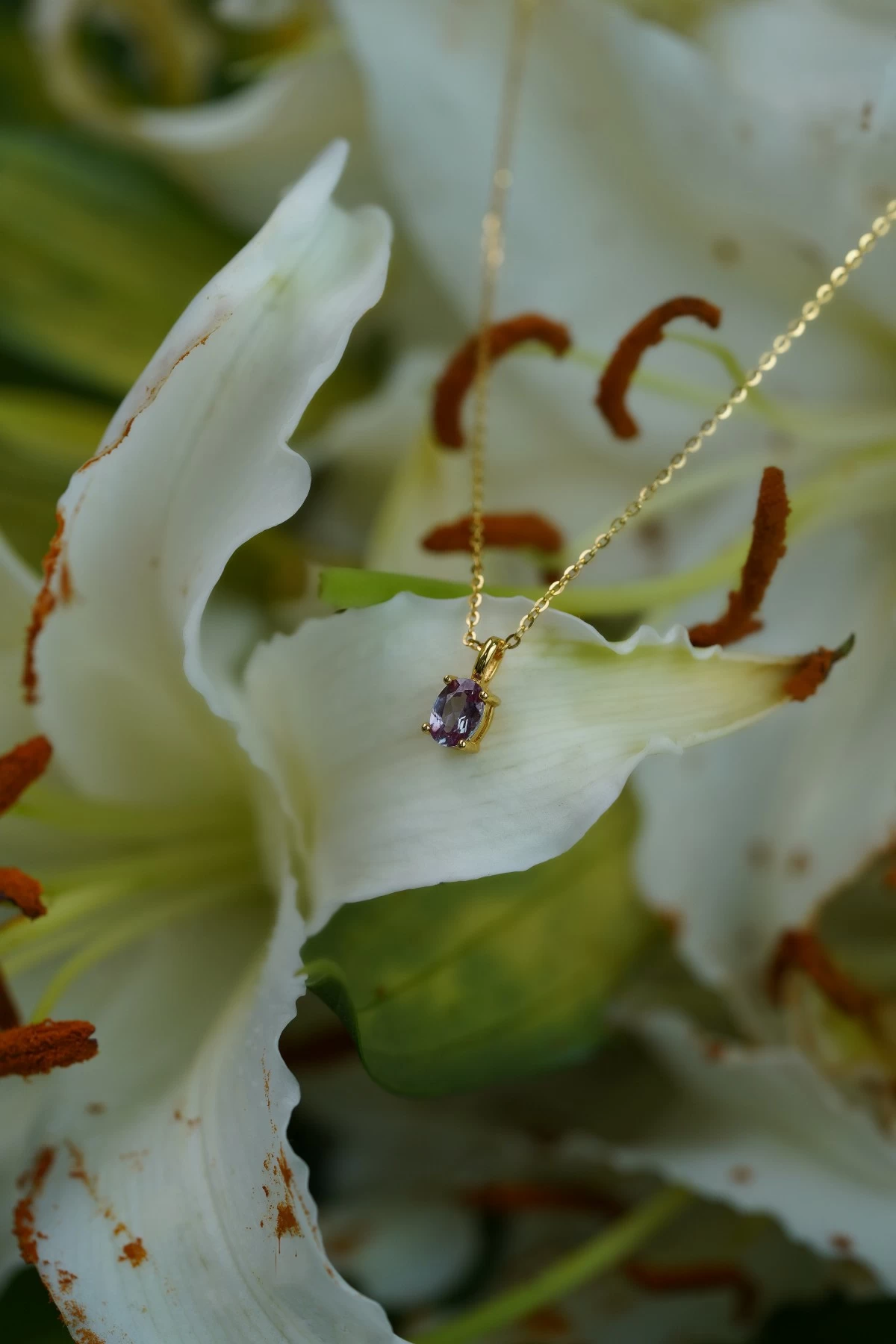
Pristine Paradigm's Lab Alexandrite
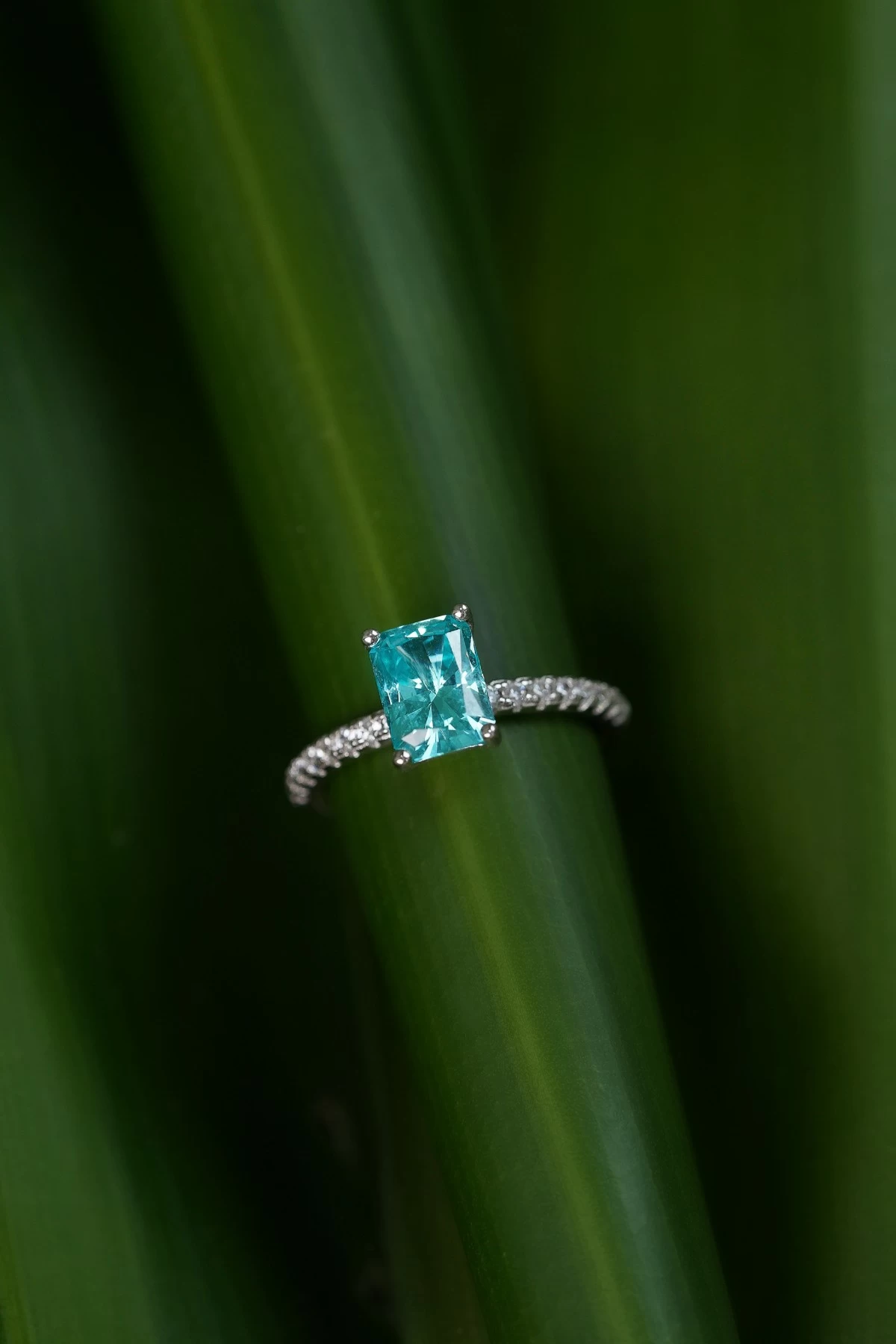
Pristine Paradigm's Lab Paraiba
“The reason why we started Pristine Paradigm is to offer a more sustainable and more ethical alternative for everyone, and that’s why we are here today,” Katriana shared.
“Lab-grown Paraiba is a vibrant neon-blue-to-green gemstone that captures the stunning beauty of its natural counterpart, but without the high cost and environmental impact,” Juni added. “Known for its intense color and rarity, lab-grown Paraiba is a perfect choice for customers looking for something bold and extraordinary.”
Pristine Paradigm also celebrated its second anniversary with the launch of The Pristine Care, its official community engagement arm. Through this initiative, the brand partnered with the Philippine Eagle Foundation—committing that for every engagement ring sold, a tree will be planted, named after the customer, and tracked via PEF’s “Track Your Tree” platform.
“We’ve always believed in intentional growth,” Juni reflected. “We want every milestone to reflect our values and to involve the people who’ve believed in us from day one. To us, this means we’ve built something meaningful—not just a brand, but a community based on trust. Our transparency in pricing, sourcing, and production has allowed us to grow a loyal audience.”
To learn more about Pristine Paradigm’s new collection, visit pristineparadigm.com and follow @pristine.paradigm on Instagram.

Related Tags

fashion and beauty jewelry Paraiba Tourmaline
ADVERTISEMENT
.most-popular .layout-ratio{ padding-bottom: 79.13%; } @media (min-width: 768px) and (max-width: 1024px) { .widget-title { font-size: 15px !important; } }

{{ articles_filter_1561_widget.title }}

.most-popular .layout-ratio{ padding-bottom: 79.13%; } @media (min-width: 768px) and (max-width: 1024px) { .widget-title { font-size: 15px !important; } }

{{ articles_filter_1562_widget.title }}

.most-popular .layout-ratio{ padding-bottom: 79.13%; } @media (min-width: 768px) and (max-width: 1024px) { .widget-title { font-size: 15px !important; } }

{{ articles_filter_1563_widget.title }}

{{ articles_filter_1564_widget.title }}

.mb-article-details { position: relative; } .mb-article-details .article-body-preview, .mb-article-details .article-body-summary{ font-size: 17px; line-height: 30px; font-family: "Libre Caslon Text", serif; color: #000; } .mb-article-details .article-body-preview iframe , .mb-article-details .article-body-summary iframe{ width: 100%; margin: auto; } .read-more-background { background: linear-gradient(180deg, color(display-p3 1.000 1.000 1.000 / 0) 13.75%, color(display-p3 1.000 1.000 1.000 / 0.8) 30.79%, color(display-p3 1.000 1.000 1.000) 72.5%); position: absolute; height: 200px; width: 100%; bottom: 0; display: flex; justify-content: center; align-items: center; padding: 0; } .read-more-background a{ color: #000; } .read-more-btn { padding: 17px 45px; font-family: Inter; font-weight: 700; font-size: 18px; line-height: 16px; text-align: center; vertical-align: middle; border: 1px solid black; background-color: white; } .hidden { display: none; }
function initializeAllSwipers() { // Get all hidden inputs with cms_article_id document.querySelectorAll('[id^="cms_article_id_"]').forEach(function (input) { const cmsArticleId = input.value; const articleSelector = '#article-' + cmsArticleId + ' .body_images'; const swiperElement = document.querySelector(articleSelector); if (swiperElement && !swiperElement.classList.contains('swiper-initialized')) { new Swiper(articleSelector, { loop: true, pagination: false, navigation: { nextEl: '#article-' + cmsArticleId + ' .swiper-button-next', prevEl: '#article-' + cmsArticleId + ' .swiper-button-prev', }, }); } }); } setTimeout(initializeAllSwipers, 3000); const intersectionObserver = new IntersectionObserver( (entries) => { entries.forEach((entry) => { if (entry.isIntersecting) { const newUrl = entry.target.getAttribute("data-url"); if (newUrl) { history.pushState(null, null, newUrl); let article = entry.target; // Extract metadata const author = article.querySelector('.author-section').textContent.replace('By', '').trim(); const section = article.querySelector('.section-info ').textContent.replace(' ', ' '); const title = article.querySelector('.article-title h1').textContent; // Parse URL for Chartbeat path format const parsedUrl = new URL(newUrl, window.location.origin); const cleanUrl = parsedUrl.host + parsedUrl.pathname; // Update Chartbeat configuration if (typeof window._sf_async_config !== 'undefined') { window._sf_async_config.path = cleanUrl; window._sf_async_config.sections = section; window._sf_async_config.authors = author; } // Track virtual page view with Chartbeat if (typeof pSUPERFLY !== 'undefined' && typeof pSUPERFLY.virtualPage === 'function') { try { pSUPERFLY.virtualPage({ path: cleanUrl, title: title, sections: section, authors: author }); } catch (error) { console.error('ping error', error); } } // Optional: Update document title if (title && title !== document.title) { document.title = title; } } } }); }, { threshold: 0.1 } ); function showArticleBody(button) { const article = button.closest("article"); const summary = article.querySelector(".article-body-summary"); const body = article.querySelector(".article-body-preview"); const readMoreSection = article.querySelector(".read-more-background"); // Hide summary and read-more section summary.style.display = "none"; readMoreSection.style.display = "none"; // Show the full article body body.classList.remove("hidden"); } document.addEventListener("DOMContentLoaded", () => { let loadCount = 0; // Track how many times articles are loaded const offset = [1, 2, 3, 4, 5, 6, 7, 8, 9, 10]; // Offset values const currentUrl = window.location.pathname.substring(1); let isLoading = false; // Prevent multiple calls if (!currentUrl) { console.log("Current URL is invalid."); return; } const sentinel = document.getElementById("load-more-sentinel"); if (!sentinel) { console.log("Sentinel element not found."); return; } function isSentinelVisible() { const rect = sentinel.getBoundingClientRect(); return ( rect.top < window.innerHeight && rect.bottom >= 0 ); } function onScroll() { if (isLoading) return; if (isSentinelVisible()) { if (loadCount >= offset.length) { console.log("Maximum load attempts reached."); window.removeEventListener("scroll", onScroll); return; } isLoading = true; const currentOffset = offset[loadCount]; window.loadMoreItems().then(() => { let article = document.querySelector('#widget_1690 > div:nth-last-of-type(2) article'); intersectionObserver.observe(article) loadCount++; }).catch(error => { console.error("Error loading more items:", error); }).finally(() => { isLoading = false; }); } } window.addEventListener("scroll", onScroll); });

Sign up by email to receive news.