







The Philippines expressed sympathies to Afghanistan after the devastating earthquake and aftershocks last week left more than 2,200 people killed, the Department of Foreign Affairs (DFA) said on Monday, Sept. 8.
PH condoles with Afghanistan after deadly quake
Published Sep 8, 2025 10:31 am


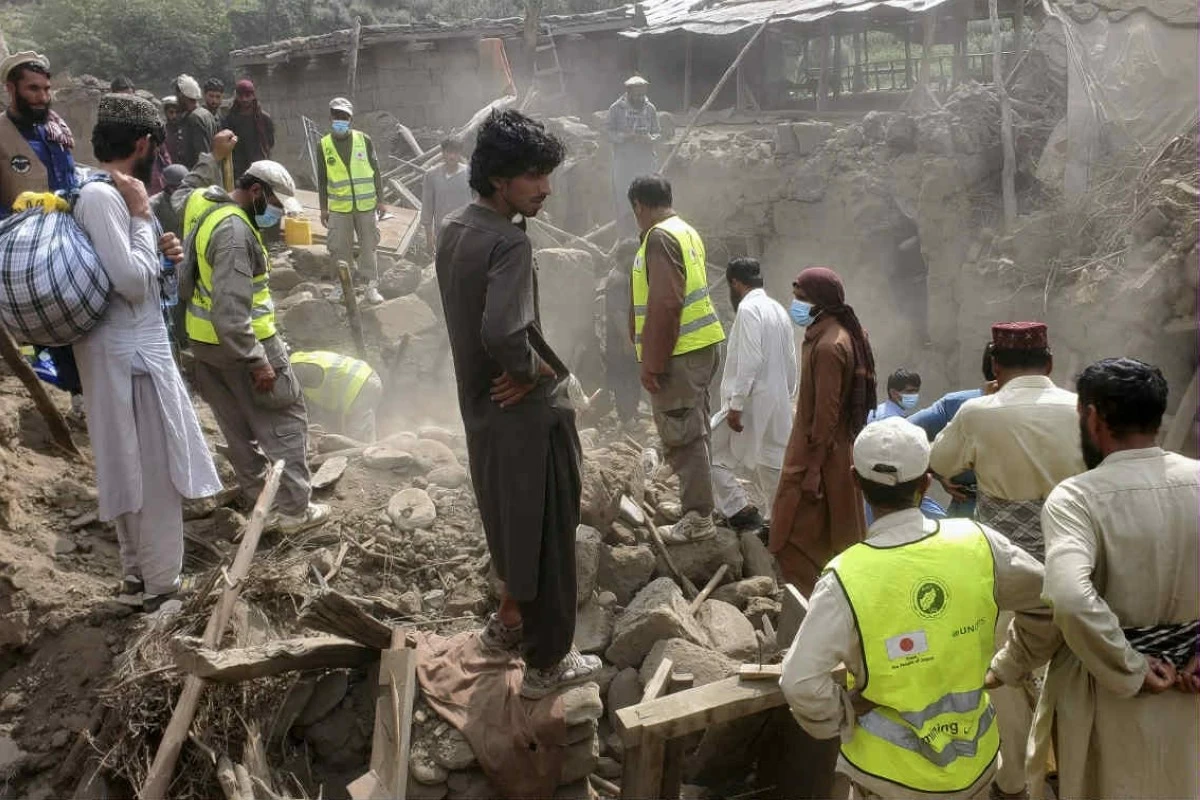
Civil defense workers, locals, and army soldiers clear rubble after a powerful 6.0-magnitude earthquake struck eastern Afghanistan on Sunday, killing many people and destroying villages, in Mazar Dara, Kunar province, Afghanistan on Sept. 2, 2025.(AP Photo/Hedayat Shah)
“The Government and people of the Republic of the Philippines extend their deepest condolences to the people of Afghanistan following the recent earthquake and aftershocks that have claimed many lives and caused widespread suffering,” DFA said in a statement.
“We mourn with Afghan families who have lost loved ones and wish a swift recovery to the injured… Our thoughts and prayers are with the Afghan people as they begin the long process of healing and rebuilding,” it added.
The statement also recognized the “courage” of the first responders and volunteers “who continue litesaving work under extremely difficult conditions.”
Earlier, the Philippine Embassy in Islamabad, which has jurisdiction over Afghanistan, reported that no Filipino has been reported killed or injured in the quake.
Currently, there are seven Filipino nationals in Afghanistan, all of whom are based in or around the capital city of Kabul, and none are in the Jalalabad or Nangarhar Province.
The earthquake and aftershocks left whole villages in Afghanistan’s Kunar province in rubbles, leaving residents mourning for their dead loved ones and fearing for more devastation as aftershocks continue days after.
According to a report from the World Health Organization (WHO), at least 6,700 homes have been destroyed as of Sept. 3, with many fearing winter’s approach as the area receives heavy snow while they leave in makeshift tents.
Landslides and blocked roads have obstructed rescuers and volunteers from doing relief work, while the WHO called for $4 million in funds to provide “life-saving health interventions” in addition to “water, sanitation, and hygiene activities” for the residents.