






Manila Bulletin
 Business
Banking & Finance
BSP likely to halt October rate cuts as rice import ban fuels inflation fears
Business
Banking & Finance
BSP likely to halt October rate cuts as rice import ban fuels inflation fears
Business
Banking & Finance
BSP likely to halt October rate cuts as rice import ban fuels inflation fears
BSP likely to halt October rate cuts as rice import ban fuels inflation fears
By Derco Rosal
Published Sep 8, 2025 01:02 pm


At A Glance
- Citing risks that consumer prices could rise at a faster pace due to the rice importation ban, Germany-based Deutsche Bank believes the Bangko Sentral ng Pilipinas (BSP) is likely to hold its cycle of reducing borrowing costs in October.
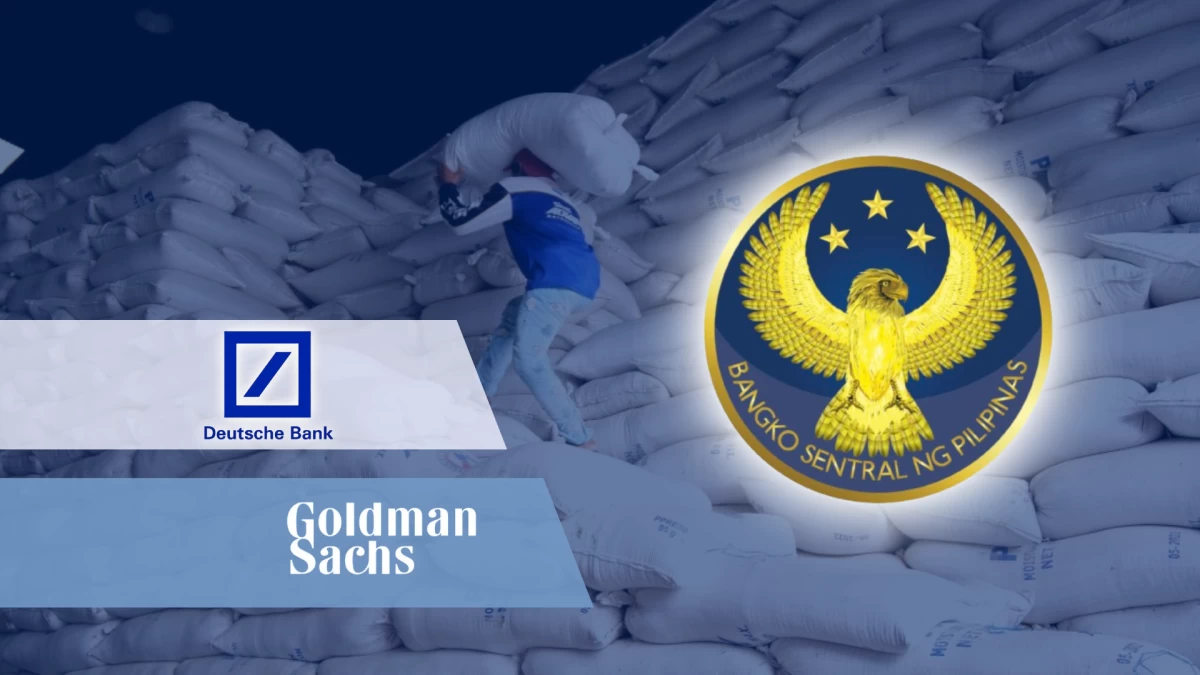
Citing risks that consumer prices could rise at a faster pace due to the rice importation ban, Germany-based Deutsche Bank believes the Bangko Sentral ng Pilipinas (BSP) is likely to hold its cycle of reducing borrowing costs in October.
“There is still some upside risk to inflation in September and October, alongside the suspension of rice imports over these two months,” Deutsche Bank Research said in a commentary published last Friday, Sept. 5.
It noted, however, that inflation would still settle below the government’s target band of two to four percent.
Last week, Agriculture Assistant Secretary Arnel de Mesa downplayed potential price hikes in locally produced rice after the two-month import ban took effect on Sept. 1. Meanwhile, some imported rice registered a modest increase following the directive’s implementation.
Inflation quickened to 1.5 percent in August from 0.9 percent in July, which was the slowest in nearly six years. The faster increase in consumer prices in August was “mainly due to a spike in food (fish, vegetables) prices from possible supply chain disruptions amid inclement weather, even as rice prices continue to decline,” Deutsche Bank Research noted.
Despite this, August inflation fell within the central bank’s forecast of one to 1.8 percent for the month.
However, given the likelihood of faster inflation this month through the next quarter, the BSP “may be inclined to temporarily pause its easing in the next October meeting,” Deutsche Bank Research said.
But after the pause, the German banking giant believes the central bank will resume trimming the current five percent key lending rate to support growth, which has been delivering a lackluster, below-target performance.
To recall, the country’s economic output expanded by an average of 5.4 percent in the first half of the year, below the downscaled full-year growth target of 5.5 to 6.5 percent.
Global investment banking giant Goldman Sachs also retained its forecast that the BSP will deliver a quarter-point reduction in the key borrowing cost by year-end, although it did not specify in which policy meeting it will happen.
“Given our expectations of slower global growth in the second half of 2025 and our more dovish Fed [United States Federal Reserve] outlook (versus the market pricing), we continue to expect the BSP to cut policy rates by another 50 bps [basis points] in the cycle—25 bps each in the fourth quarter of 2025 and the first quarter of 2026—to 4.5 percent,” Goldman Sachs Economics Research said in a Sept. 5 commentary.
As Manila Bulletin reported earlier, Goldman Sachs was among the first financial institutions to forecast an easing cycle extending through early 2026.
To date, the BSP has loosened the key interest rate by a cumulative 1.5 percentage points (ppt) from 6.5 percent in August 2024—the start of its inflation-targeted monetary easing.
For this year alone, the BSP has reduced the policy rate by 75 bps across three consecutive policy meetings in April, June, and August. The remaining policy meetings for 2025 are scheduled in October and December.