ADVERTISEMENT

US ensures continued aid to PH won't fall to corruption

Published Sep 7, 2025 12:19 pm  |  Updated Sep 7, 2025 02:10 pm
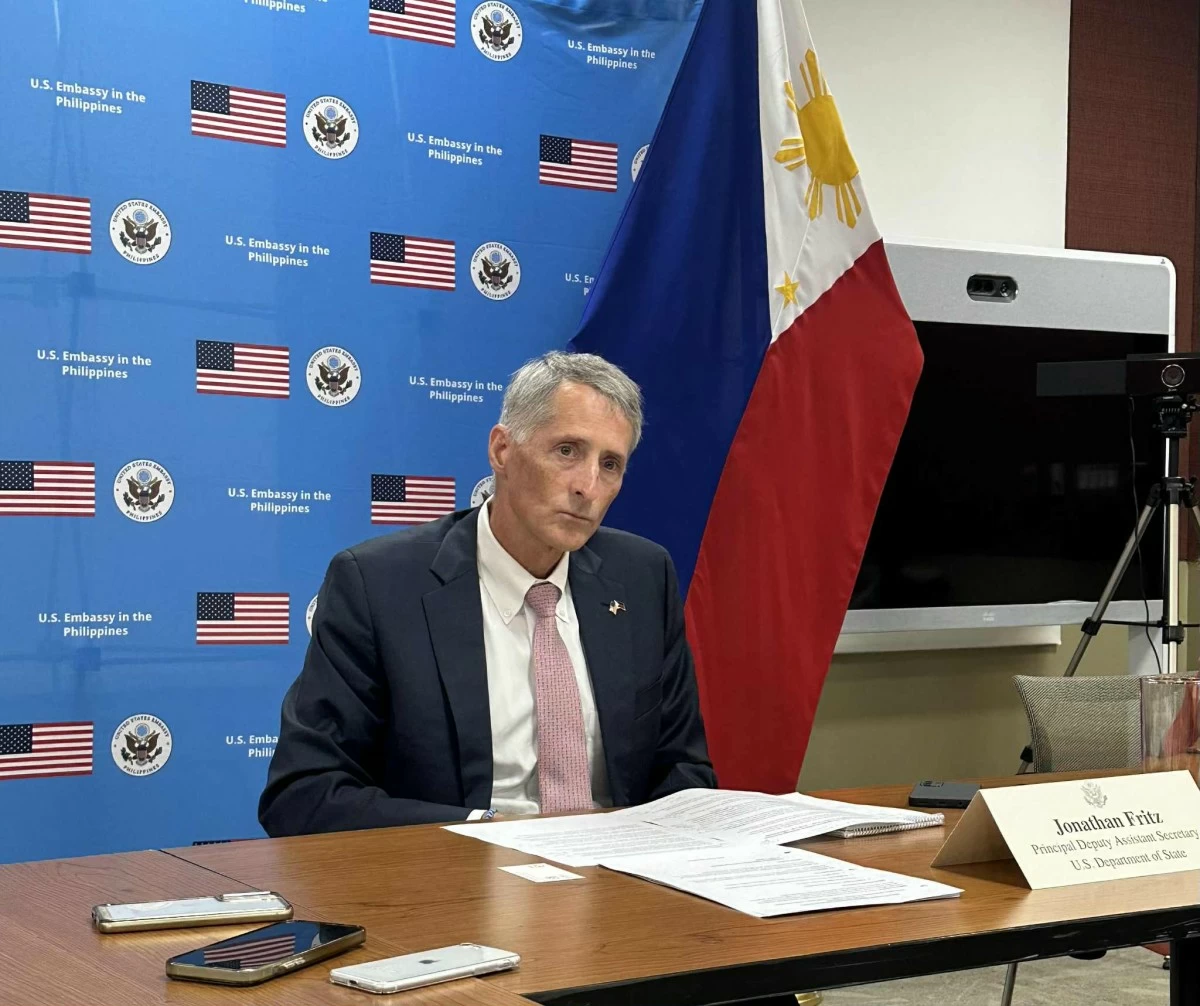
Principal Deputy Assistant Secretary of State for East Asian & Pacific Affairs Jonathan Fritz speaks to select members of the Philippine media, including from the Manila Bulletin, during a roundtable discussion held at the US Embassy in Manila on Thursday, Sept. 4, 2025. (Raymund Antonio/MB)
Amid allegations of massive corruption in the country’s infrastructure development projects, a visiting official from the United States underscored the need to ensure that its foreign aid to the Philippines will be spent with integrity.

Principal Deputy Assistant Secretary of State for East Asian & Pacific Affairs Jonathan Fritz said in a recent media roundtable hosted by the US Embassy in Manila that while the US will continue its assistance to the Philippines despite recent revelations, they will take on the responsibility of ensuring the funds are being well-spent.

“One thing that President Trump very clearly had elaborated during the electoral campaign was he wanted to make sure that US taxpayer dollars were being spent effectively, fair enough, and part of the transition to a new, more focused Foreign Assistance Program, not just in the Philippines, but around the world,” he said.

In July, Secretary of State Marco Rubio announced $63 million (approximately P3 billion) in foreign funding—the first of its kind under the second Trump Administration’s foreign aid realignment—to the Philippines to help in improving disaster response, combatting illegal fishing, and creating a conducive business environment.

“I think is a reflection of that any time we spend foreign assistance monies, we very rigorously monitor and evaluate how those funds were spent and the results that we expect to get from them,” Fritz added.

Ensuring American taxes are directed to legitimate programs and projects will be a “crucial part” of the “new mode” on how foreign assistance is being delivered, the official furthered.

“We still take very seriously our responsibility to spend US taxpayer dollars with the highest degrees of integrity and accountability,” he stressed.

The US official’s response came on the heels of twin investigations at the House of Representatives and in the Senate about the ghost or substandard flood control projects worth hundreds of billions of pesos that allegedly lined contractors’ and government officials’ pockets.

Fritz disclosed that while flood control is not specifically part of the agenda of the new US funding announced in July, it could form part of the projects in communities adversely affected by natural calamities.

“I can't tell you at this point in time we have any specific projects specifically focused on that topic (flood control), but in terms of overall improvement of infrastructure along that (Luzon Economic) corridor, you know, I think considerations about vulnerability to natural disasters is a key part of making infrastructure more resilient,” he explained.

“So, I wouldn't rule that out as being something that is at least part of the equation going forward with those sorts of programs,” he added.

Currently, the official said the US funding will assist the Philippine government in preparing for disaster assistance and response, such as prepositioning supplies in areas that are prone to cyclones and typhoons.

They will also work with local communities for training and capacity-building, “so that when natural disasters do hit, they're ready to respond quickly and effectively to the benefit of the people in those communities.”

Related Tags

United States Jonathan Fritz Luzon Economic Corridor flood control projects corruption
ADVERTISEMENT
.most-popular .layout-ratio{ padding-bottom: 79.13%; } @media (min-width: 768px) and (max-width: 1024px) { .widget-title { font-size: 15px !important; } }

{{ articles_filter_1561_widget.title }}

.most-popular .layout-ratio{ padding-bottom: 79.13%; } @media (min-width: 768px) and (max-width: 1024px) { .widget-title { font-size: 15px !important; } }

{{ articles_filter_1562_widget.title }}

.most-popular .layout-ratio{ padding-bottom: 79.13%; } @media (min-width: 768px) and (max-width: 1024px) { .widget-title { font-size: 15px !important; } }

{{ articles_filter_1563_widget.title }}

{{ articles_filter_1564_widget.title }}

.mb-article-details { position: relative; } .mb-article-details .article-body-preview, .mb-article-details .article-body-summary{ font-size: 17px; line-height: 30px; font-family: "Libre Caslon Text", serif; color: #000; } .mb-article-details .article-body-preview iframe , .mb-article-details .article-body-summary iframe{ width: 100%; margin: auto; } .read-more-background { background: linear-gradient(180deg, color(display-p3 1.000 1.000 1.000 / 0) 13.75%, color(display-p3 1.000 1.000 1.000 / 0.8) 30.79%, color(display-p3 1.000 1.000 1.000) 72.5%); position: absolute; height: 200px; width: 100%; bottom: 0; display: flex; justify-content: center; align-items: center; padding: 0; } .read-more-background a{ color: #000; } .read-more-btn { padding: 17px 45px; font-family: Inter; font-weight: 700; font-size: 18px; line-height: 16px; text-align: center; vertical-align: middle; border: 1px solid black; background-color: white; } .hidden { display: none; }
function initializeAllSwipers() { // Get all hidden inputs with cms_article_id document.querySelectorAll('[id^="cms_article_id_"]').forEach(function (input) { const cmsArticleId = input.value; const articleSelector = '#article-' + cmsArticleId + ' .body_images'; const swiperElement = document.querySelector(articleSelector); if (swiperElement && !swiperElement.classList.contains('swiper-initialized')) { new Swiper(articleSelector, { loop: true, pagination: false, navigation: { nextEl: '#article-' + cmsArticleId + ' .swiper-button-next', prevEl: '#article-' + cmsArticleId + ' .swiper-button-prev', }, }); } }); } setTimeout(initializeAllSwipers, 3000); const intersectionObserver = new IntersectionObserver( (entries) => { entries.forEach((entry) => { if (entry.isIntersecting) { const newUrl = entry.target.getAttribute("data-url"); if (newUrl) { history.pushState(null, null, newUrl); let article = entry.target; // Extract metadata const author = article.querySelector('.author-section').textContent.replace('By', '').trim(); const section = article.querySelector('.section-info ').textContent.replace(' ', ' '); const title = article.querySelector('.article-title h1').textContent; // Parse URL for Chartbeat path format const parsedUrl = new URL(newUrl, window.location.origin); const cleanUrl = parsedUrl.host + parsedUrl.pathname; // Update Chartbeat configuration if (typeof window._sf_async_config !== 'undefined') { window._sf_async_config.path = cleanUrl; window._sf_async_config.sections = section; window._sf_async_config.authors = author; } // Track virtual page view with Chartbeat if (typeof pSUPERFLY !== 'undefined' && typeof pSUPERFLY.virtualPage === 'function') { try { pSUPERFLY.virtualPage({ path: cleanUrl, title: title, sections: section, authors: author }); } catch (error) { console.error('ping error', error); } } // Optional: Update document title if (title && title !== document.title) { document.title = title; } } } }); }, { threshold: 0.1 } ); function showArticleBody(button) { const article = button.closest("article"); const summary = article.querySelector(".article-body-summary"); const body = article.querySelector(".article-body-preview"); const readMoreSection = article.querySelector(".read-more-background"); // Hide summary and read-more section summary.style.display = "none"; readMoreSection.style.display = "none"; // Show the full article body body.classList.remove("hidden"); } document.addEventListener("DOMContentLoaded", () => { let loadCount = 0; // Track how many times articles are loaded const offset = [1, 2, 3, 4, 5, 6, 7, 8, 9, 10]; // Offset values const currentUrl = window.location.pathname.substring(1); let isLoading = false; // Prevent multiple calls if (!currentUrl) { console.log("Current URL is invalid."); return; } const sentinel = document.getElementById("load-more-sentinel"); if (!sentinel) { console.log("Sentinel element not found."); return; } function isSentinelVisible() { const rect = sentinel.getBoundingClientRect(); return ( rect.top < window.innerHeight && rect.bottom >= 0 ); } function onScroll() { if (isLoading) return; if (isSentinelVisible()) { if (loadCount >= offset.length) { console.log("Maximum load attempts reached."); window.removeEventListener("scroll", onScroll); return; } isLoading = true; const currentOffset = offset[loadCount]; window.loadMoreItems().then(() => { let article = document.querySelector('#widget_1690 > div:nth-last-of-type(2) article'); intersectionObserver.observe(article) loadCount++; }).catch(error => { console.error("Error loading more items:", error); }).finally(() => { isLoading = false; }); } } window.addEventListener("scroll", onScroll); });

Sign up by email to receive news.