







Pointing out how “some neighbors” have been “stealing” the Philippines’ marine resources, a United States official said that the Trump administration is expected to tap Filipino fishermen as the “first line” in monitoring illegal fishing in the contested South China Sea.
US to aid PH vs illegal fishing under Trump's aid realignment
Published Sep 6, 2025 10:41 am
|
Updated Sep 6, 2025 01:39 pm


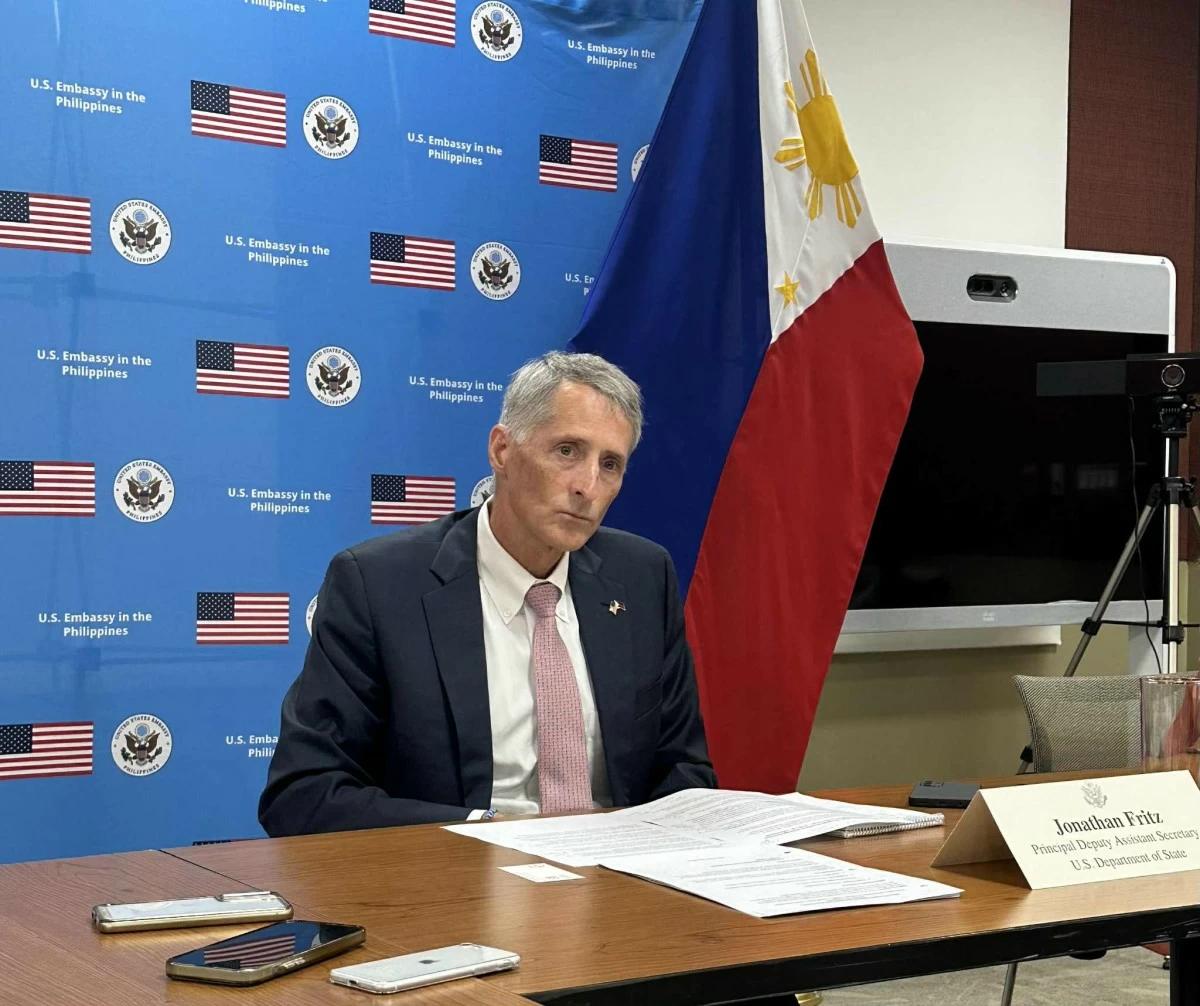
Principal Deputy Assistant Secretary of State for East Asian & Pacific Affairs Jonathan Fritz speaks to select members of the Philippine media, including from the Manila Bulletin, during a roundtable discussion held at the US Embassy in Manila on Thursday, Sept. 4, 2025. (Raymund Antonio/MB)
Principal Deputy Assistant Secretary of State for East Asian & Pacific Affairs Jonathan Fritz, who visited Manila, assured the Philippines that US foreign aid will be focused on combatting illegal fishing, building a resilient energy sector, and improving business environment in the country.
In particular, the official noted that “one of our key focus areas is going to be on fisheries.”
“I know that the fisheries industry here in the Philippines is an important part of the economy. But there are some neighbors—and some more than others—that I know are basically stealing the fish resources of the Filipino people,” he said during a media roundtable organized by the US Embassy in Manila on Thursday, Sept. 4.
“And so one of the key areas where we will be focusing our foreign assistance programming going forward is helping the Philippines better monitor illegal fishing and basically being aware of vessels from non-Philippine fishers that are here taking resources of the Philippine people without their permission,” he added.
Fritz revealed plans to work with actual Filipino fishers to be the “front line” and “eyes and ears” who will transmit real-time information to local government units and the national government about illegal fishing, coral reef destruction, and marine pollution, among others.
“I think they're obviously the ones on the brunt of illegal fishing, whether it's from China or other fishing nations that are illegally fishing in Philippine waters. All of that, using them, getting them more involved in being sort of the first line of some of the eyes and ears of intrusions on Philippine waters,” he explained.
Asked about if the provinces near the South China Sea are the specific areas where these programs will be implemented, the US official responded in the affirmative.
“I think you answered your own question better than I could, but yes, that is the area where we're starting our focus,” he stressed.
During the roundtable discussion, Fritz also assured the Philippines that the $63 million (approximately P3 billion) in funding announcement by Secretary of State Marco Rubio in July won’t be the last of its kind under the second Trump administration despite the policy to realign official foreign assistance.
“I don't have a crystal ball. Obviously, our Congress just got back from their summer recess and are working on the budget, and I'm not able to predict how that will end up. But those are not the last assistance dollars that we see coming into the Philippines. Far from it,” he said.
“I think the message that we want to convey to our Filipino friends is you guys were the first recipients of new assistance funding, and I think that will sort of set a mark and the Philippines will continue to be one of our closest partners in this space going forward,” the official added.
Rubio’s announcement of a new foreign assistance funding to the Philippines in July was the first since the White House proclaimed an America First Policy.