







LGU spending on health rising, but efficiency a concern
UCHP Study: LGUs need better guidance to maximize health spending
By MBrand
Published Sep 6, 2025 12:00 pm
|
Updated Sep 6, 2025 01:12 pm


At A Glance
- A new study commissioned by the Unilab Center for Health Policy (UCHP), the think tank of pharmaceutical and health care leader Unilab, Inc., conducted by the Ateneo School of Government and the Ateneo Policy Center was presented at the 2nd UCHP Symposium entitled Investing in Heath: Policy Forum on LGU Health Budget and PhilHealth Benefit Design with Department of Budget and Management Sec. Amenah F. Pangandaman as the keynote speaker.
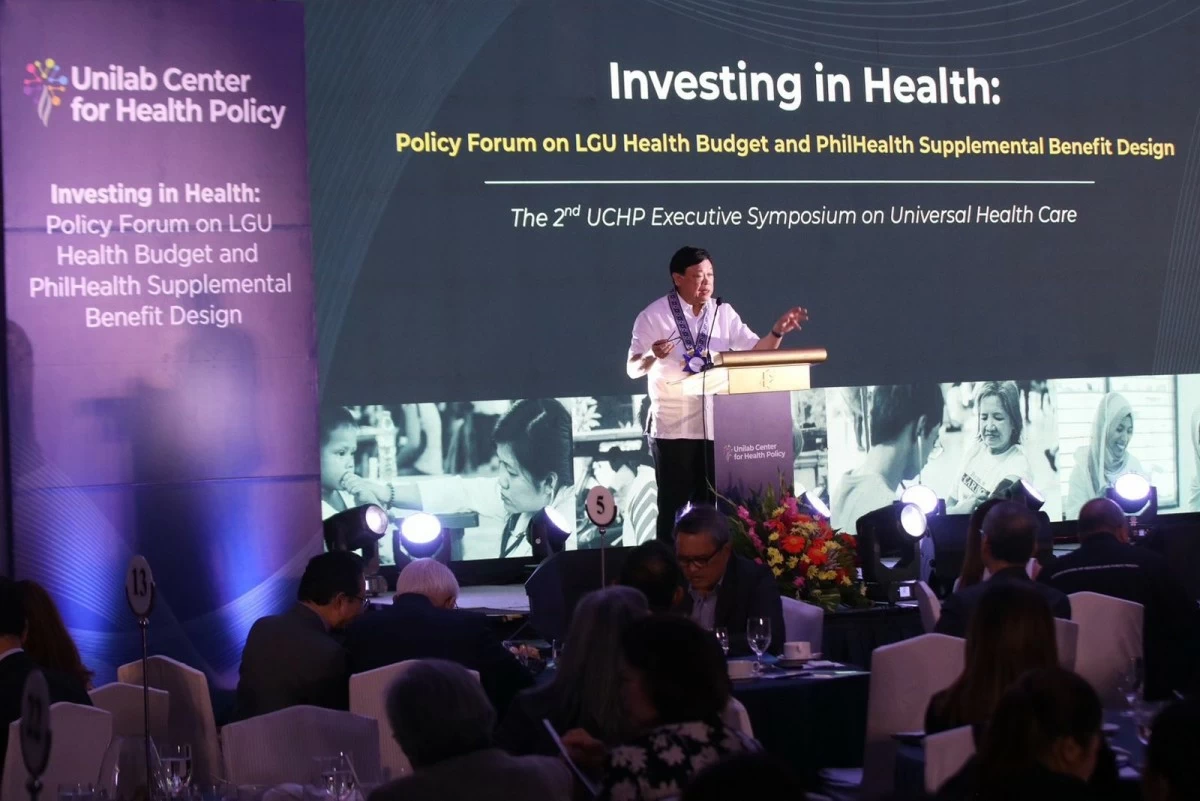
PhilHealth President & CEO Dr. Edwin M. Mercado outlined the way forward for health insurance in the Philippines at the 2nd Unilab Center for Health Policy (UCHP) Executive Symposium on Universal Health Care.
Local Government Units (LGUs) continue to allocate significant portions of their local health budgets for devolved health programs and services, but they need clearer guidance, technical support, and stronger intergovernmental coordination from relevant national government agencies to ensure the funds are being spent efficiently for the benefit of their constituents, as envisioned under the Universal Health Care Law.
This was the key finding of a new study commissioned by the Unilab Center for Health Policy (UCHP), the think tank of pharmaceutical and health care leader Unilab, Inc., conducted by the Ateneo School of Government and the Ateneo Policy Center. The study was presented at the 2nd UCHP Symposium entitled Investing in Heath: Policy Forum on LGU Health Budget and PhilHealth Benefit Design with Department of Budget and Management Sec. Amenah F. Pangandaman as the keynote speaker.
Led by principal researcher, Dr. Maria Eufemia C. Yap, Senior Research Fellow, Ateneo School of Government, the research reviewed budget practices of four LGUs—Quezon City, the Province of Antique, the Municipality of Belison (Antique), and the Municipality of Odiongan (Romblon)—with a fifth case in Isabela City, Basilan underway, in collaboration with the Department of Budget and Management (DBM).
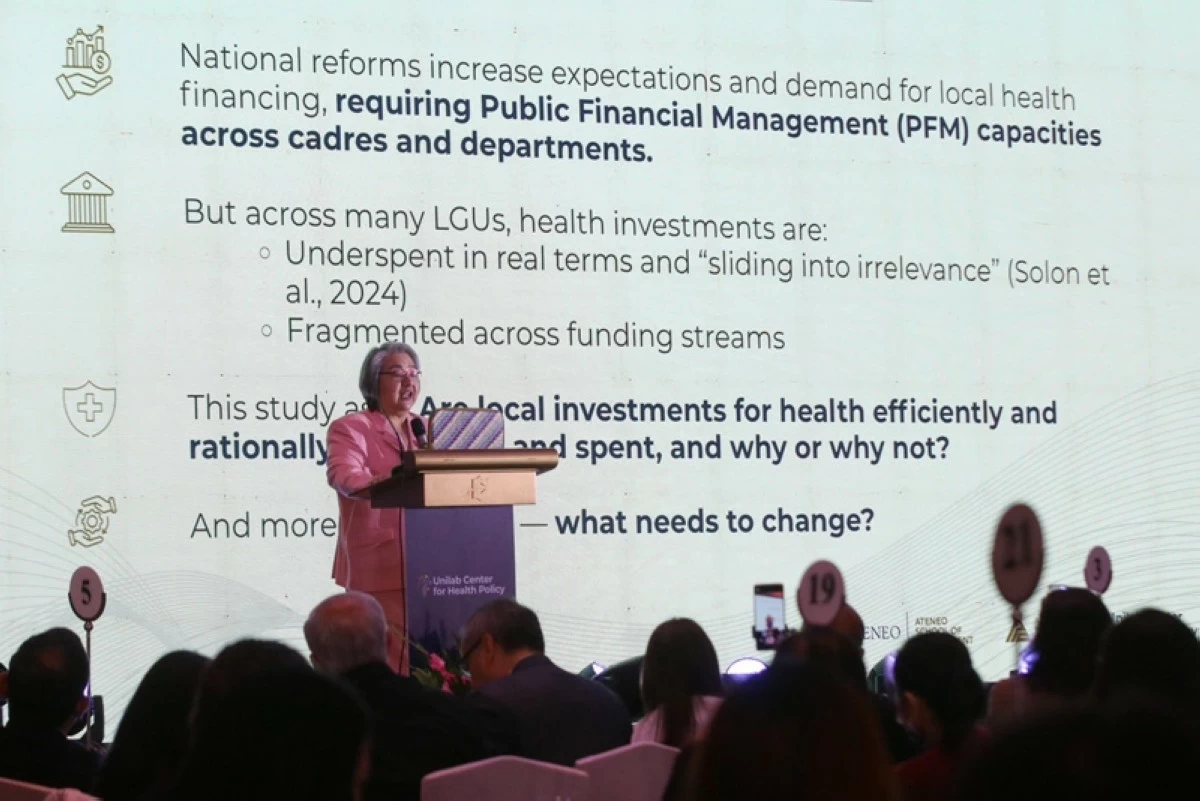
Dr. Maria Eufemia C. Yap of the Ateneo Policy Center discussed strategies to maximize local government fiscal performance of health budgets at the ongoing 2nd Unilab Center for Health Policy (UCHP) Executive Symposium on Universal Health Care.
The study, “Maximizing Local Government Fiscal Performance of Health Budget”, examined the full cycle of local budgeting from preparation, authorization, and execution up to review, covering 2022 to mid-2025. It revealed that LGU health spending is on the rise. During this period, the health budget of the LGUs in the study increased by as much as 5%.
The challenges
Despite devolution of health to LGUs, municipalities remain heavily reliant on the National Tax Allocation (NTA), with 74% to 95% of their budgets coming from the national government, compared to just 23% to 36% for provinces and highly urbanized cities. In many areas, large shares of health budgets go to salaries of health personnel, leaving limited resources for actual health operations and programs. In addition, the budget may be utilized mostly to fund Personnel Services instead of Operational Expenses.
At the same time, LGUs face a complex maze of overlapping requirements: Annual Investment Plans, Annual Operational Plans, Annual Procurement Plans, and Local Investment Plans for Health—all on different schedules. So while funding is available, these documentary requirements and the delays and confusion they create are seen as barriers to timely release and utilization of funds for health spending.
Call for alignment and accountability
"This misalignment, along with budget directives that do not always reflect local realities, often results in plans that fail to meet emerging health needs. Weak monitoring and local council dynamics further complicate timely budget approvals and accountability," Yap stressed.
She added: “The study supports the efforts of DBM to cascade and effectively capacitate LGUs’ Public Financial Management (PFM) competency. Promoting financial accountability and aligning national and local priorities will ensure that resources for health are not just spent, but are truly felt by the people.”
UCHP Program Director John Basa noted that the findings underscore the urgent need for government agencies such as the DBM, the Department of Finance's Bureau of Local Government Finance, the Department of Interior and Local Government, and the Department of Health to extend stronger technical support and more precise policy guidance to local governments. He further emphasized the crucial role of Congress in examining whether current legislation truly encourages genuine and sustainable spending on health at the LGU level.
"With improved systems and alignment, LGUs can transform their health budgets from routine expenditures into powerful investments that directly improve the well-being of their constituents," he said.
Another UCHP Study: PhilHealth’s supplemental insurance coverage
This year, UCHP commissioned another university-led study to trigger the discussions on expanding the Philippine Health Insurance Corporation's (PhilHealth) services to include supplemental insurance coverage for its members as mandated by the Universal Health Care (UHC) law.
The research, conducted by the University of the Philippines, led by Dr. Hilton Lam and Dr. Michael Tee, noted that while PhilHealth has made significant progress in expanding outpatient and inpatient benefits, there is still a need to establish a clear framework for optional supplemental benefits that could be offered to members through additional contributions.
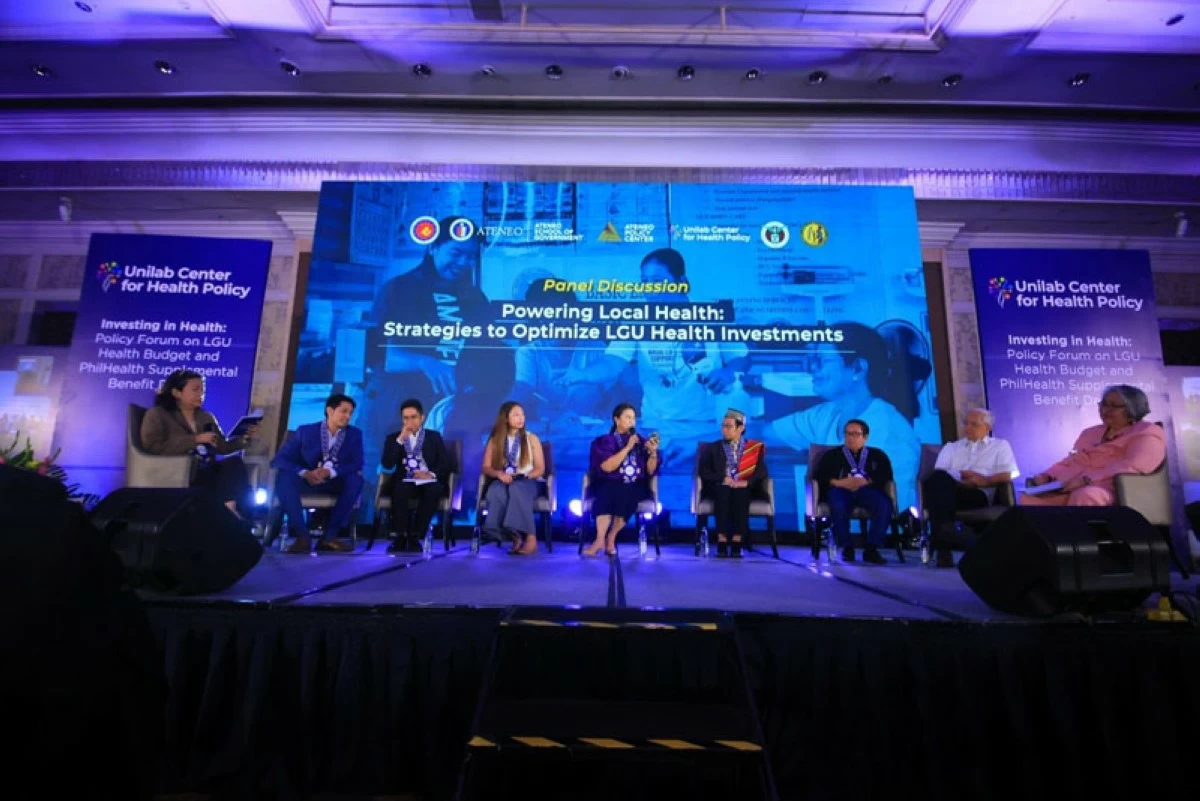
Panel Discussion 1 higlighted strategies to optimize LGU health investments, with insights from leaders and experts at the ongoing 2nd Unilab Center for Health Policy (UCHP) Executive Symposium on Universal Health Care.
From left: Prof. Jean S. Encinas-Franco, Professor and Department Assistant Chair, Department of Political Science, College of Social Sciences and Philosophy, University of the Philippines Diliman; Mr. Lawrence Trinidad, Project Development Manager, Union of Local Authorities of the Philippines; Kenneth Isaiah Abante, Lead Convenor, People’s Budget Coalition; Dr. Franciz Ramos, Medical Officer IV, Municipality of Odiongan; Hon. Leni Robredo, Mayor of Naga City; Dr. Mohrein Ismael VI, City Health Officer, Isabela City, Basilan; Gov. Patrick Alain Azanza, Governor of Catanduanes Province; Austere Panadero, Executive Director, Zuellig Family Foundation; and Dr. Maria Eufemia C. Yap, Senior Research Fellow, Ateneo Policy Center.
Global lessons on voluntary health insurance
Other countries, such as Indonesia, Myanmar, Singapore, and even developed economies like the USA and Germany, have adopted similar voluntary schemes as “top-up” mechanisms to strengthen healthcare protection.
The Philippine study recommends using frameworks such as cost-effectiveness, equity, and feasibility to guide which prioritization of benefits for inclusion. By developing this policy foundation and consulting stakeholders, PhilHealth can ensure that future supplemental packages truly respond to the most urgent health needs of Filipinos while maintaining financial sustainability.
UCHP’s 2025 policy agenda
"Together, the two studies highlight that while both LGUs and PhilHealth are investing in health, effective policy guidance, stronger coordination, and evidence-based frameworks are critical to ensure that resources translate into meaningful outcomes for the people they serve," said Basa.
The 2025 policy agenda of the UCHP takes off from the results of the previous year’s research studies. The 30-year review of the National Health Accounts (1992–2022) by researchers from the University of the Philippines School of Economics (UPEcon) showed that out-of-pocket payments by the Filipino people still account for about 45% of total health spending, far beyond the 30% target. All the while, LGUs and PhilHealth have not reached their target spending.

Panel Discussion 2 explored a multi-stakeholder roadmap for PhilHealth benefit enhancement, engaging government, the private sector, and patient advocates at the ongoing 2nd Unilab Center for Health Policy (UCHP) Executive Symposium on Universal Health Care. From left: Prof. Jean S. Encinas-Franco, Professor and Assistant Chair, Department of Political Science, College of Social Sciences and Philosophy, University of the Philippines Diliman; Mr. Arturo C. Guerrero III, Governor, Employers Confederation of the Philippines; Dr. Cenon Alfonso, Ateneo School of Medicine and Public Health; Ms. Kara Magsanoc-Alikpala, Founding President, ICanServe Foundation; Dr. Lester M. Tan, Director IV, Regional Director, Department of Health; Dr. Arturo Libao, Medical Director, Maxicare Healthcare Corporation; Ms. Carmen Auste, Chief Executive Officer, Cancer Warriors Foundation; and Dr. Hilton Lam, Director, Institute of Health Policy and Development Studies, National Institutes of Health, University of the Philippines Manila.