






Manila Bulletin
 Property and Living
South's newest township shapes the future of green luxury living
Property and Living
South's newest township shapes the future of green luxury living
Property and Living
South's newest township shapes the future of green luxury living
South's newest township shapes the future of green luxury living
How sustainability guides every aspect of Southlinks Estate's master plan
Published Sep 5, 2025 12:47 pm
|
Updated Sep 5, 2025 01:17 pm


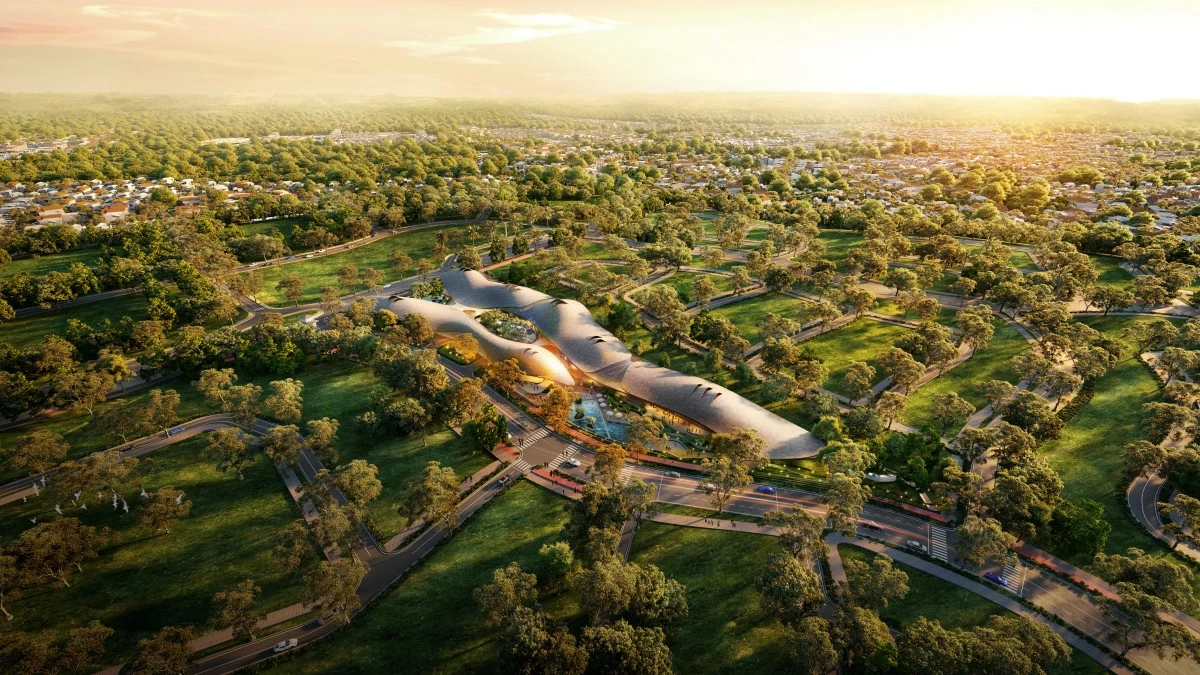
Southlinks Estate, a 34-hectare township by Height Realty Inc. in Las Piñas, is positioned as a prime address defined by sustainability.
Many aspire to live close to nature without losing the convenience of the city. Southlinks Estate promises that balance in Las Piñas City, where Height Realty Inc. recently unveiled a 34-hectare township positioned as a prime address with sustainability as its defining feature.
Arch. Cathy Saldaña, president and CEO of PDP+ Architects and the project’s local architect and master planner, described the estate as “one of the last gems in the metropolis” for its rare size, location, and sustainability-driven design. She highlighted its accessibility to Metro Manila while staying connected to the South, and stressed that its core values—family and community, nature, and future generations—are rooted in sustainability.
“Here in Southlinks, sustainability is not just a buzzword. It’s about how this estate will improve in terms of investment and value. It’s about health, wellness, family, and about creating pride of place,” she shared.
Joining her in the event were Kevin Wong, president and CEO of Height Realty Inc.; Rick Santos, chairman and CEO of Santos Knight Frank; and PJ Garcia, principal and managing partner of Grow Capital Partners. They shared perspectives on the project while also offering insights on the evolving intersections of real estate and artificial intelligence.
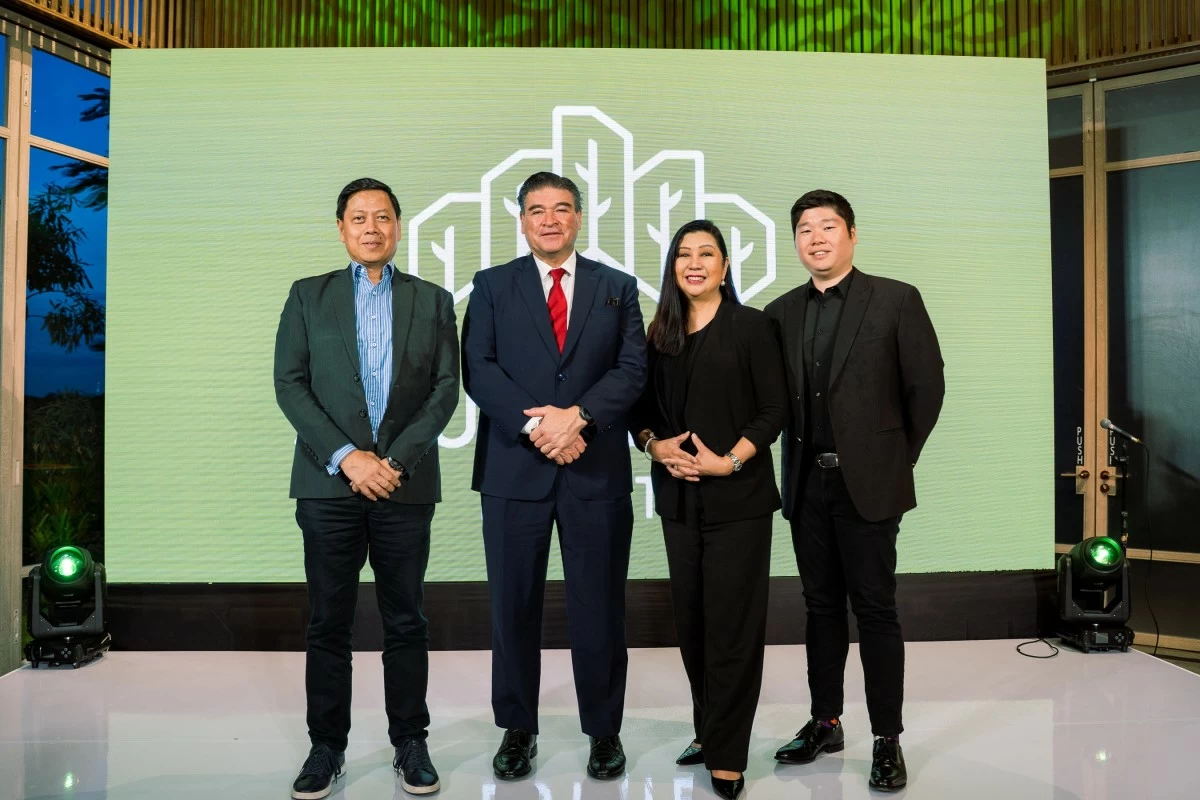
PJ Garcia, principal and managing partner of Grow Capital Partners; Rick Santos, chairman and CEO of Santos Knight Frank; Arch. Cathy Saldaña, president and CEO of PDP Architects and the project’s local architect and master planner; and Kevin Wong, president and CEO of Height Realty Inc.
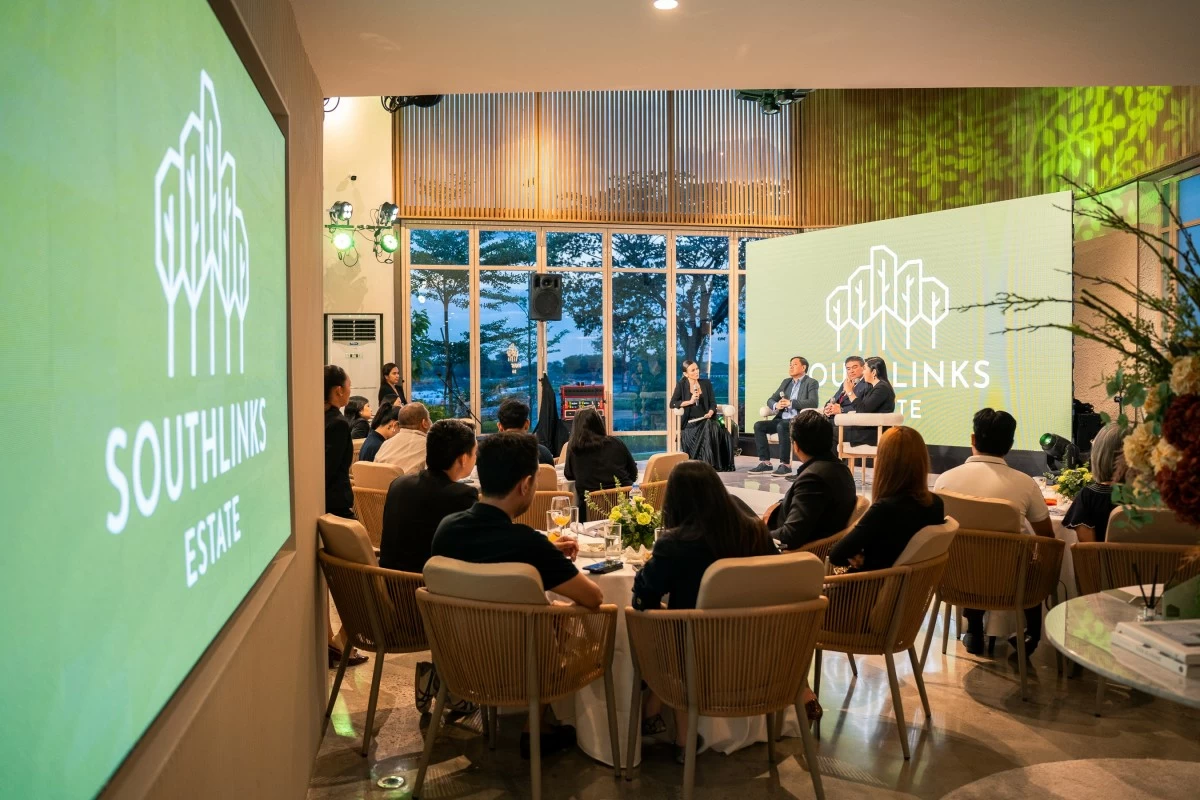
In a forum, Saldaña, Santos, and Garcia highlighted the estate’s accessibility, sustainability-focused values, and the evolving link between real estate and artificial intelligence.

Issa Litton; PJ Garcia, principal and managing partner of Grow Capital Partners; Rick Santos, chairman and CEO of Santos Knight Frank; and Arch. Cathy Saldaña, president and CEO of PDP Architects and the project’s local architect and master planner

PJ Garcia
While Saldaña underscored sustainability as the estate’s foundation, Santos framed Southlinks within the luxury real estate market, saying it has the makings of the Philippines’ next Forbes Park within the decade. Citing his experience with London’s Canary Wharf and Bonifacio Global City, he noted that strong infrastructure and developer vision could drive its success.
Designs that leave a mark
Sustainability is the core driving Southlinks Estate. The development sets aside 60 percent of its land for open spaces, a move that has drawn attention from property experts as Environmental, Social, and Governance (ESG) factors increasingly shape investment decisions.Saldaña noted that preserving native species such as narra, ipil, and ilang-ilang, alongside features like linear parks, pocket gardens, and tree-lined walkways, protects biodiversity while giving the community a distinct identity. The roads are designed with the right-of-way for sidewalks, pedestrians, and bikers. She explained that this vision extends beyond landscaping and into the way homes and neighborhoods are planned.
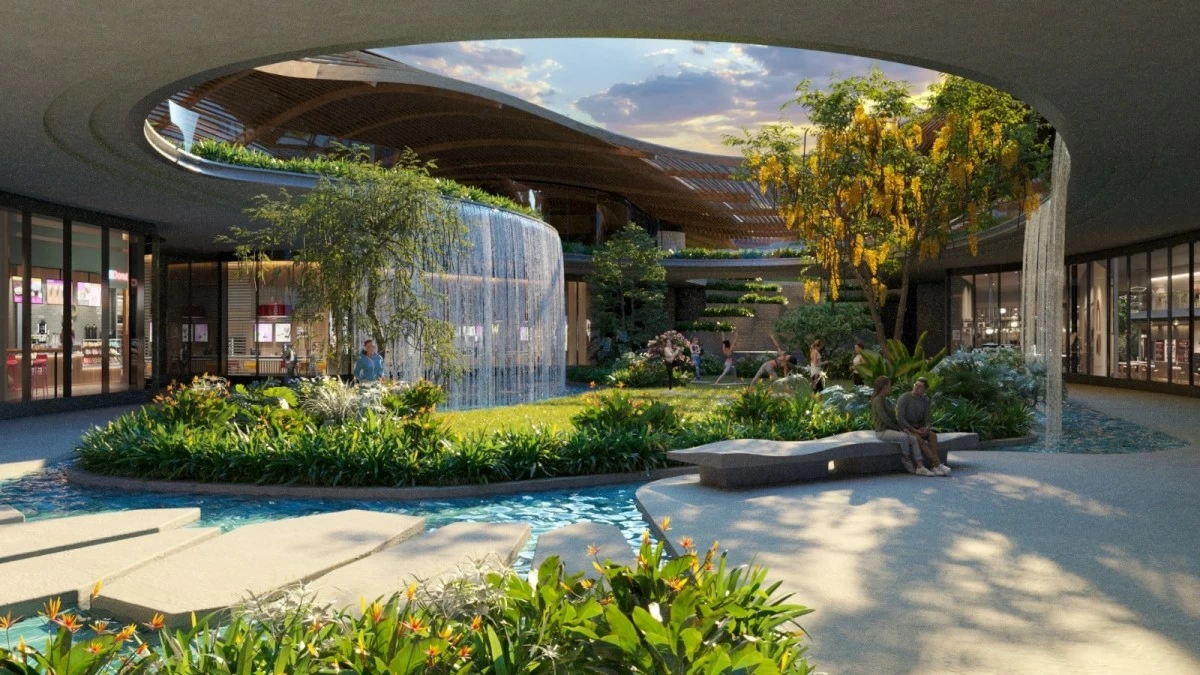
Courtyard
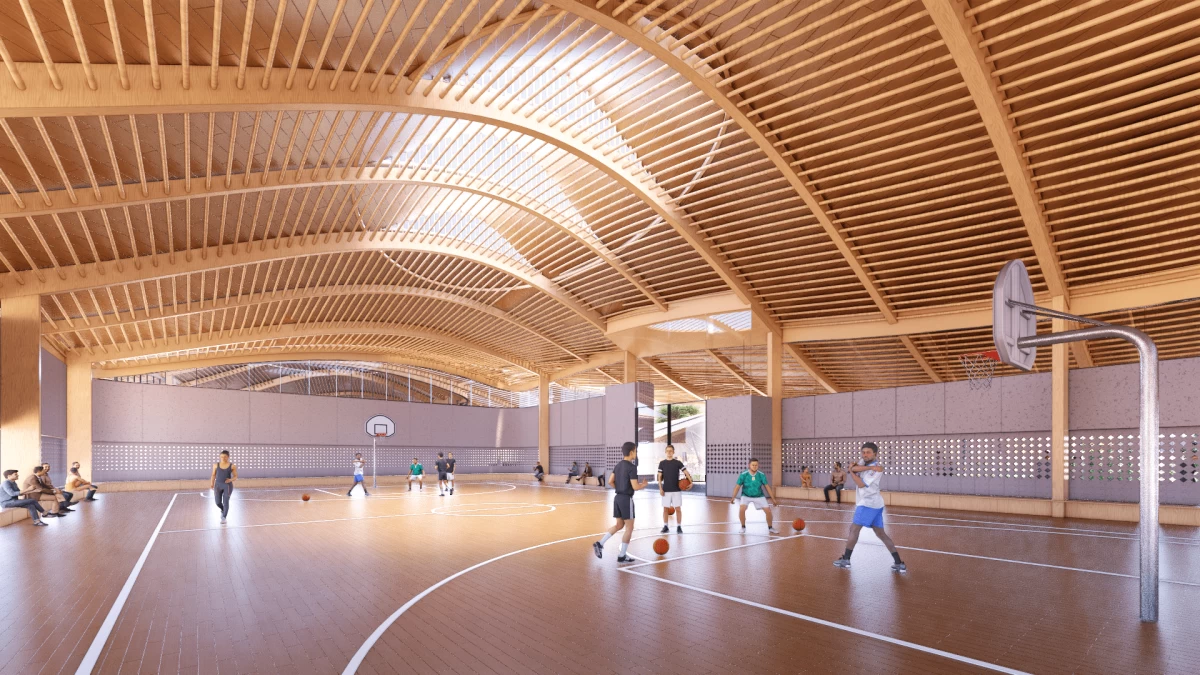
Basketball court

Open spaces
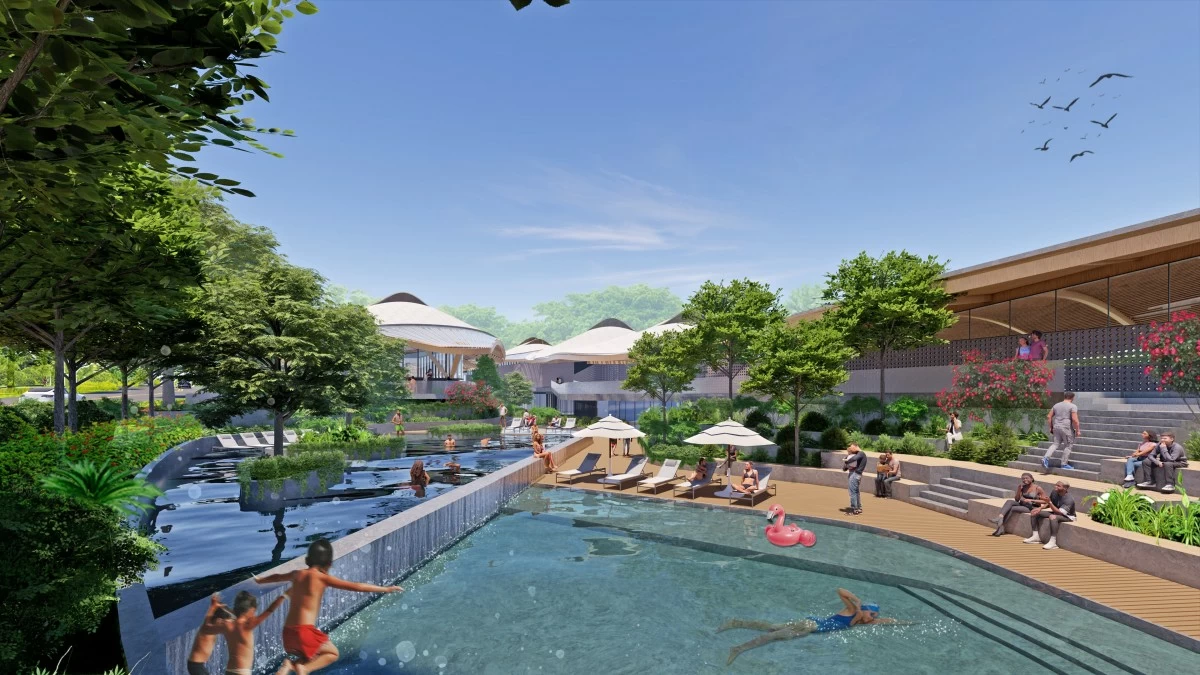
Swimming pool
“For us, we're like, in most of the places, we preserve the trees. And where we need to replant, we will. So we're also creating the design guidelines and the design character. What kind of houses will you build? What are the gaps and the spaces in between you and your neighbor? What are the ways by which we are working on livability, safety, security, comfort, family? All of that put together,” said Saldaña.
One of the estate’s first projects is the 1.4-hectare clubhouse with sports facilities such as a basketball court, swimming pool, and pickleball. It is designed for sustainability with rainwater harvesting, natural ventilation, and flexible air-conditioning, and will also include function rooms and spaces for children, parties, and celebrations.
Beyond its green spaces, Southlinks is designed for convenience. Just 10 minutes from Alabang Town Center, it offers access to major road networks such as MCX, CALAX, SLEX, and the Skyway. Lot sizes range from 400 to 1,200 square meters, with construction timelines set for homeowners to begin building by 2026.
Looking ahead, Saldaña said the estate will feature retail, corporate, and hotel components, noting that the future is already here and stressing the need to learn from exclusive villages to ensure comfort for the next generation. She added that the development is centered on innovation and community building. “Technology, AI, and real estate will take their role. Let's go beyond traditional because we're linking ourselves to the future. Stop planning for today, design for tomorrow—that's our game plan. Because not everybody looks at it that way.”