ADVERTISEMENT

New law seen to address farm-to-market roads backlog

Published Sep 5, 2025 03:48 pm
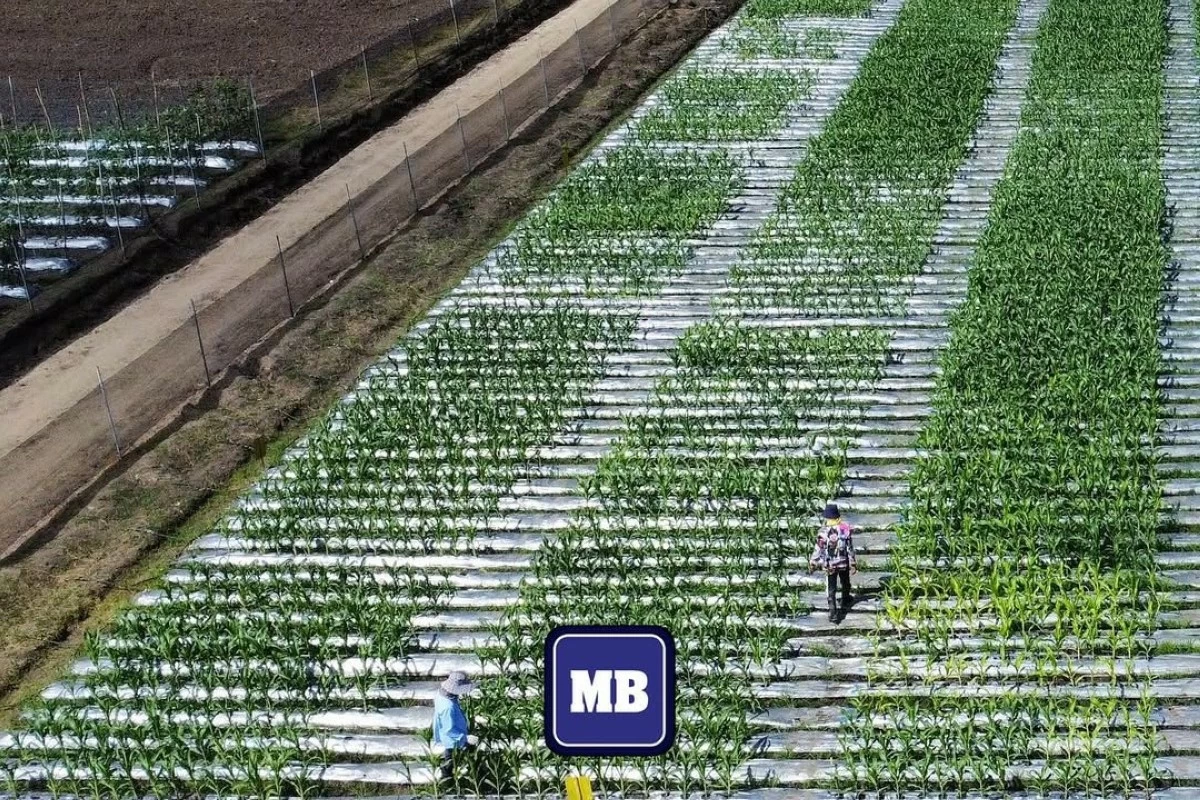
(Manila Bulletin file photo)
The Department of Agriculture (DA) is optimistic about addressing the backlog of 36,000 kilometers (km) of farm-to-market roads (FMR) in the country, which is 44-percent lower than a previous government estimate, through a new proposed law.
Agriculture Secretary Francisco Tiu Laurel said FMRs are more than just infrastructure linkages, as they are critical in connecting farmers, fisherfolk, and livestock producers to markets and economic opportunity.
Tiu Laurel said the proposed Farm-to-Market Roads Development and Equity Act is central to the agency’s plan to address the massive gap.
“Every kilometer of FMR we build is a pathway out of poverty for rural communities. But with a staggering 36,000-km backlog, we need a comprehensive, fair, and sustainable approach. This bill delivers that,” he said in a statement.
Under the proposed measure, at least 30 percent of FMR funds will be earmarked for rural areas with high poverty incidence.
Funds will also be allocated to key regional growth corridors identified by the Department of Economy, Planning, and Development (DEPDev) and Regional Development Councils (RDC).
Major commodity production zones under the DA’s agricultural modernization plan and geographically isolated and disadvantaged areas (GIDAs) are additional priorities.
The bill likewise provides key FMR support for fisheries development areas designated by the Bureau of Fisheries and Aquatic Resources (BFAR) and livestock clusters under the governments national livestock program.
Once enacted into law, this is expected to help the government address the backlog of up to 36,000 km in FMRs.
The DA’s new estimated gap is significantly lower than the 64,155 km identified under the government’s national FMR network plan (FMRNP) for 2023 to 2028.
FMRNP stated that the government must allocate ₱962.33 billion to cover the remaining gap.
Under the DA’s proposed budget for next year, it received an allocation of ₱16 billion for its FMR program, enough to build 1,067 km of roads.
To address its estimated 36,000-km gap, the DA is proposing the creation of another masterplan, which will be anchored in six-year rolling implementation cycles.
The proposed Farm-to-Market Road Masterplan will ensure strong interagency coordination for the construction of FMRs and with local government units (LGUs) for integration on the ground.
The plan will also establish the National FMR Dashboard, envisioned to provide real-time monitoring and promote transparency.
Tiu Laurel noted that a well-planned FMR will help lower food prices, reduce post-harvest losses, and raise the incomes of farmers and fisherfolk.
He added that it could even address peace and order issues while improving overall connectivity for remote and underserved communities.
With this, he is urging both chambers of Congress to support the proposed Farm-to-Market Roads Development and Equity Act to strengthen the country’s effort toward agricultural modernization, poverty alleviation, and inclusive national growth.
“We cannot leave our farmers and fisherfolk stranded at the farmgate. This legislation lays not just physical roads, but a stronger foundation for food security, equity, and national development,” Tiu Laurel said.
ADVERTISEMENT
.most-popular .layout-ratio{ padding-bottom: 79.13%; } @media (min-width: 768px) and (max-width: 1024px) { .widget-title { font-size: 15px !important; } }

{{ articles_filter_1561_widget.title }}

.most-popular .layout-ratio{ padding-bottom: 79.13%; } @media (min-width: 768px) and (max-width: 1024px) { .widget-title { font-size: 15px !important; } }

{{ articles_filter_1562_widget.title }}

.most-popular .layout-ratio{ padding-bottom: 79.13%; } @media (min-width: 768px) and (max-width: 1024px) { .widget-title { font-size: 15px !important; } }

{{ articles_filter_1563_widget.title }}

{{ articles_filter_1564_widget.title }}

.mb-article-details { position: relative; } .mb-article-details .article-body-preview, .mb-article-details .article-body-summary{ font-size: 17px; line-height: 30px; font-family: "Libre Caslon Text", serif; color: #000; } .mb-article-details .article-body-preview iframe , .mb-article-details .article-body-summary iframe{ width: 100%; margin: auto; } .read-more-background { background: linear-gradient(180deg, color(display-p3 1.000 1.000 1.000 / 0) 13.75%, color(display-p3 1.000 1.000 1.000 / 0.8) 30.79%, color(display-p3 1.000 1.000 1.000) 72.5%); position: absolute; height: 200px; width: 100%; bottom: 0; display: flex; justify-content: center; align-items: center; padding: 0; } .read-more-background a{ color: #000; } .read-more-btn { padding: 17px 45px; font-family: Inter; font-weight: 700; font-size: 18px; line-height: 16px; text-align: center; vertical-align: middle; border: 1px solid black; background-color: white; } .hidden { display: none; }
function initializeAllSwipers() { // Get all hidden inputs with cms_article_id document.querySelectorAll('[id^="cms_article_id_"]').forEach(function (input) { const cmsArticleId = input.value; const articleSelector = '#article-' + cmsArticleId + ' .body_images'; const swiperElement = document.querySelector(articleSelector); if (swiperElement && !swiperElement.classList.contains('swiper-initialized')) { new Swiper(articleSelector, { loop: true, pagination: false, navigation: { nextEl: '#article-' + cmsArticleId + ' .swiper-button-next', prevEl: '#article-' + cmsArticleId + ' .swiper-button-prev', }, }); } }); } setTimeout(initializeAllSwipers, 3000); const intersectionObserver = new IntersectionObserver( (entries) => { entries.forEach((entry) => { if (entry.isIntersecting) { const newUrl = entry.target.getAttribute("data-url"); if (newUrl) { history.pushState(null, null, newUrl); let article = entry.target; // Extract metadata const author = article.querySelector('.author-section').textContent.replace('By', '').trim(); const section = article.querySelector('.section-info ').textContent.replace(' ', ' '); const title = article.querySelector('.article-title h1').textContent; // Parse URL for Chartbeat path format const parsedUrl = new URL(newUrl, window.location.origin); const cleanUrl = parsedUrl.host + parsedUrl.pathname; // Update Chartbeat configuration if (typeof window._sf_async_config !== 'undefined') { window._sf_async_config.path = cleanUrl; window._sf_async_config.sections = section; window._sf_async_config.authors = author; } // Track virtual page view with Chartbeat if (typeof pSUPERFLY !== 'undefined' && typeof pSUPERFLY.virtualPage === 'function') { try { pSUPERFLY.virtualPage({ path: cleanUrl, title: title, sections: section, authors: author }); } catch (error) { console.error('ping error', error); } } // Optional: Update document title if (title && title !== document.title) { document.title = title; } } } }); }, { threshold: 0.1 } ); function showArticleBody(button) { const article = button.closest("article"); const summary = article.querySelector(".article-body-summary"); const body = article.querySelector(".article-body-preview"); const readMoreSection = article.querySelector(".read-more-background"); // Hide summary and read-more section summary.style.display = "none"; readMoreSection.style.display = "none"; // Show the full article body body.classList.remove("hidden"); } document.addEventListener("DOMContentLoaded", () => { let loadCount = 0; // Track how many times articles are loaded const offset = [1, 2, 3, 4, 5, 6, 7, 8, 9, 10]; // Offset values const currentUrl = window.location.pathname.substring(1); let isLoading = false; // Prevent multiple calls if (!currentUrl) { console.log("Current URL is invalid."); return; } const sentinel = document.getElementById("load-more-sentinel"); if (!sentinel) { console.log("Sentinel element not found."); return; } function isSentinelVisible() { const rect = sentinel.getBoundingClientRect(); return ( rect.top < window.innerHeight && rect.bottom >= 0 ); } function onScroll() { if (isLoading) return; if (isSentinelVisible()) { if (loadCount >= offset.length) { console.log("Maximum load attempts reached."); window.removeEventListener("scroll", onScroll); return; } isLoading = true; const currentOffset = offset[loadCount]; window.loadMoreItems().then(() => { let article = document.querySelector('#widget_1690 > div:nth-last-of-type(2) article'); intersectionObserver.observe(article) loadCount++; }).catch(error => { console.error("Error loading more items:", error); }).finally(() => { isLoading = false; }); } } window.addEventListener("scroll", onScroll); });

Sign up by email to receive news.