






Manila Bulletin
 Business
Trade & Industry
Canada's Atkins Realis taps Philippine gencos for 700-MW nuclear project
Business
Trade & Industry
Canada's Atkins Realis taps Philippine gencos for 700-MW nuclear project
Business
Trade & Industry
Canada's Atkins Realis taps Philippine gencos for 700-MW nuclear project
Canada's Atkins Realis taps Philippine gencos for 700-MW nuclear project
Published Sep 5, 2025 01:49 pm


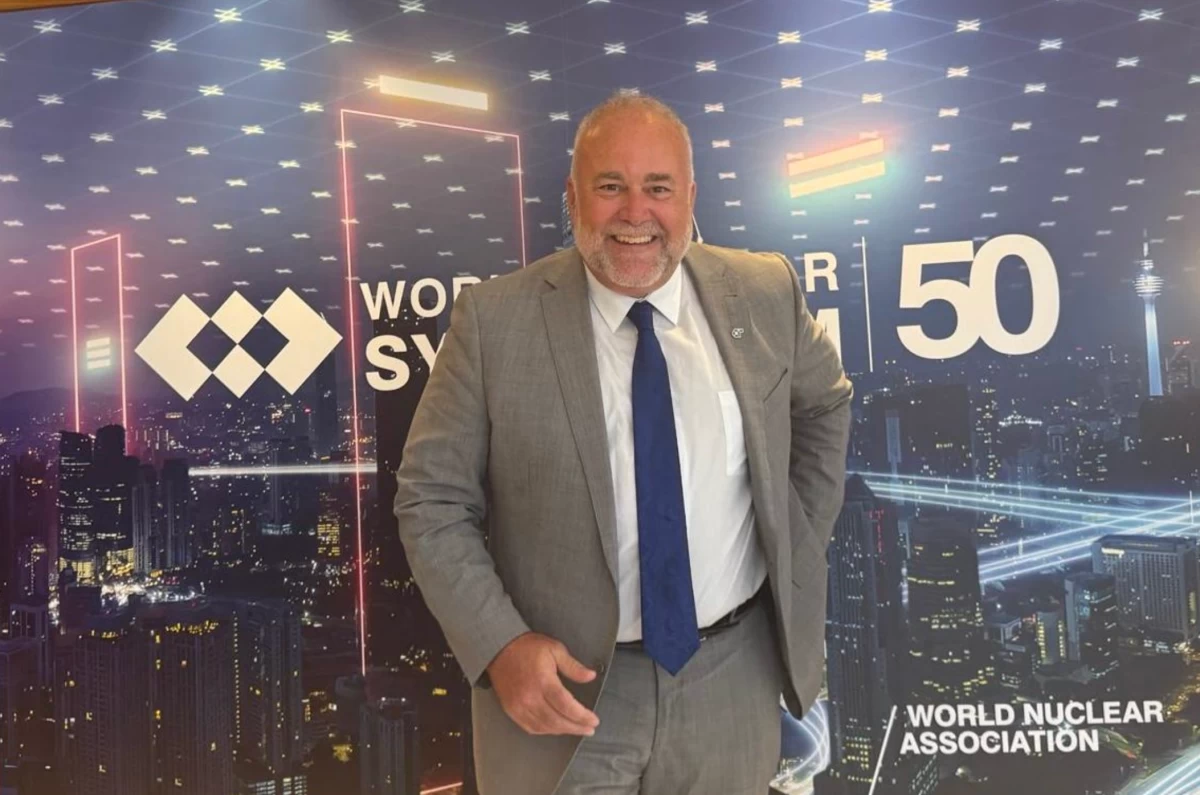
Todd Smith - VP for Candu Marketing & Business Development at Candu Energy Inc (Atkins Realis)
LONDON, England – Canadian engineering firm Atkins Realis is in ‘collaborative talks’ with Philippine power companies for technology deployment on a targeted first 700-megawatt greenfield nuclear power project that will be equipped with Canada’s enhanced CANDU 6 reactor.
In an exclusive interview on the sidelines of the ongoing World Nuclear Symposium here, Todd Smith, vice president for Candu Marketing & Business Development of Candu Energy Inc of the Atkins Realis group, said “we’re already over a year in conversations with different stakeholders in the Philippines… and we believe that we’re making good progress with a number of IPPs (independent power producers) and also with the government.”
Candu Energy holds an exclusive license for Candu nuclear reactors that have already been deployed for various projects in different parts of the world. The company specializes in the design, supply, and servicing of this technology.
Smith disclosed that the power companies being engaged for a new nuclear project in the Philippines include the energy investment arm of San Miguel Corporation, Meralco PowerGen Corp., Aboitiz Power Corp., Prime Infrastructure Capital of the Razon Group as well as GNPower Ltd. Co.
“It’s a positive step for our company, Candu and Atkins Realis – we believe that we have the project that will work within the current grid in the Philippines,” he emphasized.
Smith further noted “the IPPs we’re talking to by now have spent fair amount of time understanding on what the government is looking to accomplish in the targets that had been set for nuclear power,” adding that one major step that could happen for the country would be the enactment of the ratified bill creating the Philippine Atomic Energy Regulatory Authority (PhilAtom) which is now at the desk of President Marcos.
If the legislative measure will not be signed by the President, the PhilAtom Bill is expected to lapse into law by Sept. 20 this year.
He qualified that the Philippine power producers “want to see the government first create the environment and create the regulatory environment for them to be successful – I believe that this will happen with the PhilAtom Bill … the government has now moved and created the PhilAtom bill; and we’re hopeful that this will result in positive news to the Philippines when it comes to the nuclear front.”
Smith highlighted “Candu, being the only technology in the world that operates using natural uranium is key – and we offer energy security to the country; which I know is something that the Philippines is interested in – and enhanced Candu 6 is a medium-sized reactor; it’s of 700MW which will fit into the Philippines’ grid really well.”
The enhanced Candu 6 reactor had already been deployed for nuclear power installations in Quebec and New Brunswick in Canada, as well as for projects in Pakistan, Argentina, South Korea, Romania and China.
“In jurisdictions where Candu plants are operating now, we’re providing affordable, reliable 24/7 baseload power, which is something that the Philippines desperately needs. It will actually bring more stability to electricity prices over the long-term because these are not just 5-year or 20-year assets; these are 100-year assets that we are providing as important baseload power in the grid, it’s emissions free,” he explained.
Smith indicated “as coal plants are phasing out and the need for clean energy is growing – this is the only way that you would be able to meet that demand in the country – for the Philippines to have nuclear power.”
He conveyed “what we’ve seen in countries which built nuclear plants, they have really stabilized prices and that allowed them to build an economy around nuclear ecosystem that results in thousands of jobs, and that also increased the attractiveness for new developments and new investments in the countries where the Candus have been deployed.”
Project siting and financing
The Canadian firm executive stated there are already sites being explored for the planned greenfield nuclear installations – and one prospect is the current site of the mothballed Bataan Nuclear Power Plant (BNPP) if its repowering will no longer be pursued by the government.
“That site (for BNPP) is already licensed for nuclear – which could be a site for greenfield nuclear, but I know that there are a number of sites being considered also by the independent power producers,” he stressed.
Smith noted though that the decision on siting will largely depend with the power producers sponsoring the projects, although he acknowledged that “there had been no really new feasibility studies that had been done on the sites yet – but that’s something that we would have to look at in partnership with the government and the power producers.”
On the financing precept for new nuclear power projects, he pointed out that financing models leaning on public-private partnerships (PPP) or the grant of sovereign guarantees could help concretize planned nuclear power facilities; primarily in de-risking the heavy upfront capital cost.
“A PPP model would definitely work and depending on how the PhilAtom rolls out, its mandate will determine a lot of that … these things can be explored with partners – but certainly, we would want private sector involvement for projects; but there has to be government support as well in terms of sovereign guarantees,” he asserted.