ADVERTISEMENT

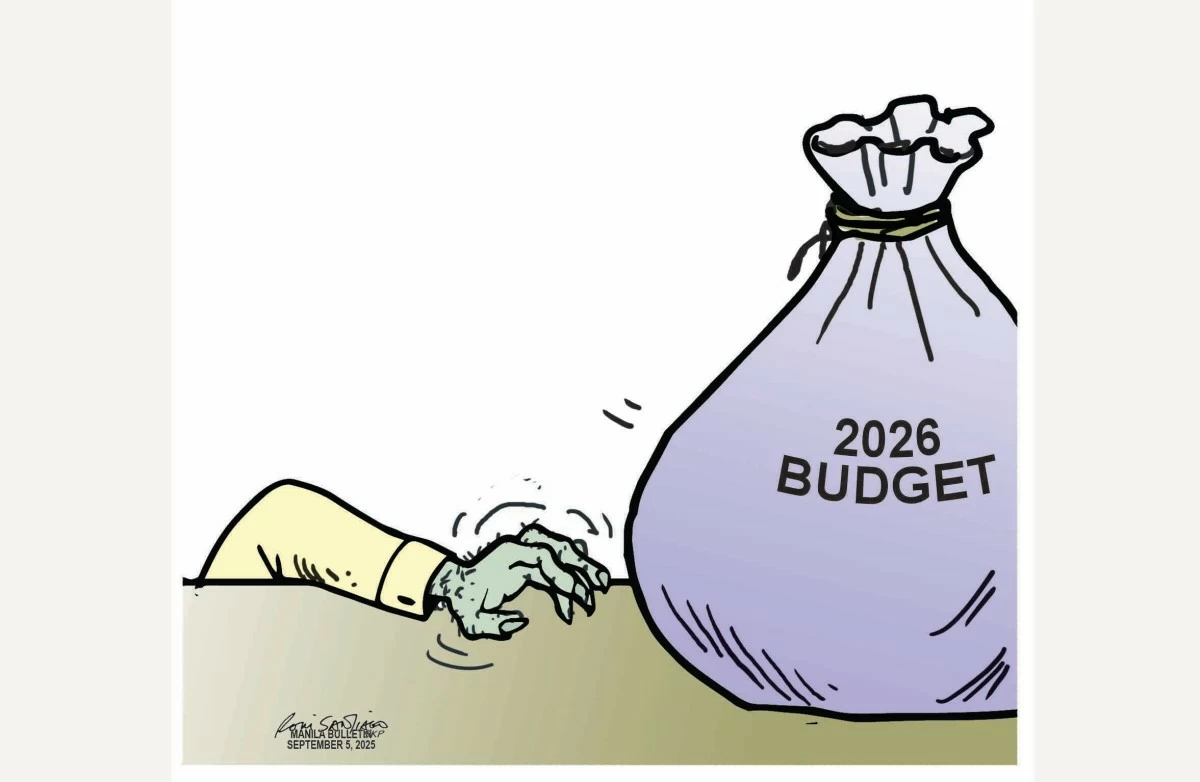
Budget process under siege

Published Sep 5, 2025 12:05 am  |  Updated Sep 5, 2025 04:50 pm
Political party leaders in the House of Representatives, who initially moved to return the proposed 2026 National Expenditure Program (NEP) to the Department of Budget and Management (DBM), have relented. Instead, the House will allow the DBM to address flaws in the NEP during the course of the budget hearings.
Had it pushed through, this would have been an unprecedented move that is laden with political consequence and public concern. Regardless, the move—ostensibly grounded in technical “infirmities”—is far more than an act of legislative housekeeping. It should serve as a wake-up call. This is a blistering indictment of a budget process increasingly viewed as opaque, transactional, and indifferent to the real struggles of the Filipino people.
At the heart of this controversy lies a chilling pattern: flood control projects carrying identical amounts; line items suspiciously duplicating already completed initiatives; bloated lump-sum allocations labeled vaguely as “nationwide” projects; unsolicited—and potentially unauthorized—multi-billion peso firearms procurements under the Department of the Interior and Local Government (DILG) and the Philippine National Police (PNP); and allegations of “allocation-for-sale” schemes in the Department of Agriculture’s budget, commodifying public funds meant for life-changing farm-to-market roads.
The economic implications of such anomalies are staggering. In a nation still reeling from pandemic scars, high inflation, and widening inequality, every peso wasted is an affront to every Filipino struggling to make ends meet. Misallocations like these drain the economy of much-needed investments in infrastructure, education, health care, and agricultural support—sectors vital for inclusive growth and long-term resilience.
But it is not just the economy that is bleeding. The very credibility of our institutions is at stake. When the national budget—a moral document meant to reflect the nation’s priorities and values—is treated as a political pie to be sliced and sold, public trust erodes. This trust deficit weakens the social contract between government and citizen, fueling cynicism, resentment, and disengagement.
That the House, long perceived by many as a rubber stamp for Malacañang, had attempted to push back raises serious questions, though. Is this genuine fiscal stewardship or political maneuvering? No matter what, the underlying message is clear: the integrity of the budgeting process is under siege, and it is the Filipino people who are footing the bill. This is why it is crucial to address the red flags, pronto.
While the House has relented, all eyes remain focused on President Ferdinand Marcos Jr. and the DBM. The President cannot remain a passive observer in this particular issue. Silence or inaction may be construed as complicity. If he is sincere in his promises of good governance and economic revival, he has to demand a full audit of the anomalies, hold accountable those who engineered these distortions, and ensure that the 2026 budget reflects not just legal compliance but moral clarity.
For its part, the DBM must restore credibility to the budget process. It must commit to zero tolerance for vague lump sums, ensure transparency in all line items, and subject unsolicited proposals to the strictest scrutiny. The agency must resist all forms of political pressure and uphold the principle that public funds are not private entitlements.
The House decision has somehow tempered the specter of a reenacted 2025 budget, which is already tainted by similar irregularities. But if this scenario repeats, it will represent not just administrative failure but moral collapse. The consequences will be dire: development stalled, services delayed, lives further burdened.
At this moment of reckoning, we must ask: Who is the budget really for? Every wasted peso is a stolen opportunity—a school unfunded, a hospital left wanting, Juan dela Cruzes kept in poverty, and communities vulnerable to floods that might have been prevented.
The discovery of the flaws in NEP is a call to conscience. The Filipino people deserve a government that honors their sacrifice with fiscal discipline, transparency, and compassion. Anything less is betrayal.
ADVERTISEMENT
.most-popular .layout-ratio{ padding-bottom: 79.13%; } @media (min-width: 768px) and (max-width: 1024px) { .widget-title { font-size: 15px !important; } }

{{ articles_filter_1561_widget.title }}

.most-popular .layout-ratio{ padding-bottom: 79.13%; } @media (min-width: 768px) and (max-width: 1024px) { .widget-title { font-size: 15px !important; } }

{{ articles_filter_1562_widget.title }}

.most-popular .layout-ratio{ padding-bottom: 79.13%; } @media (min-width: 768px) and (max-width: 1024px) { .widget-title { font-size: 15px !important; } }

{{ articles_filter_1563_widget.title }}

{{ articles_filter_1564_widget.title }}

.mb-article-details { position: relative; } .mb-article-details .article-body-preview, .mb-article-details .article-body-summary{ font-size: 17px; line-height: 30px; font-family: "Libre Caslon Text", serif; color: #000; } .mb-article-details .article-body-preview iframe , .mb-article-details .article-body-summary iframe{ width: 100%; margin: auto; } .read-more-background { background: linear-gradient(180deg, color(display-p3 1.000 1.000 1.000 / 0) 13.75%, color(display-p3 1.000 1.000 1.000 / 0.8) 30.79%, color(display-p3 1.000 1.000 1.000) 72.5%); position: absolute; height: 200px; width: 100%; bottom: 0; display: flex; justify-content: center; align-items: center; padding: 0; } .read-more-background a{ color: #000; } .read-more-btn { padding: 17px 45px; font-family: Inter; font-weight: 700; font-size: 18px; line-height: 16px; text-align: center; vertical-align: middle; border: 1px solid black; background-color: white; } .hidden { display: none; }
function initializeAllSwipers() { // Get all hidden inputs with cms_article_id document.querySelectorAll('[id^="cms_article_id_"]').forEach(function (input) { const cmsArticleId = input.value; const articleSelector = '#article-' + cmsArticleId + ' .body_images'; const swiperElement = document.querySelector(articleSelector); if (swiperElement && !swiperElement.classList.contains('swiper-initialized')) { new Swiper(articleSelector, { loop: true, pagination: false, navigation: { nextEl: '#article-' + cmsArticleId + ' .swiper-button-next', prevEl: '#article-' + cmsArticleId + ' .swiper-button-prev', }, }); } }); } setTimeout(initializeAllSwipers, 3000); const intersectionObserver = new IntersectionObserver( (entries) => { entries.forEach((entry) => { if (entry.isIntersecting) { const newUrl = entry.target.getAttribute("data-url"); if (newUrl) { history.pushState(null, null, newUrl); let article = entry.target; // Extract metadata const author = article.querySelector('.author-section').textContent.replace('By', '').trim(); const section = article.querySelector('.section-info ').textContent.replace(' ', ' '); const title = article.querySelector('.article-title h1').textContent; // Parse URL for Chartbeat path format const parsedUrl = new URL(newUrl, window.location.origin); const cleanUrl = parsedUrl.host + parsedUrl.pathname; // Update Chartbeat configuration if (typeof window._sf_async_config !== 'undefined') { window._sf_async_config.path = cleanUrl; window._sf_async_config.sections = section; window._sf_async_config.authors = author; } // Track virtual page view with Chartbeat if (typeof pSUPERFLY !== 'undefined' && typeof pSUPERFLY.virtualPage === 'function') { try { pSUPERFLY.virtualPage({ path: cleanUrl, title: title, sections: section, authors: author }); } catch (error) { console.error('ping error', error); } } // Optional: Update document title if (title && title !== document.title) { document.title = title; } } } }); }, { threshold: 0.1 } ); function showArticleBody(button) { const article = button.closest("article"); const summary = article.querySelector(".article-body-summary"); const body = article.querySelector(".article-body-preview"); const readMoreSection = article.querySelector(".read-more-background"); // Hide summary and read-more section summary.style.display = "none"; readMoreSection.style.display = "none"; // Show the full article body body.classList.remove("hidden"); } document.addEventListener("DOMContentLoaded", () => { let loadCount = 0; // Track how many times articles are loaded const offset = [1, 2, 3, 4, 5, 6, 7, 8, 9, 10]; // Offset values const currentUrl = window.location.pathname.substring(1); let isLoading = false; // Prevent multiple calls if (!currentUrl) { console.log("Current URL is invalid."); return; } const sentinel = document.getElementById("load-more-sentinel"); if (!sentinel) { console.log("Sentinel element not found."); return; } function isSentinelVisible() { const rect = sentinel.getBoundingClientRect(); return ( rect.top < window.innerHeight && rect.bottom >= 0 ); } function onScroll() { if (isLoading) return; if (isSentinelVisible()) { if (loadCount >= offset.length) { console.log("Maximum load attempts reached."); window.removeEventListener("scroll", onScroll); return; } isLoading = true; const currentOffset = offset[loadCount]; window.loadMoreItems().then(() => { let article = document.querySelector('#widget_1690 > div:nth-last-of-type(2) article'); intersectionObserver.observe(article) loadCount++; }).catch(error => { console.error("Error loading more items:", error); }).finally(() => { isLoading = false; }); } } window.addEventListener("scroll", onScroll); });

Sign up by email to receive news.