






Manila Bulletin
 Philippines
National
PH Navy holds anti-submarine warfare game with Australia, Canada and US counterparts
Philippines
National
PH Navy holds anti-submarine warfare game with Australia, Canada and US counterparts
Philippines
National
PH Navy holds anti-submarine warfare game with Australia, Canada and US counterparts
PH Navy holds anti-submarine warfare game with Australia, Canada and US counterparts
Published Sep 4, 2025 11:24 am


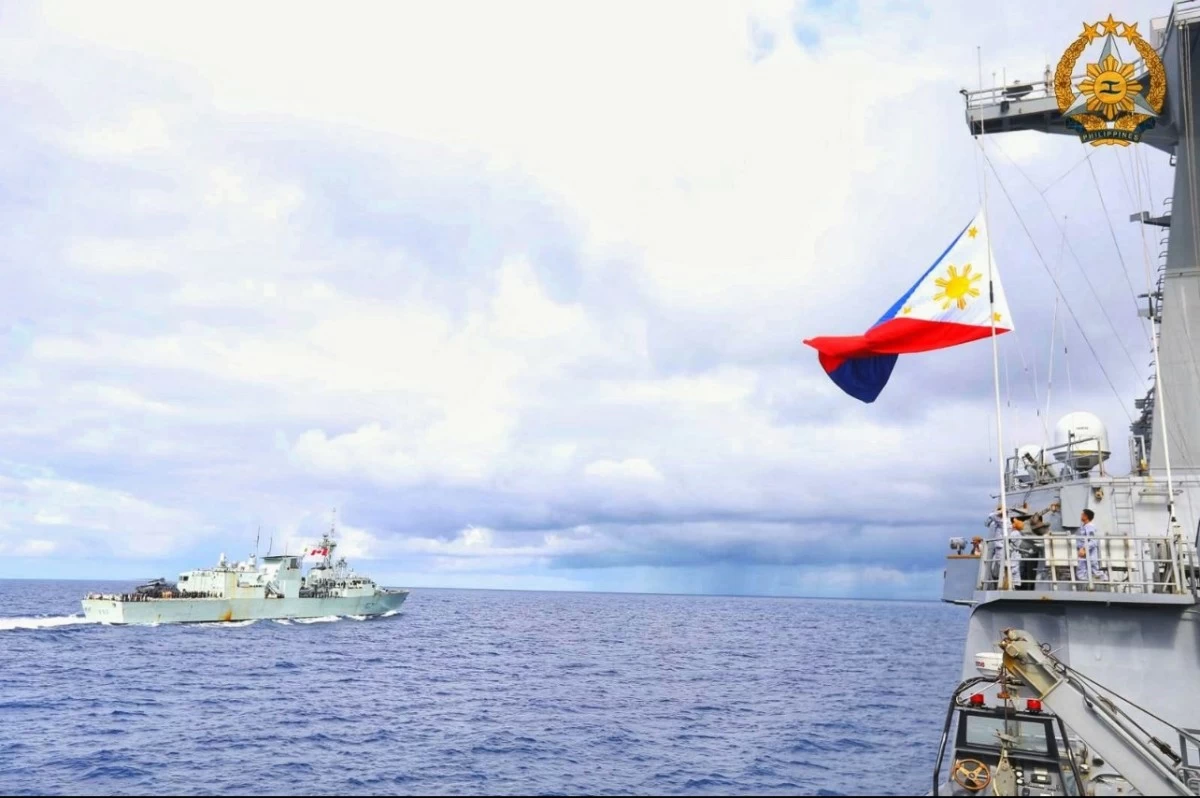
photo: Armed Forces of the Philippines
Filipino Navy personnel conducted an anti-submarine warfare exercise with their counterparts from the United States, Australia and Canada during a two-day military exercises in the West Philippine Sea.
Gen. Romeo Brawner, chief of staff of the Armed Forces of the Philippines (AFP), said the Coordinated Anti-Submarine Warfare Exercise (CASEX C2 Reverse) was one of the war games conducted during the 10th Multilateral Maritime Cooperative Activity (MMCA) that started on Sept. 2.
He said the anti-submarine warfare exercise, held in the waters off Zambales. enhanced detection and tracking capabilities of the Philippine Navy personnel and their counterparts from the Royal Australian Navy (RAN), the Royal Canadian Navy (RCN), and the United States Indo-Pacific Command.
“The 10th MMCA reaffirms our collective resolve to protect our seas and uphold a rules-based international order. We will continue to build on this foundation of trust, proving that we are indeed stronger together,” said Brawner.
The maritime exercises also featured the deployment of premier naval and air assets from the Philippines such as the BRP Jose Rizal (FF150) that was supported by an AW159 helicopter, a search and rescue Sokol aircraft, and a C-208B surveillance platform.
Australia deployed its HMAS Brisbane (DDG41) and P-8A Poseidon maritime patrol aircraft while Canada tapped HMCS Ville de Quebéc (FFH332) and CH-148 Cyclone.
The United States deployed a P-8A Poseidon.
Aside from anti-submarine exercise, the four-nation military exercises also include a Vertical Replenishment (VERTREP) to test at-sea logistics and resupply operations, a Personnel Exchange conducted via RHIB that enabled Australian and Philippine sailors to share best practices onboard, and a Passing Exercise (PASSEX) for seamless coordination and interoperability of all participating forces.