







Peace Month's global lessons for PH: Strengthening peace amid challenges
Published Sep 4, 2025 12:01 am
|
Updated Sep 3, 2025 04:59 pm


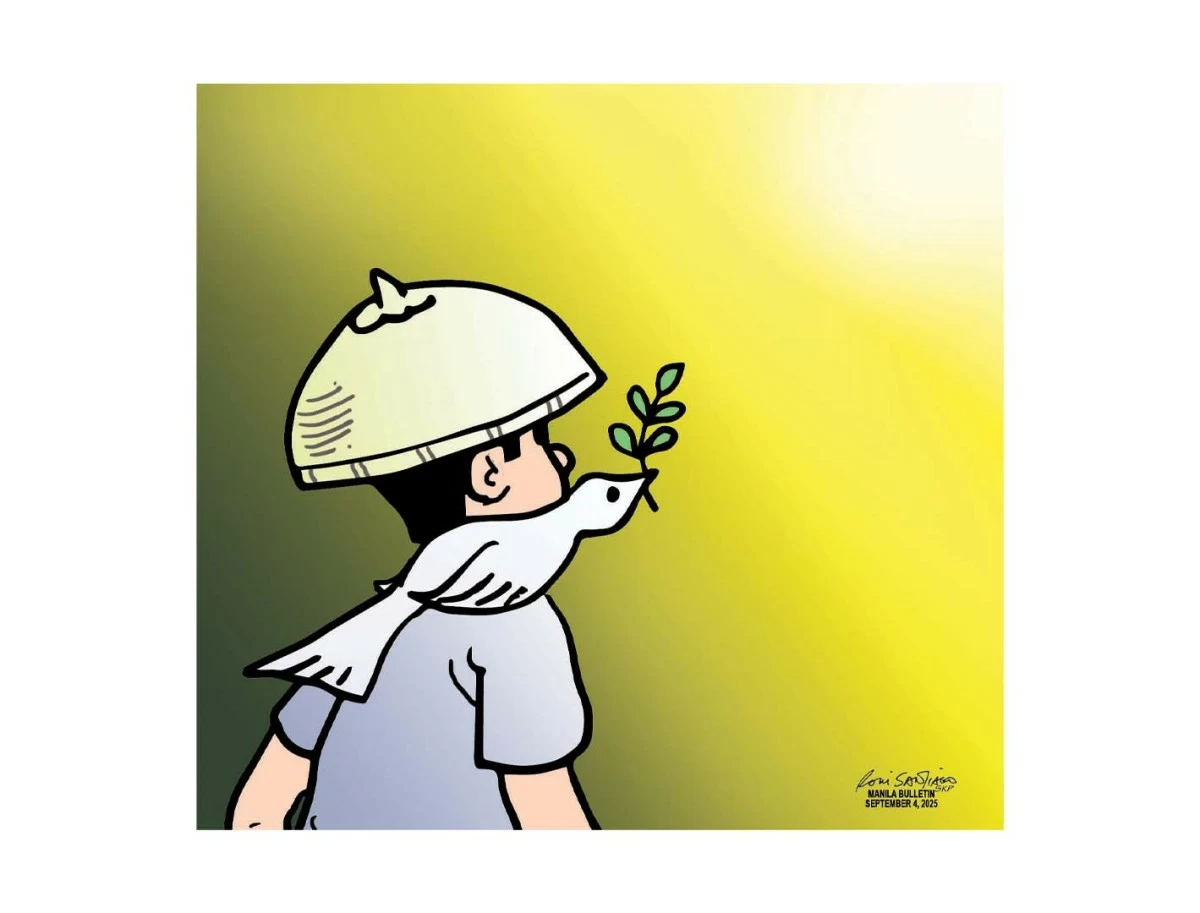
As the Philippines marks National Peace Month this September, led by the Office of the Presidential Adviser for Peace, Reconciliation and Unity (OPAPRU), the nation stands at a critical juncture in its long and complex journey toward lasting peace. This year’s observance gains deeper resonance as it follows the country’s participation in two key international initiatives: the first Peacebuilding Learning Route between Bogotá and Manila, and the five-nation South-South Cooperation Study Tour involving Colombia, Cameroon, Nigeria, the Democratic Republic of Congo (DRC), and the Philippines.
These twin initiatives bring new energy and perspective to the country’s peacebuilding efforts. The Peacebuilding Learning Route, an innovative collaboration between Bogotá and Manila, reflects a growing recognition that countries emerging from conflict share not only burdens, but also lessons. It offered the Philippines a platform to showcase its evolving peace infrastructure, while learning from Colombia’s advances in transitional justice and reintegration. The reciprocal visit of a Colombian delegation to the Philippines — as part of the South-South Study Tour — reinforced this spirit of mutual learning and solidarity.
Crucially, this global engagement occurs as the Philippines continues to navigate the post-conflict transition in the Bangsamoro Autonomous Region in Muslim Mindanao (BARMM). While the region prepares for its first parliamentary elections, the internal impasse within the Moro Islamic Liberation Front (MILF) poses a significant challenge. Leadership tensions within the MILF risk undermining public confidence in the transition, and in the peace process as a whole.
It is in this context that international partnerships become not just symbolic, but strategically vital. Countries like Colombia offer valuable insights into maintaining momentum in the face of political divisions. Likewise, the experiences of Nigeria, Cameroon, and the DRC — where peace processes are also challenged by fragmentation — reinforce the importance of inclusive governance, local peace dividends, and sustained external support.
Among the Philippines’ steadfast partners in this journey is Japan, whose contributions have long transcended funding. Through its enduring support for development and demilitarization efforts in BARMM, and its active involvement in the World Peace Bell movement, Japan exemplifies a holistic approach to peace. The Peace Bell — envisioned as a symbolic chain of global unity for a nuclear-free and conflict-free world — aligns closely with the ideals promoted during National Peace Month: reconciliation, cooperation, and shared humanity.
Japan’s quiet diplomacy and tangible investments in Mindanao’s peace infrastructure — from livelihood programs to educational support and the work of the International Monitoring Team (IMT) — underscore how sustained international commitment can stabilize fragile transitions. Its presence provides both moral and material support to BARMM as it attempts to navigate a historic political milestone amid internal turbulence.
As the Philippines looks outward for insight and inward for resolve, it must recognize that peace building is a continuing process that must be nourished through political will, social trust, and global cooperation. National Peace Month is not only a time for commemoration but a call to action. It is imperative to address the remaining fault lines within our own peace processes, while continuing to learn from, and contribute to, the global peace movement.
The road ahead remains uncertain. But with shared knowledge, steadfast allies like Japan, and a commitment to inclusivity, the Philippines can continue to move forward: one step, one dialogue, one vote at a time.