






Manila Bulletin
 Philippines
National
Marcos signs law creating new fiscal regime for large-scale metallic mining
Philippines
National
Marcos signs law creating new fiscal regime for large-scale metallic mining
Philippines
National
Marcos signs law creating new fiscal regime for large-scale metallic mining
Marcos signs law creating new fiscal regime for large-scale metallic mining
Published Sep 4, 2025 09:51 am
|
Updated Sep 4, 2025 02:22 pm


At A Glance
- Marcos said the signing of RA 12253 sends a very clear and powerful message: "Progress shall never come at the cost of our people, nor our planet."
President Marcos has signed Republic Act No. 12253, also known as the Enhanced Fiscal Regime for Large-Scale Metallic Mining Act, describing it as a landmark reform that will ensure transparency, accountability, and a fairer share of revenues from the country’s mineral resources.
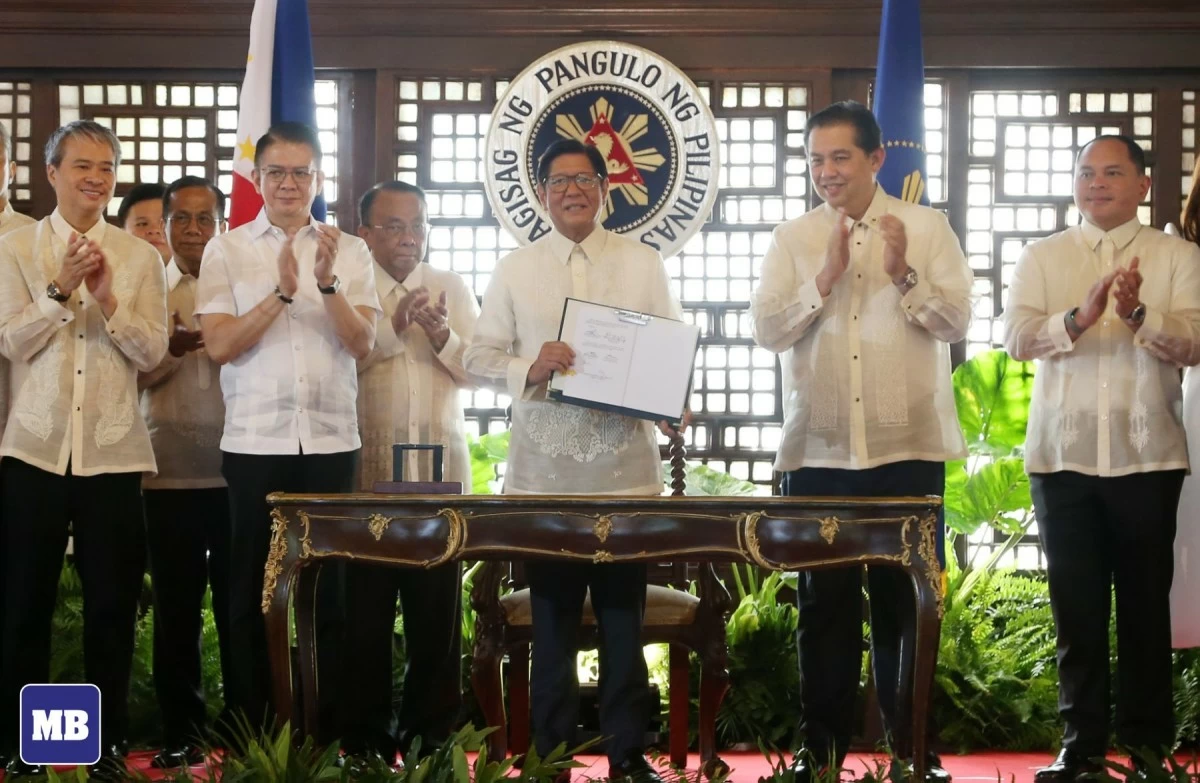
President Ferdinand 'Bongbong' Marcos Jr. sign into law the Enhanced Fiscal Regime for Large-Scale Metallic Mining Act in Malacañan on Sept. 4, 2025. Joining the President were Executive Secretary Lucas Bersamin, Senate President Francis Escudero, House Speaker Martin Romualdez, House Majority Leader Sandro Marcos, Senate Majority Leader Joel Villanueva, and other officials. (Mark Balmores)
In a ceremony in Malacañan on Thursday, Sept. 4, Marcos said the signing of RA 12253 sends a very clear and powerful message: “Progress shall never come at the cost of our people, nor our planet.”
“Together, let us build the mining industry that is transparent, accountable, and sustainable. One where our communities are empowered, our environment preserved, and our people are the ultimate beneficiaries of this progress,” he said in his speech.
According to the President, the new law would strengthen the mining industry and ensure that the benefits of the country’s resources would benefit ordinary Filipinos.
“Mas magiging simple ang pamamalakad at paggamit sa pondo na mula sa pagmimina, matitiyak na may bahagi ang pamahalaan sa kita, maitataguyod ang malinaw at tapat na sistema, at maibibigay ang seguridad sa mga mamumuhunan (The management and use of mining revenues will be simplified, the government’s share will be secured, a clear and honest system will be established, and investors will be given certainty),” he said.
A fairer system
Marcos described the measure as a system that is fairer, clearer, and more responsive to the needs of both our people and the environment.
The law imposes a five percent royalty on mining firms operating within government-designated sites, while those outside will be subject to a margin-based royalty depending on their profitability.
It also introduces a windfall profits tax of up to 10 percent on companies whose margins exceed 30 percent, alongside existing corporate income taxes and excise taxes.
“Gone are the days when a mining contractor can bury its profits beneath the weight of losses. No longer can we use one project’s failure to conceal another project’s success,” Marcos said.
Strengthening oversight
Under the law, the Bureau of Internal Revenue and the Bureau of Customs are mandated to audit all sales and exports of minerals and inspect company records, in coordination with the Mines and Geosciences Bureau.
The President emphasized that transparency “is now the rule, accountability our standard, and fairness the measure by which we move forward.”
The law also introduces a ring-fencing rule requiring each mining project to be treated as a separate taxable entity, preventing firms from consolidating income and expenses across projects.
Benefits for LGUs and communities
President Marcos stressed that revenues from mining should directly benefit local governments and communities most affected by extractive operations.
Under RA 12253, 40 percent of collections from excise taxes, royalties, and other fees will go to LGUs, while 10 percent of royalties from government sites will be earmarked for the Mines and Geosciences Bureau and the Metals Industry Research and Development Center to establish mineral valuation laboratories and facilities.
“This ensures that the communities that bear the brunt of mines will also experience their benefits,” he said.
Balancing development and environment
Marcos underscored that the country’s mineral wealth is finite and must be managed with sustainability in mind.
“Minerals are finite. Once extracted, they are gone forever,” he noted.
“But if we use them wisely—tax them fairly, protect our environment as we mine, and ensure that revenues return to the people—then their value will outlive all of us,” he said.
The law also mandates the reinvestment of a portion of mining royalties in exploration, research, and environmental protection through natural capital accounting.
Based on government estimates, the new regime is expected to generate P25.08 billion in revenues from 2026 to 2029, or an average of P6.26 billion annually.