






Manila Bulletin
 Lifestyle
Fashion and Beauty
Ushi Sato's 'Kutawatu' collection honors the regal past of Cotabato
Lifestyle
Fashion and Beauty
Ushi Sato's 'Kutawatu' collection honors the regal past of Cotabato
Lifestyle
Fashion and Beauty
Ushi Sato's 'Kutawatu' collection honors the regal past of Cotabato
Ushi Sato's 'Kutawatu' collection honors the regal past of Cotabato
The Filipino fashion designer showcased his latest collection at the Precious of Malaysia Cultural Fashion Week 2025
By John Legaspi
Published Sep 3, 2025 04:27 pm


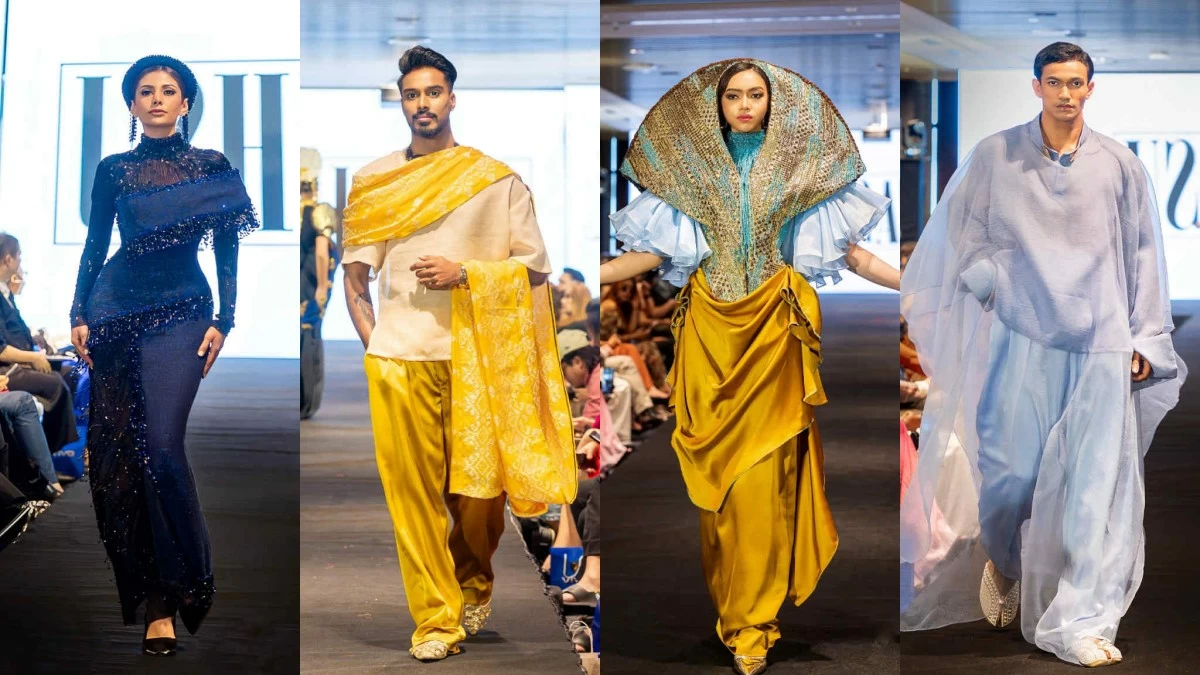
Long ago, Cotabato was different from the province we know today. Back then, it was a vast land with abundant resources, ruled by sultanates. Its area was so enormous that it was once called the Empire Province of Cotabato. Its former territory is now divided into the provinces of Cotabato, South Cotabato, Maguindanao, Sarangani, and Sultan Kudarat. While its borders have changed, its culture and heritage have remained vibrant, from the traditions of the Manobo and Bagobo ethnic groups to those of the Muslim communities.
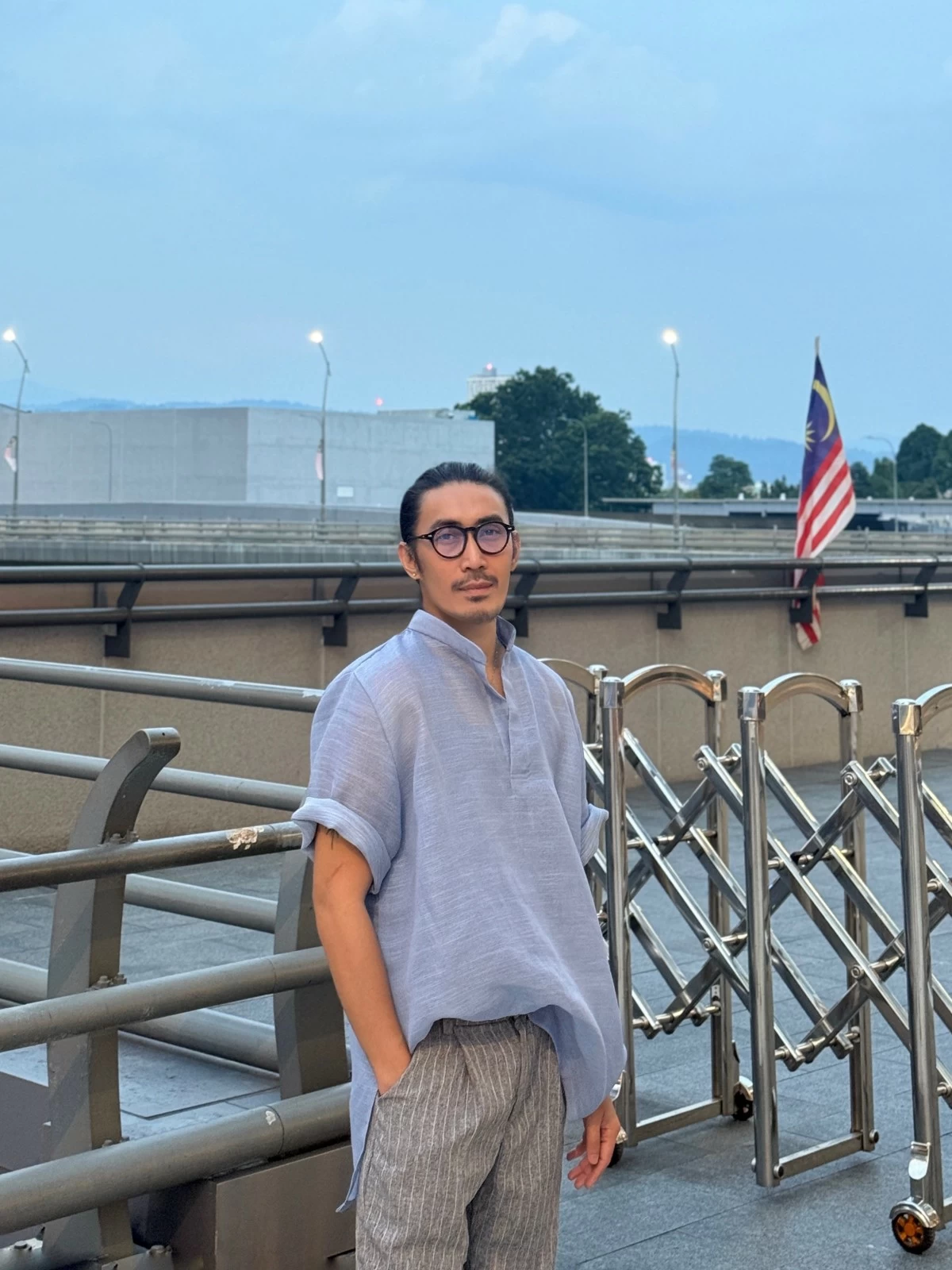
Ushi Sato
That was the scene Ushi Sato grew up with. That is why, when he participated in Precious of Malaysia Cultural Fashion Week 2025 (POM), held on Aug. 17, 2025, at the TRX Menara Affin in Kuala Lumpur, he aimed to craft a collection that captured his upbringing and the colors that shaped his childhood.
“I was born and raised in the Province of Cotabato. When I was little, Cotabato City was like my Disneyland,” Ushi tells Manila Bulletin Lifestyle. “Those years, the city was peaceful and colorful. I get to see boats, Muslim people in their beautiful garbs, and experience the real ‘barter trade,’ where people exchanged things.”
Ushi is the youngest of five children. While his mother worked as a seamstress, he never thought of pursuing a career in design. After feeling unfulfilled in nursing school, he shifted gears and enrolled at the Fashion Institute of the Philippines to study fashion design. For 15 years, he lived and worked in Dubai, where his skills in intricate and couture clothing were honed, with the help of his mentor, Filipino fashion designer Albert Andrada. Eventually, he returned to the Philippines, creating elaborate pieces for celebrities and Manila’s stylish crowd.
Ushi’s journey to POM began when he saw a call for Philippine delegates issued by Philippine national director Dong Omaga-Diaz. Though hesitant at first, he sent his application with encouragement from Albert. After making it to the Philippine roster, he went on to create his collection. His line, dubbed “Kutawatu,” is a reimagination of the golden age of his beloved province, dreaming what local royals might wear in modern society.
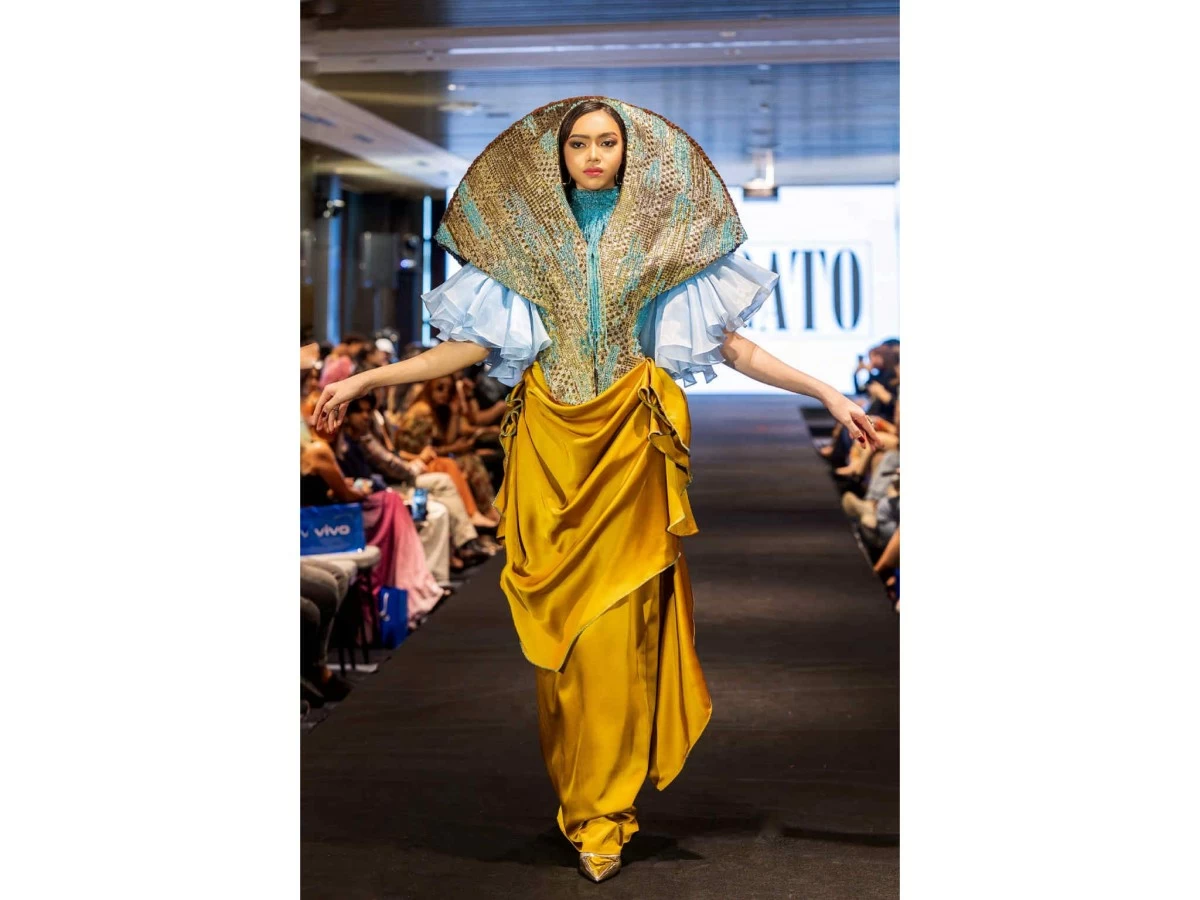
Photo by Roger Lactao Jr.
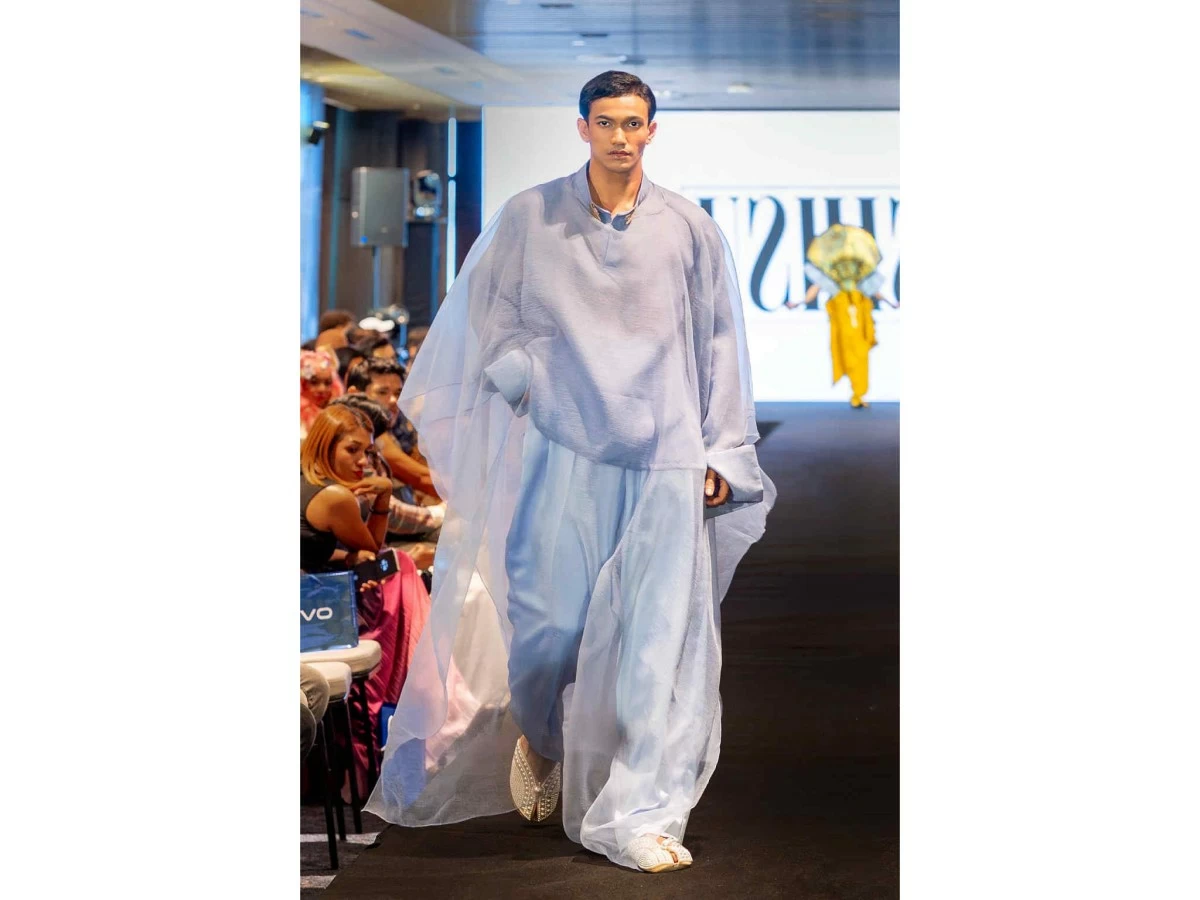
Photo by Roger Lactao Jr.
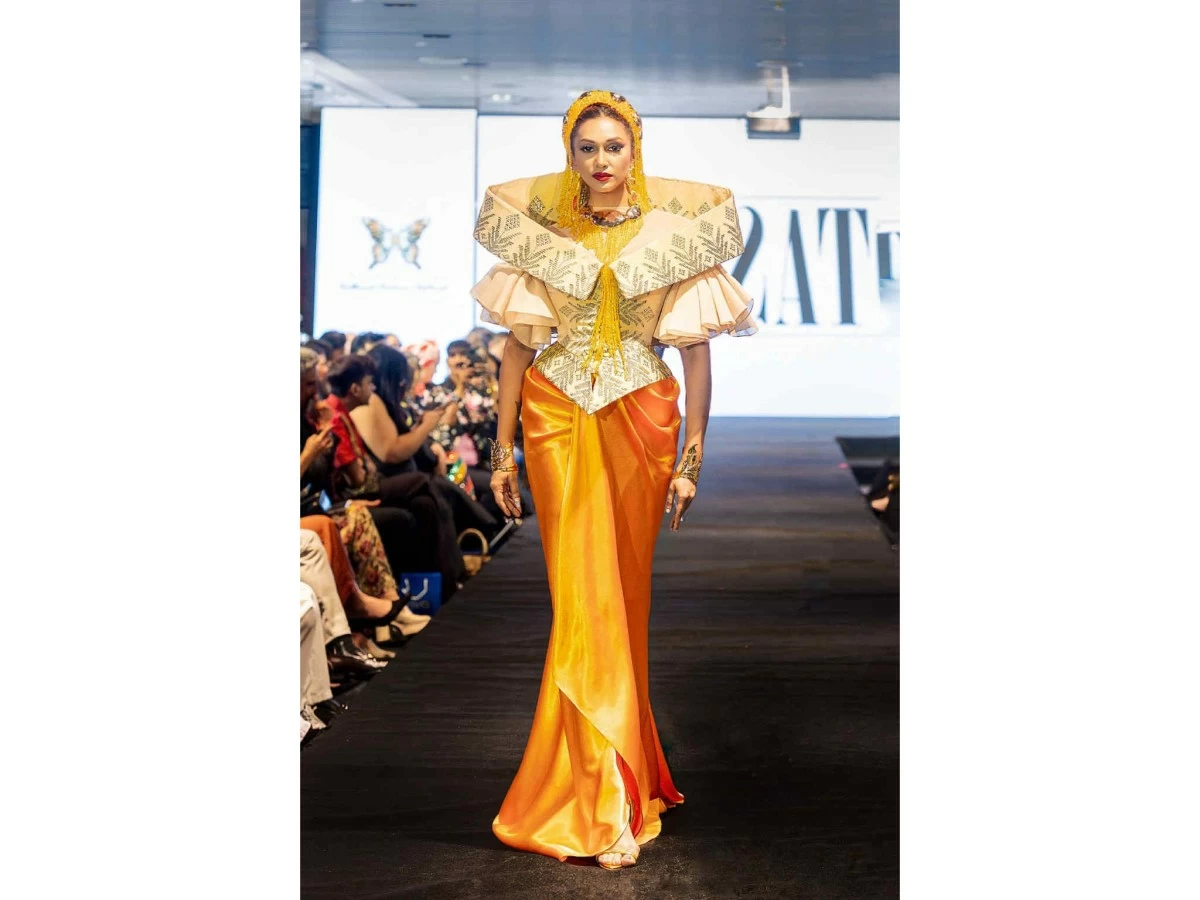
Photo by Roger Lactao Jr.
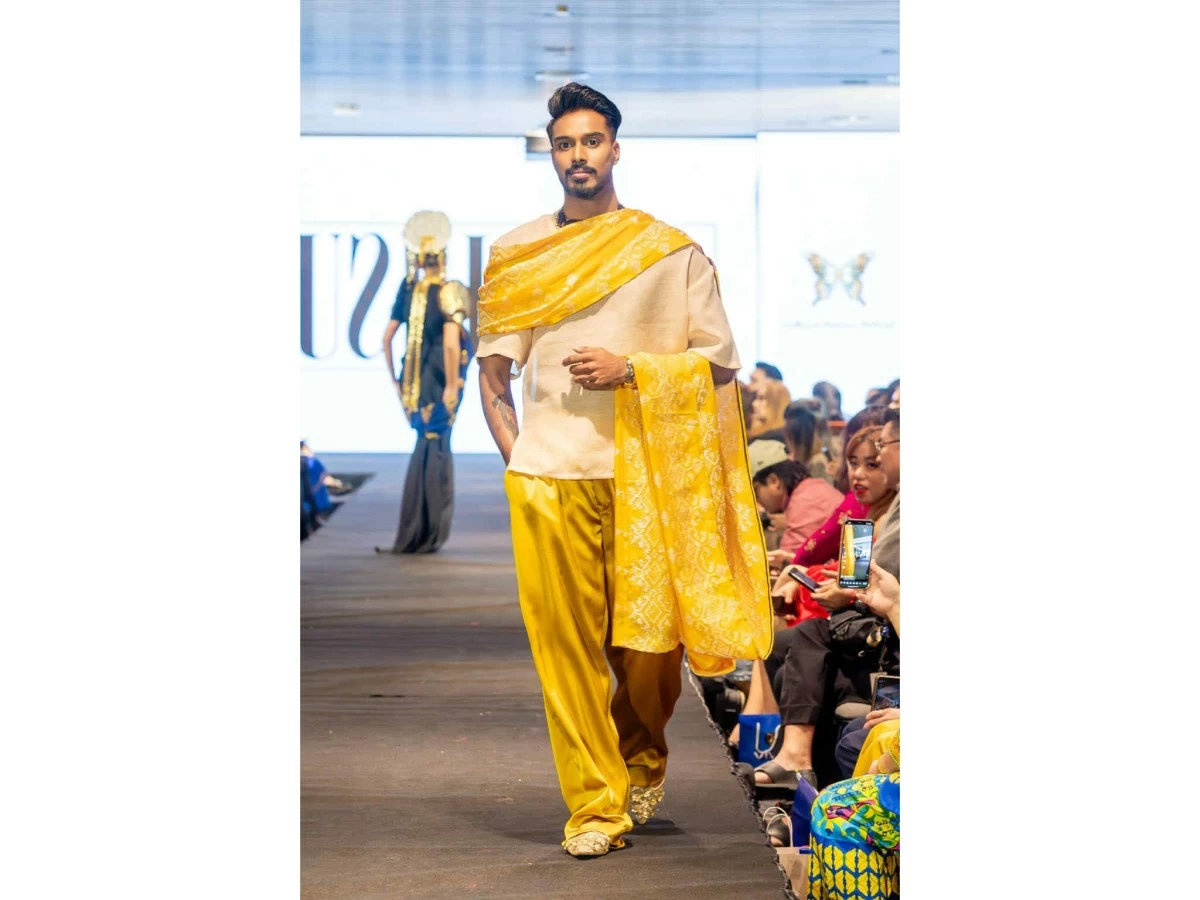
Photo by Roger Lactao Jr.
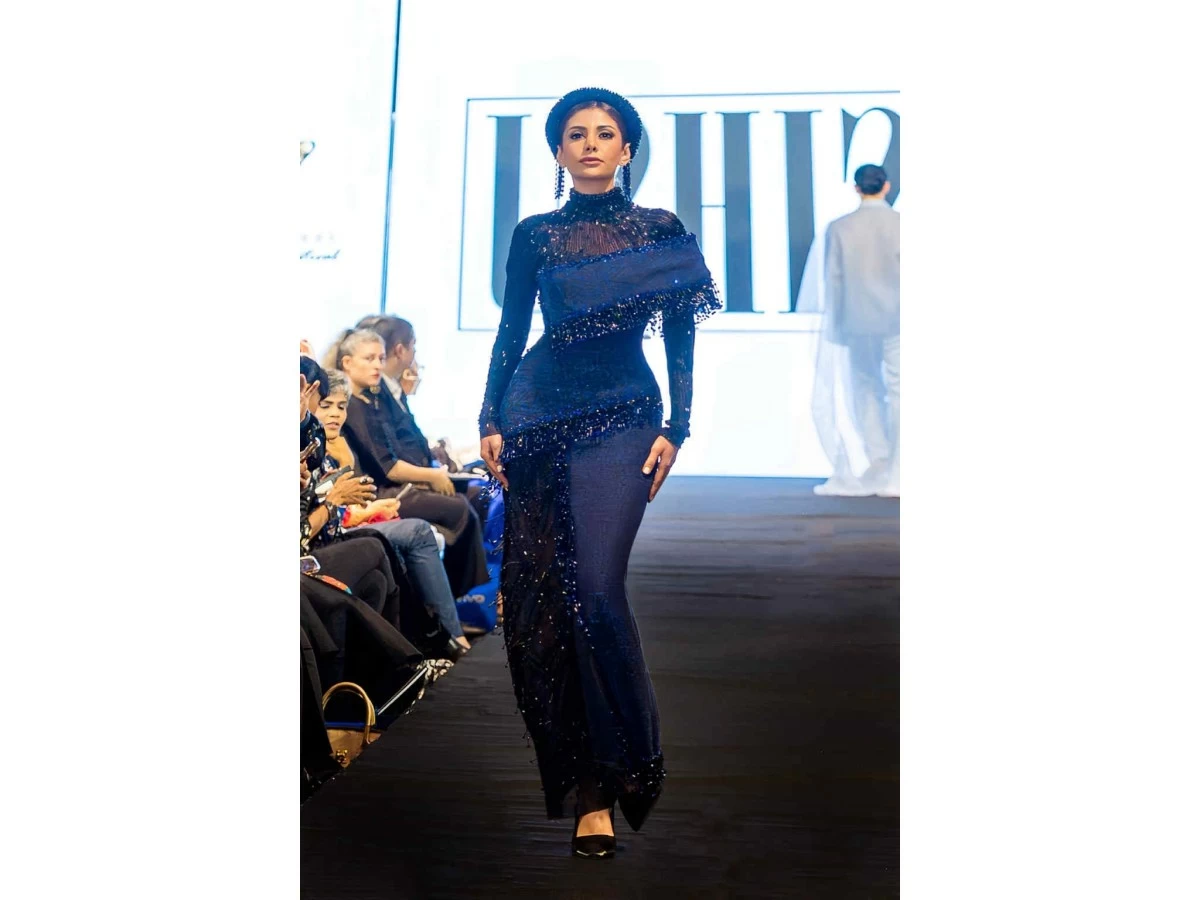
Photo by Roger Lactao Jr.
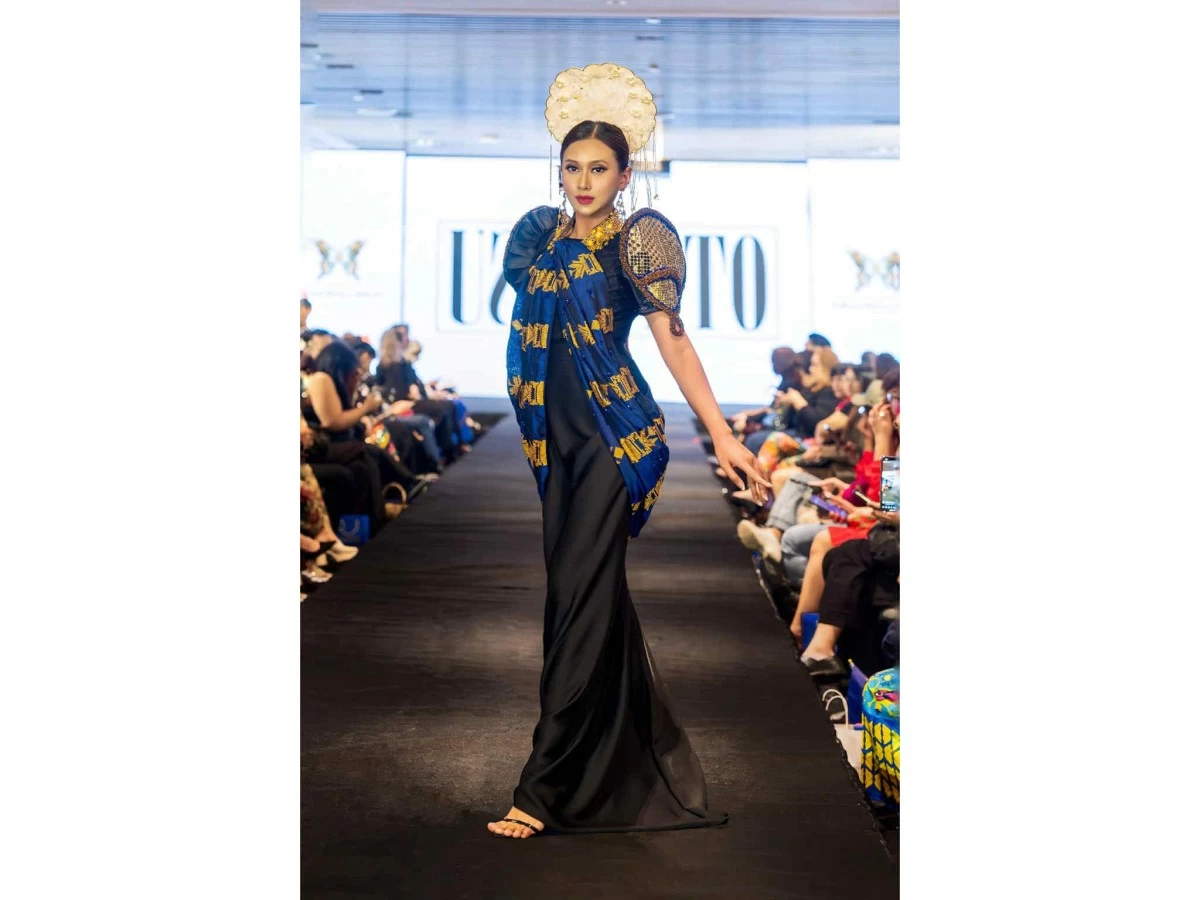
Photo by Roger Lactao Jr.
“I was deeply inspired by the traditional wraps and drapes used in daily life, items that served as blankets, baby carriers, even bags—reimagined into garments that honor their origins while offering fresh relevance,” the designer muses. “It was fascinating and, at the same time, it tickled my young imagination into fantasy land.”
In creating the collection, Ushi made sure to use a variety of local fabrics such as inaul from Maguindanao, tennun yakan from Basilan, cotton, and pure silk. Over the course of weeks, he and his team transformed these materials into men’s and women’s pieces featuring graceful drapery, flowing silhouettes, and structured tailoring. Through his work, he was able to bag POM’s Uplifting Traditional Designer Award.
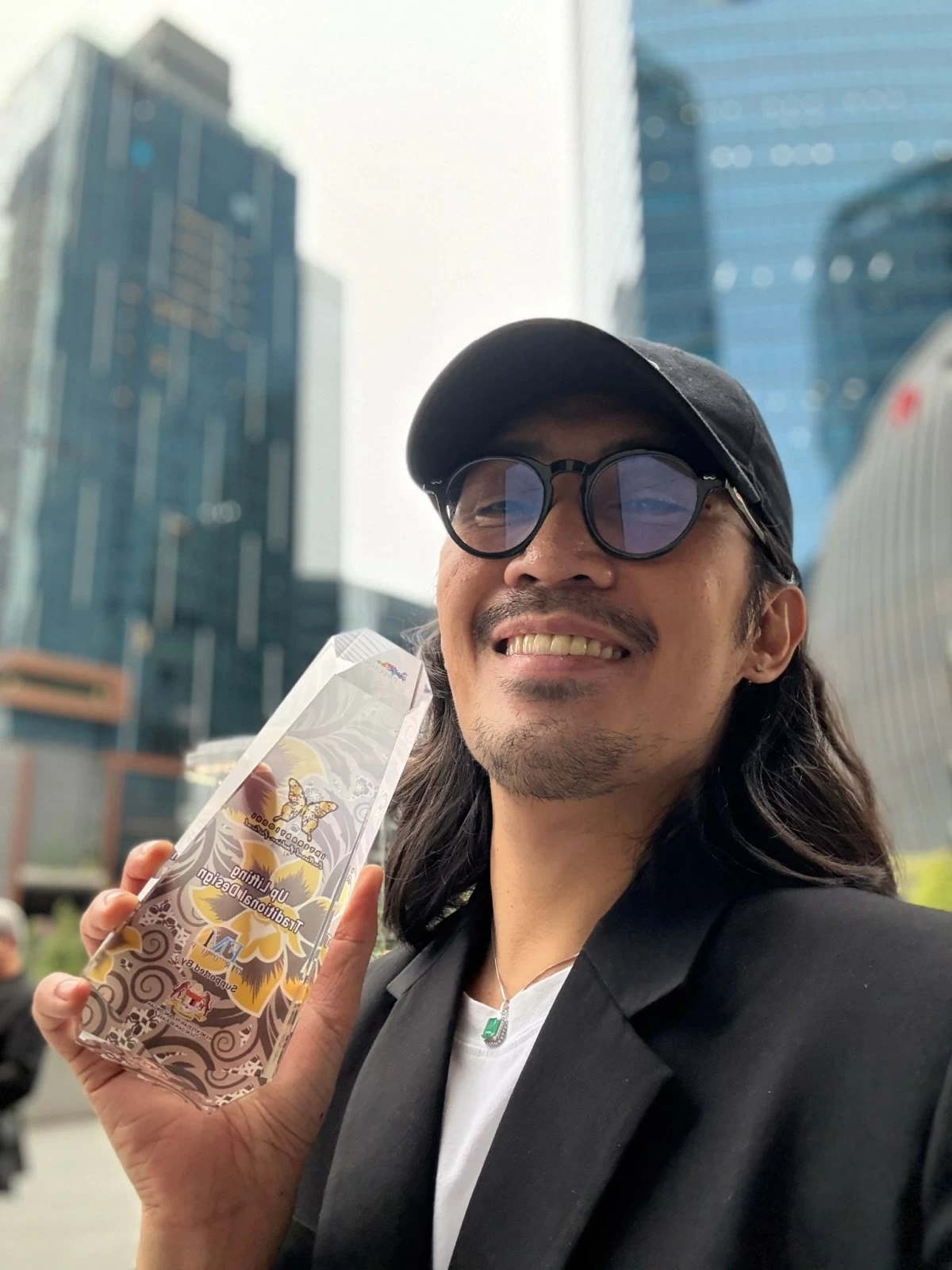
Ushi and his Uplifting Traditional Designer Award
“My goal is to show how rich our heritage and culture are in the southern part of the Philippines. That we too have beautiful, regal, and rich fashion,” Ushi said. “I just wanted to show not only to the world but to our kababayans that we are not just known as a ‘danger zone.’ Because when we talk about Filipino fashion, we immediately think of terno and barong. There were a lot of thoughts that went into making my collection, but throughout those days of brainstorming, I just wanted to show what little Ushi saw around his hometown.”
By weaving together fabrics and memories, Ushi proved that fashion can be a powerful vessel for storytelling—whether it tells the tale of a land or a young designer’s dream.