ADVERTISEMENT

Philippines nears 100% electricity access but faces renewable energy challenges—UNESCAP

Published Sep 3, 2025 11:46 am
The Philippines is on the verge of achieving universal electricity access despite challenges in its shift toward renewable energy (RE) sources, according to the United Nations Economic and Social Commission for Asia and the Pacific (UNESCAP).
“Countries like Indonesia, Fiji, and the Philippines are very close to reaching universal access, surpassing 98-percent coverage,” UNESCAP said in a Sept. 3 report titled “Transforming energy systems for a low carbon future in Asia and the Pacific: Regional Trends Report on Energy for Sustainable Development.”
Citing 2023 data provided by the Washington-based World Bank, UNESCAP said 98 percent of the Philippine population has access to electricity.
Across the Asia-Pacific region, electricity access jumped to nearly 99 percent in 2023 from about 80 percent in 2000.
“This progress has been primarily achieved by the expansion of national grids, the deployment of off-grid solar installations, and robust government support... However, alongside these milestones, overall regional progress slowed during the Covid-19 pandemic period as countries struggled with supply chains and rising costs,” UNESCAP said.
“Following the pandemic period, momentum has resumed, driven by significant improvements in Bangladesh, as well as steady progress in Cambodia and the Philippines,” it added.
Besides the Philippines, Indonesia, and Fiji, the other countries in the region that have yet to achieve 100-percent electrification included Laos, Pakistan, Kiribati, Cambodia, Nepal, Federated States of Micronesia, Afghanistan, Solomon Islands, Myanmar, Vanuatu, North Korea, and Papua New Guinea.
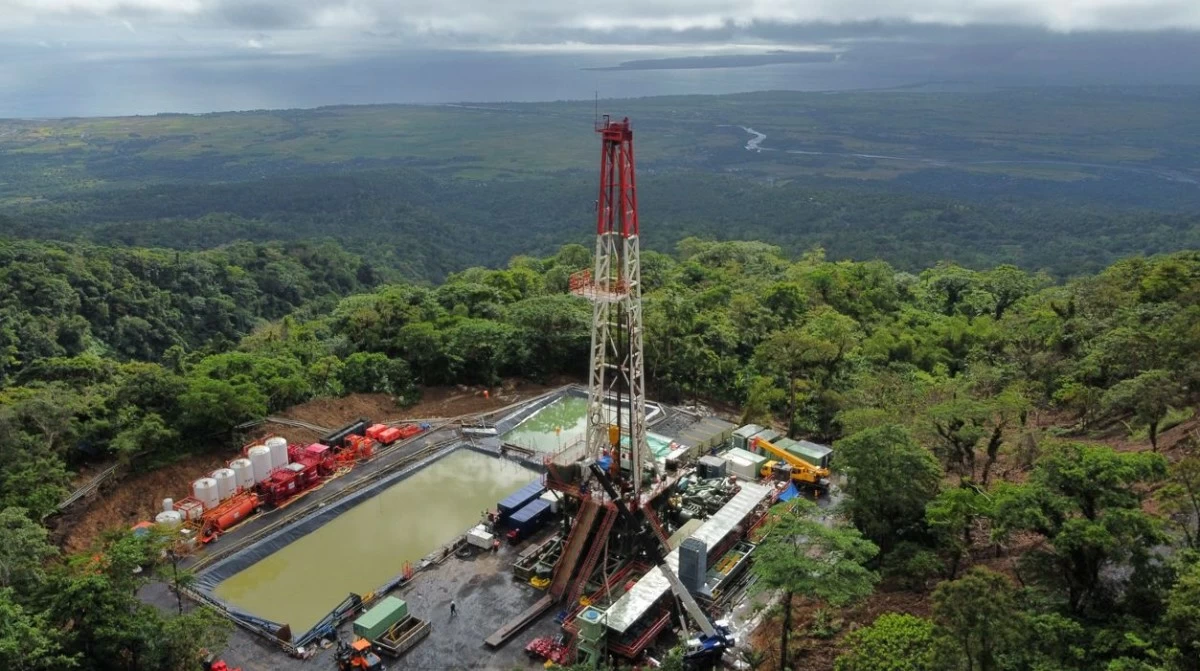
The UNESCAP report also highlighted the country’s leadership in geothermal energy alongside Indonesia, positioning the Philippines as a regional frontrunner in RE development.
“In the Philippines, geothermal energy is critical in supplying both power and heat demands. In 2022, the nation had 1,932 megawatts (MW) of installed geothermal capacity, which contributed more than 10 percent of total power generation and provided industrial heat for food drying, aquaculture, and district heating,” the report noted, citing International Renewable Energy Agency (IRENA) data.
UNESCAP also cited that the Department of Energy (DOE) has proposed incentives to attract greater investment in geothermal fields, aiming to boost total capacity by 2030.
However, UNESCAP said the Philippines still continues to face significant challenges in tracking small-scale RE systems, such as rooftop solar panels and solar water heaters, particularly on remote islands and off-grid areas.
To support the regional RE push, the Manila-based Asian Development Bank (ADB) in 2018 introduced its energy transition mechanism (ETM), an innovative financing model designed to accelerate the early retirement of coal-fired power plants and replace them with clean energy, UNESCAP noted. This mechanism, which was piloted in the Philippines, Indonesia, and Vietnam, uses a blended finance approach, combining concessional and commercial capital to lower financial risks for private investors.
In 2022, the Philippines sourced 31 percent of its total energy supply from coal, UN data showed.
Across the region, coal remains the dominant source, accounting for 43.3 percent of total in 2021, UNESCAP said, citing International Energy Agency (IEA) data.
It was followed by oil (23.2 percent), natural gas (19.4 percent), renewables (8.6 percent), nuclear (3.1 percent), and hydro (2.5 percent).
(Ricardo M. Austria)

Related Tags

United Nations Economic and Social Commission for Asia and the Pacific (UNESCAP) renewable energy (RE)
ADVERTISEMENT
.most-popular .layout-ratio{ padding-bottom: 79.13%; } @media (min-width: 768px) and (max-width: 1024px) { .widget-title { font-size: 15px !important; } }

{{ articles_filter_1561_widget.title }}

.most-popular .layout-ratio{ padding-bottom: 79.13%; } @media (min-width: 768px) and (max-width: 1024px) { .widget-title { font-size: 15px !important; } }

{{ articles_filter_1562_widget.title }}

.most-popular .layout-ratio{ padding-bottom: 79.13%; } @media (min-width: 768px) and (max-width: 1024px) { .widget-title { font-size: 15px !important; } }

{{ articles_filter_1563_widget.title }}

{{ articles_filter_1564_widget.title }}

.mb-article-details { position: relative; } .mb-article-details .article-body-preview, .mb-article-details .article-body-summary{ font-size: 17px; line-height: 30px; font-family: "Libre Caslon Text", serif; color: #000; } .mb-article-details .article-body-preview iframe , .mb-article-details .article-body-summary iframe{ width: 100%; margin: auto; } .read-more-background { background: linear-gradient(180deg, color(display-p3 1.000 1.000 1.000 / 0) 13.75%, color(display-p3 1.000 1.000 1.000 / 0.8) 30.79%, color(display-p3 1.000 1.000 1.000) 72.5%); position: absolute; height: 200px; width: 100%; bottom: 0; display: flex; justify-content: center; align-items: center; padding: 0; } .read-more-background a{ color: #000; } .read-more-btn { padding: 17px 45px; font-family: Inter; font-weight: 700; font-size: 18px; line-height: 16px; text-align: center; vertical-align: middle; border: 1px solid black; background-color: white; } .hidden { display: none; }
function initializeAllSwipers() { // Get all hidden inputs with cms_article_id document.querySelectorAll('[id^="cms_article_id_"]').forEach(function (input) { const cmsArticleId = input.value; const articleSelector = '#article-' + cmsArticleId + ' .body_images'; const swiperElement = document.querySelector(articleSelector); if (swiperElement && !swiperElement.classList.contains('swiper-initialized')) { new Swiper(articleSelector, { loop: true, pagination: false, navigation: { nextEl: '#article-' + cmsArticleId + ' .swiper-button-next', prevEl: '#article-' + cmsArticleId + ' .swiper-button-prev', }, }); } }); } setTimeout(initializeAllSwipers, 3000); const intersectionObserver = new IntersectionObserver( (entries) => { entries.forEach((entry) => { if (entry.isIntersecting) { const newUrl = entry.target.getAttribute("data-url"); if (newUrl) { history.pushState(null, null, newUrl); let article = entry.target; // Extract metadata const author = article.querySelector('.author-section').textContent.replace('By', '').trim(); const section = article.querySelector('.section-info ').textContent.replace(' ', ' '); const title = article.querySelector('.article-title h1').textContent; // Parse URL for Chartbeat path format const parsedUrl = new URL(newUrl, window.location.origin); const cleanUrl = parsedUrl.host + parsedUrl.pathname; // Update Chartbeat configuration if (typeof window._sf_async_config !== 'undefined') { window._sf_async_config.path = cleanUrl; window._sf_async_config.sections = section; window._sf_async_config.authors = author; } // Track virtual page view with Chartbeat if (typeof pSUPERFLY !== 'undefined' && typeof pSUPERFLY.virtualPage === 'function') { try { pSUPERFLY.virtualPage({ path: cleanUrl, title: title, sections: section, authors: author }); } catch (error) { console.error('ping error', error); } } // Optional: Update document title if (title && title !== document.title) { document.title = title; } } } }); }, { threshold: 0.1 } ); function showArticleBody(button) { const article = button.closest("article"); const summary = article.querySelector(".article-body-summary"); const body = article.querySelector(".article-body-preview"); const readMoreSection = article.querySelector(".read-more-background"); // Hide summary and read-more section summary.style.display = "none"; readMoreSection.style.display = "none"; // Show the full article body body.classList.remove("hidden"); } document.addEventListener("DOMContentLoaded", () => { let loadCount = 0; // Track how many times articles are loaded const offset = [1, 2, 3, 4, 5, 6, 7, 8, 9, 10]; // Offset values const currentUrl = window.location.pathname.substring(1); let isLoading = false; // Prevent multiple calls if (!currentUrl) { console.log("Current URL is invalid."); return; } const sentinel = document.getElementById("load-more-sentinel"); if (!sentinel) { console.log("Sentinel element not found."); return; } function isSentinelVisible() { const rect = sentinel.getBoundingClientRect(); return ( rect.top < window.innerHeight && rect.bottom >= 0 ); } function onScroll() { if (isLoading) return; if (isSentinelVisible()) { if (loadCount >= offset.length) { console.log("Maximum load attempts reached."); window.removeEventListener("scroll", onScroll); return; } isLoading = true; const currentOffset = offset[loadCount]; window.loadMoreItems().then(() => { let article = document.querySelector('#widget_1690 > div:nth-last-of-type(2) article'); intersectionObserver.observe(article) loadCount++; }).catch(error => { console.error("Error loading more items:", error); }).finally(() => { isLoading = false; }); } } window.addEventListener("scroll", onScroll); });

Sign up by email to receive news.