








At A Glance
- House lawmakers pressed for a higher 2026 budget for the Department of Tourism (DOT) and its attached agencies
- Proposed allocation: ₱3.718 billion (₱3.19B for Office of the Secretary; IA, NPDC, PCSSD to get ₱159M, ₱320M, ₱44.9M)
- Tourism Road Infrastructure Program (TRIP) funding sought at ₱6 billion
- 2024 domestic trips: 134 million; inbound tourism revenue: ₱700 billion
- Tourism sector employs 6.75 million Filipinos
- 12 operational Tourist Rest Areas; target: 100 nationwide
- 330,000 workers trained under Filipino Brand of Service Excellence
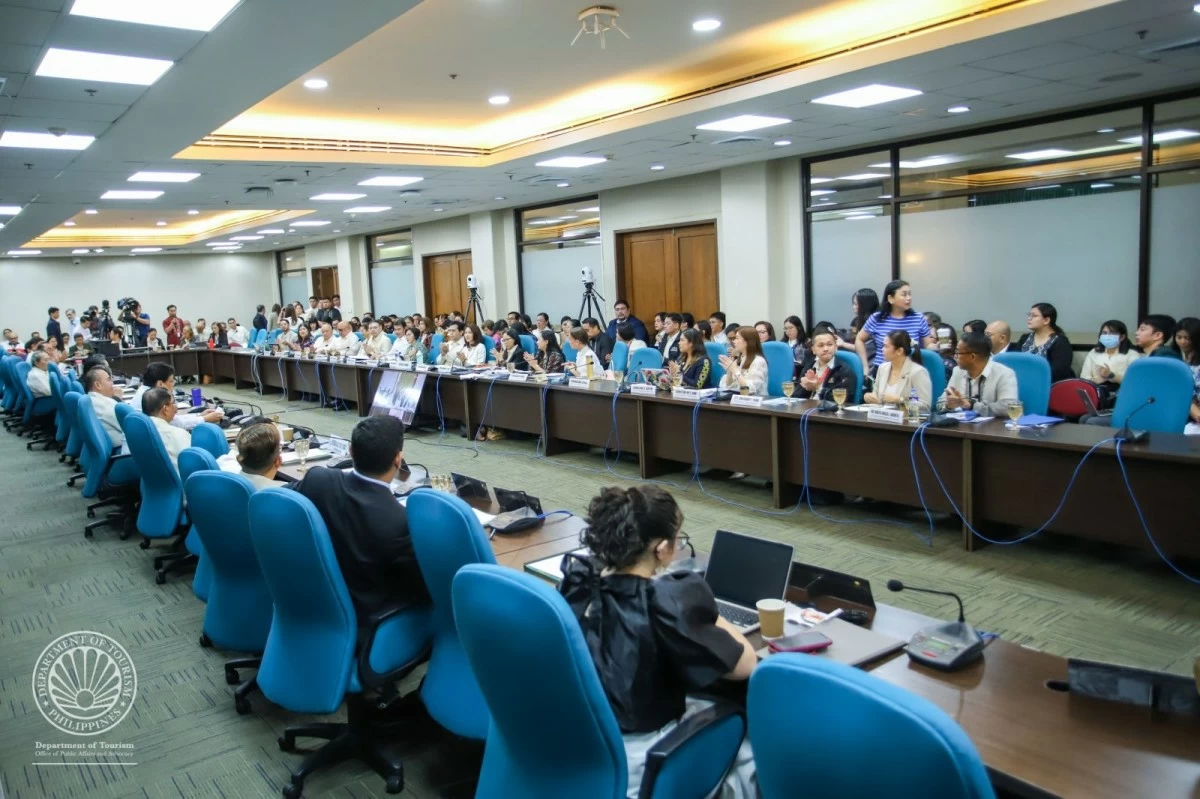
Lawmakers from the House of Representatives pushed for a higher 2026 budget for the Department of Tourism (DOT) and its attached agencies during the budget hearing on September 2, 2025. (Photo courtesy of DOT)
Lawmakers from the House of Representatives pressed for a higher 2026 budget for the Department of Tourism (DOT) and its attached agencies as they highlighted the sector’s role in driving economic growth and supporting community development.
The DOT, led by Secretary Christina Garcia-Frasco, presented its proposed ₱3.718-billion allocation under the National Expenditure Program (NEP) before the House Committee on Appropriations.
Of the amount, ₱3.19 billion is earmarked for the Office of the Secretary.
The Intramuros Administration (IA), National Parks Development Committee (NPDC), and Philippine Commission of Sports Scuba Diving (PCSSD) will receive ₱159 million, ₱320 million, and ₱44.9 million, respectively.
House Vice Chairperson Rep. Bernadette Escudero emphasized how tourism sustains local livelihoods, while Rep. Jose “Bong” Teves Jr. of TGP Partylist cited Catanduanes’ new Tourist Rest Area (TRA) as proof of its impact at the community level.
Leyte Rep. Carl Nicolas Cari described tourism as “an investment in the nation’s future,” and Negros Occidental Rep. Javi Benitez stressed the need to scale up investments to keep pace with ASEAN neighbors.
A major concern raised during the hearing was the restoration of funds for the Tourism Road Infrastructure Program (TRIP).
Rodriguez pushed for at least ₱6 billion to maintain access roads to destinations nationwide, while Poe-Llamanzares flagged weak connectivity and port facilities as persistent challenges.
House Appropriations Chairperson Rep. Mikaela Angela Suansing assured the committee’s openness to augment the DOT’s budget, particularly for TRIP projects, which lawmakers described as vital to tourism traffic.
Frasco highlighted the sector’s record performance, noting that internal tourism expenditure in 2024 reached ₱3.86 trillion, or 8.9 percent of GDP, surpassing pre-pandemic levels.
Domestic trips rose to 134 million, while inbound tourism generated ₱700 billion and provided jobs to 6.75 million Filipinos, or 13.4 percent of the workforce.
She also outlined ongoing DOT programs, including 12 operational Tourist Rest Areas (TRAs) with a target of 100 nationwide and grassroots initiatives under the Tourism Champions Challenge.
Other projects cover heritage caravans, hop-on-hop-off bus tours, a national travel app, dive and gastronomy promotions, and the training of 330,000 workers under the Filipino Brand of Service Excellence program.
“Tourism is the best investment for our economy and our people. It employs millions, powers small enterprises, and brings communities to life,” Frasco said.