

ADVERTISEMENT

Solons puzzled by high college dropout rate

Published Sep 2, 2025 02:33 pm

At A Glance

  • Lawmakers are still figuring out how to address the high attrition rate among college students in the Philippines as the Commission on Higher Education (CHEd) reported a significant dropout rate among those entering tertiary education despite subsidies provided by the government.
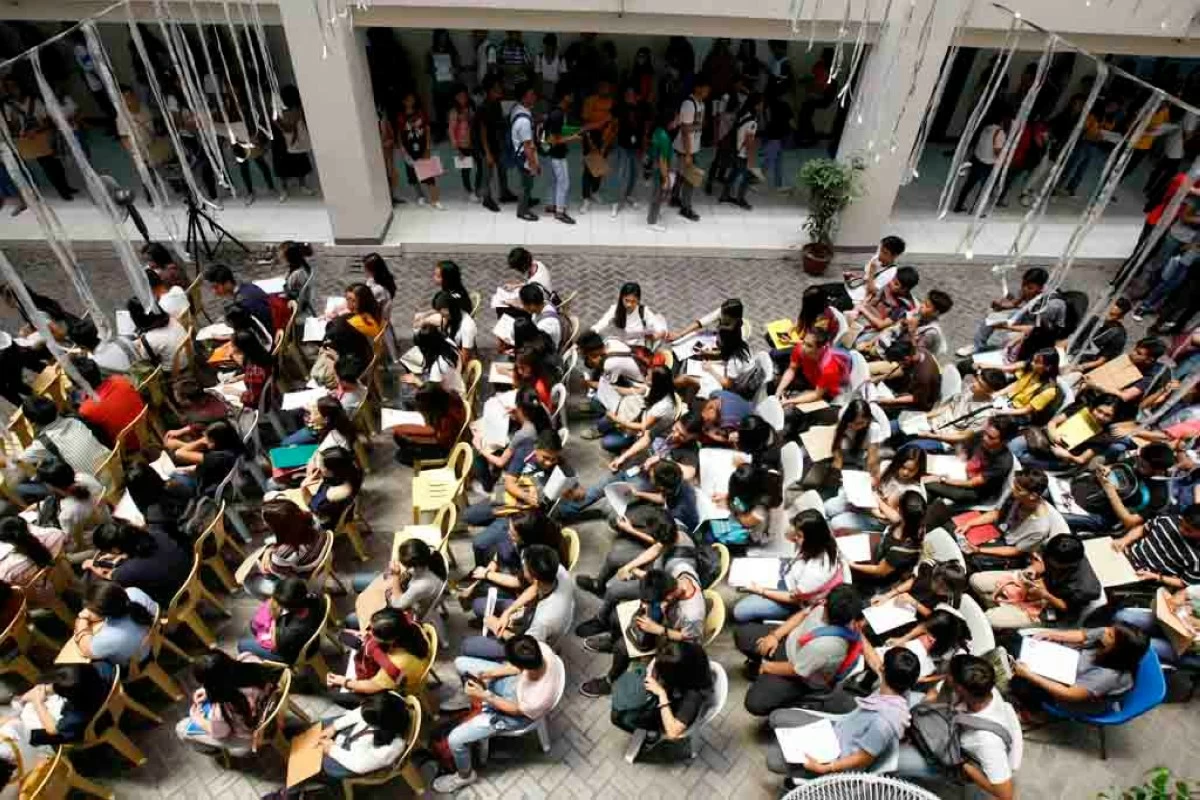
What’s holding the Philippines back? Philippine universities struggle to rise in global rankings, while top Asian institutions continue to climb. (MARK BALMORES / MANILA BULLETIN / FILE)
Lawmakers are still figuring out how to address the high attrition rate among college students in the Philippines as the Commission on Higher Education (CHEd) reported a significant dropout rate among those entering tertiary education despite subsidies provided by the government.
In a report presented by Second Congressional Commission on Education (EDCOM 2) Executive Director Karol Mark Yee during a House of Representatives hearing Tuesday, Sep. 2, it showed that four in 10 college students drop out before graduation.
The highest dropout rate was reported in the Bangsamoro Autonomous Region in Muslim Mindanao (BARMM) at 93 percent.
According to Yee, the primary reasons for this were students choosing to work instead, the lack of engagement with students, and financial reasons.
Lawmakers are puzzled as to why this still happen despite the government's intervention programs, such as the Tertiary Education Subsidy (TES) and the Pantawid Pamilyang Pilipino Program (4P), which both provide financial assistance to those in need.
Tingog Party-list Rep. Jude Acidre believed beneficiaries, particularly those from the poorest of the poor, generally did not look forward to entering college.
Meanwhile, Pasig lone district Rep. Roman Romulo said incoming college students wanted assurance first that they would receive a subsidy, not only for tuition but for other expenses, that would help get them through their tertiary education.
"Kapag 4Ps beneficiary ka, kailangan mo ng assurance na matatapos mo. Kung tuition fee lang mabibigay sayo, wala namang board and lodging mo (If you are a 4Ps beneficiary, you need an assurance that you will make it until the end. If you will only get a tuition fee, but no subsidy for board and lodging)... Why will you enter [college?]," he said.
Yee shared the same belief. He said those entering college would only enroll "if they are guaranteed as early as high school that they can receive the grant".
That is why, he said, EDCOM 2's proposal is to automatically guarantee students under 4Ps of subsidy once they enter tertiary education.
Lawmakers also believed that students tend to share the subsidies to their struggling parents. Thus, they end up with not enough funds to sustain their schooling.
Some students who had to leave their hometown to study might have also lost interest after getting homesick.
In his report, Yee said that TES "was no longer benefiting the poorest of the poor".
He said that between 2018 to 2022, the share of the poorest receiving TES dropped "drastically from 74 percent to 31 percent".
"Napunta po sya sa mga students coming...from municipalities with no SUCs [state universities and colleges) and LUCs (local universities and colleges). So mayaman o mahirap, nasa Listahanan o wala, basta nandon ka sa munisipyo na walang SUC or LUCs... sila yung mga nabigyan ng subsidy (It went to students coming from municipalities with no SUCs and LUCs. So whether they are poor or not, or in the existing list of beneficiaries or not, as long as they are from municipalities with no SUCs, they would get subsidy) that was meant for the poorest of the poor," he said.
"Karamihan ng nakatatanggap, hindi po mahirap (Most of those who received beneficiaries were not really poor)," he added.
During the same House Committee on Higher and Technical Education hearing on Monday, Sep. 1, CHEd chairperson Shirley Agrupis said there was also a high attrition rate among its beneficiaries due to reduced subsidies provided to them by the government.
In the end, regardless of any actions the House would undertake to address high attrition, Romulo said there must be "guidelines" to ensure that only the rightful beneficiaries receive subsidies.
"So dapat yung mag-ququalify for whatever [program], dapat shoot ka dito (So those who will qualify for whatever program, he or she must be deserving)," he said.
He also advised Agrupis to study the previous efforts done by various agencies, such as the Department of Social Welfare and Development (DSWD), to address the matter as they may be "going to repeat something that was already done before".
ADVERTISEMENT
.most-popular .layout-ratio{ padding-bottom: 79.13%; } @media (min-width: 768px) and (max-width: 1024px) { .widget-title { font-size: 15px !important; } }

{{ articles_filter_1561_widget.title }}

.most-popular .layout-ratio{ padding-bottom: 79.13%; } @media (min-width: 768px) and (max-width: 1024px) { .widget-title { font-size: 15px !important; } }

{{ articles_filter_1562_widget.title }}

.most-popular .layout-ratio{ padding-bottom: 79.13%; } @media (min-width: 768px) and (max-width: 1024px) { .widget-title { font-size: 15px !important; } }

{{ articles_filter_1563_widget.title }}

{{ articles_filter_1564_widget.title }}

.mb-article-details { position: relative; } .mb-article-details .article-body-preview, .mb-article-details .article-body-summary{ font-size: 17px; line-height: 30px; font-family: "Libre Caslon Text", serif; color: #000; } .mb-article-details .article-body-preview iframe , .mb-article-details .article-body-summary iframe{ width: 100%; margin: auto; } .read-more-background { background: linear-gradient(180deg, color(display-p3 1.000 1.000 1.000 / 0) 13.75%, color(display-p3 1.000 1.000 1.000 / 0.8) 30.79%, color(display-p3 1.000 1.000 1.000) 72.5%); position: absolute; height: 200px; width: 100%; bottom: 0; display: flex; justify-content: center; align-items: center; padding: 0; } .read-more-background a{ color: #000; } .read-more-btn { padding: 17px 45px; font-family: Inter; font-weight: 700; font-size: 18px; line-height: 16px; text-align: center; vertical-align: middle; border: 1px solid black; background-color: white; } .hidden { display: none; }
function initializeAllSwipers() { // Get all hidden inputs with cms_article_id document.querySelectorAll('[id^="cms_article_id_"]').forEach(function (input) { const cmsArticleId = input.value; const articleSelector = '#article-' + cmsArticleId + ' .body_images'; const swiperElement = document.querySelector(articleSelector); if (swiperElement && !swiperElement.classList.contains('swiper-initialized')) { new Swiper(articleSelector, { loop: true, pagination: false, navigation: { nextEl: '#article-' + cmsArticleId + ' .swiper-button-next', prevEl: '#article-' + cmsArticleId + ' .swiper-button-prev', }, }); } }); } setTimeout(initializeAllSwipers, 3000); const intersectionObserver = new IntersectionObserver( (entries) => { entries.forEach((entry) => { if (entry.isIntersecting) { const newUrl = entry.target.getAttribute("data-url"); if (newUrl) { history.pushState(null, null, newUrl); let article = entry.target; // Extract metadata const author = article.querySelector('.author-section').textContent.replace('By', '').trim(); const section = article.querySelector('.section-info ').textContent.replace(' ', ' '); const title = article.querySelector('.article-title h1').textContent; // Parse URL for Chartbeat path format const parsedUrl = new URL(newUrl, window.location.origin); const cleanUrl = parsedUrl.host + parsedUrl.pathname; // Update Chartbeat configuration if (typeof window._sf_async_config !== 'undefined') { window._sf_async_config.path = cleanUrl; window._sf_async_config.sections = section; window._sf_async_config.authors = author; } // Track virtual page view with Chartbeat if (typeof pSUPERFLY !== 'undefined' && typeof pSUPERFLY.virtualPage === 'function') { try { pSUPERFLY.virtualPage({ path: cleanUrl, title: title, sections: section, authors: author }); } catch (error) { console.error('ping error', error); } } // Optional: Update document title if (title && title !== document.title) { document.title = title; } } } }); }, { threshold: 0.1 } ); function showArticleBody(button) { const article = button.closest("article"); const summary = article.querySelector(".article-body-summary"); const body = article.querySelector(".article-body-preview"); const readMoreSection = article.querySelector(".read-more-background"); // Hide summary and read-more section summary.style.display = "none"; readMoreSection.style.display = "none"; // Show the full article body body.classList.remove("hidden"); } document.addEventListener("DOMContentLoaded", () => { let loadCount = 0; // Track how many times articles are loaded const offset = [1, 2, 3, 4, 5, 6, 7, 8, 9, 10]; // Offset values const currentUrl = window.location.pathname.substring(1); let isLoading = false; // Prevent multiple calls if (!currentUrl) { console.log("Current URL is invalid."); return; } const sentinel = document.getElementById("load-more-sentinel"); if (!sentinel) { console.log("Sentinel element not found."); return; } function isSentinelVisible() { const rect = sentinel.getBoundingClientRect(); return ( rect.top < window.innerHeight && rect.bottom >= 0 ); } function onScroll() { if (isLoading) return; if (isSentinelVisible()) { if (loadCount >= offset.length) { console.log("Maximum load attempts reached."); window.removeEventListener("scroll", onScroll); return; } isLoading = true; const currentOffset = offset[loadCount]; window.loadMoreItems().then(() => { let article = document.querySelector('#widget_1690 > div:nth-last-of-type(2) article'); intersectionObserver.observe(article) loadCount++; }).catch(error => { console.error("Error loading more items:", error); }).finally(() => { isLoading = false; }); } } window.addEventListener("scroll", onScroll); });

Sign up by email to receive news.