







Maritime leaders, government officials, shipping industry stakeholders, and representatives of seafarers from different countries have come together to adopt the Manila Declaration on Seafarers’ Rights, Safety, and Well-Being, marking a significant milestone in the international effort to uphold the dignity, welfare, and human rights of the world’s seafarers.
PH leads adoption of int'l declaration to protect seafarers
Published Sep 2, 2025 07:23 pm


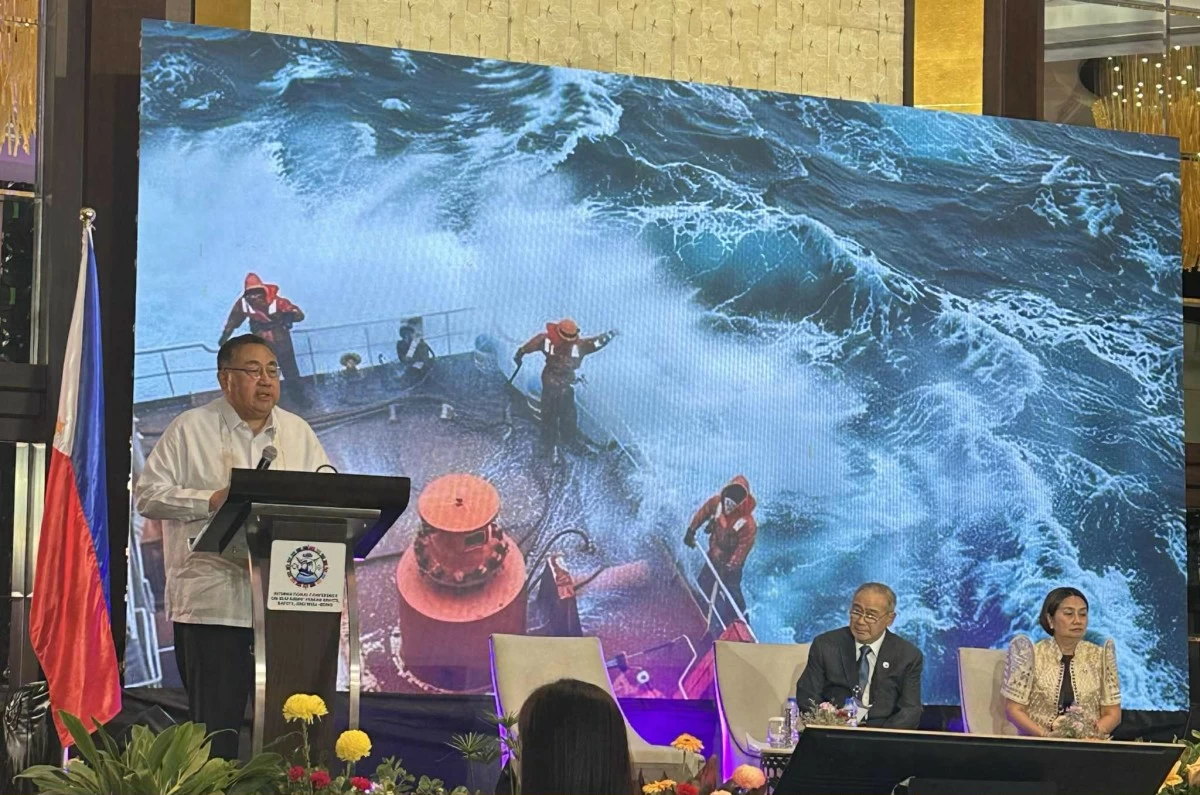
(From left) Philippine Permanent Representative to the United Nations in Geneva Carlos Sorreta together with Philippine Ambassador to the United Kingdom Teodoro Locsin Jr. and Maritime Industry Authority (Marina) Administrator Sonia Malaluan at the closing ceremony of the International Conference on Seafarers' Human Rights, Safety and Well-being held in Manila on Tuesday, Sept. 2, 2025. (Raymund Antonio/MANILA BULLETIN)
Philippine Permanent Representative to the United Nations in Geneva Carlos Sorreta led the adoption of the declaration, which lined up eight key commitments that aim to improve the well-being of seafarers around the world.
“The landmark resolution also calls on all maritime shipping stakeholders, states, shipowners, and seafarers' organizations to continue working together closely and more effectively to guarantee safe and decent living and working conditions at sea, especially during crisis situations, and this is a human rights imperative,” Sorreta said in his remarks on Tuesday, Sept. 2.
“We will continue to champion their rights and dignity. This is our national commitment and we call for greater international solidarity. We call on you, our partners, to join us in taking the next steps. Let's work together to address institutional gaps in seafarers' rights, protection, and every human toll they produce,” he added.
The declaration commits countries to uphold human rights of seafarers at all times in accordance to the Universal Declaration of Human Rights and international human rights treaties, fully enforce the 2006 Maritime Labour Convention, improve emergency preparedness and response in times of crises, and respect seafarers’ right to refuse to sail in high-risk areas without reprisal.
It also seeks to promote corporate human rights due diligence, foster inclusion and women empowerment, ensure a just transition amid digitalization and decarbonization, and harness international cooperation for maritime education and training.
Sorreta lamented how seafarers are “too often treated as expendables,” and stressed that their rights are as “inalienable and non-derogable” as with “all of us.”
“Today, we say no more. No more to the normalization of invisibility and exclusion. Let us listen to the story of seafarers who were rescued after abandonment without pay and without basic necessities,” he said.
“This resolution affirms a vital truth that seafarers' rights do not end at shore,” the official added.
Recognizing the importance of the seafarers’ role in the global trade and in highly developed and progressive societies, Sorreta honored how they help sustain the day-to-day activities and build a future for all.
“Whether as the human face of global commerce, or caught in the middle of conflict, or in the midst of technological changes, in these cross-currents, no seafarer should be left adrift,” he said.