ADVERTISEMENT

New directions in breast cancer treatment

Published Sep 2, 2025 12:05 am  |  Updated Sep 1, 2025 04:48 pm
UNDER THE MICROSCOPE
Three out of a hundred Filipinas will develop breast cancer in their lifetime. Many are diagnosed in the late stage. It is the second leading cause of mortality in the country.
Traditionally, treatment is via surgery (radical mastectomy), hormone therapy, and chemotherapy. But there are newer modalities of treatment now. One is neo-adjuvant therapy, where the patient receives chemotherapy before surgery to remove the tumor (breast-conserving surgery) or the entire breast (radical mastectomy). It is especially useful for shrinking large, bulky tumors, so that the surgery is less complicated. Oftentimes, on pathological examination, there is complete (pathologic complete response) or near-total absence (residual disease) of tumor cells in the mastectomy specimen and the axillary lymph nodes, where breast cancer usually metastasizes first. The five-year survival rate for this treatment modality is an astounding 96 percent for those without inflammatory disease. For patients with inflammatory breast cancer, it is still an impressive 67 percent.
The factors that influence clinical outcomes are tumor subtype, clinical stage, lymph node status, and vascular invasion. Subtypes that respond well to neoadjuvant chemotherapy include human epidermal receptor-2 (HER2) positivity and triple-negative (estrogen and progesterone receptor and HER2 negative) tumors. Locally advanced breast cancers (stage III) also respond well to neoadjuvant chemotherapy. Both lymph node metastasis and vascular invasion are indicators of poor response to this treatment modality.
Breast conservation surgery (lumpectomy) often involves doing a frozen section diagnosis by a pathologist of sentinel lymph nodes. These are lymph nodes that are often the first to be involved by metastases, or tumors that spread outside the primary site. If the pathologist does not detect tumor cells in the sentinel node, there is no need for axillary dissection (removal of the rest of the axillary lymph nodes). This prevents the development of lymphedema (retention of lymphatic fluid that accumulates in the arm). If the sentinel node tests positive, it is necessary to do axillary node dissection to determine if further invasion has occurred.
Most surgeons try to conserve the affected breast for many reasons. The cosmetic preservation of the breast is important for the patient’s psychological wellbeing, enhanced body image and self-confidence. There is no difference in survival between mastectomy and lumpectomy.
Lumpectomy, combined with radiation therapy, is effective especially in early breast cancer. Aside from the above benefits, it prevents complications associated with radical mastectomy like long term pain, loss of arm strength and lymphedema. It also has a shorter recovery time and is an encouragement for women to have regular breast exams to detect early breast cancer.
Another significant development in breast cancer treatment is the recent finding that even tumors with low level expression of HER2 (HER2 low), as detected by immunohistochemistry or in-situ hybridization (ISH), can benefit from the antibody-drug conjugate trastuzumab-deruxtecan.
The study presented in an American Society of Oncologists annual meeting recently introduced the concept of HER2 low tumors. When a pathologist reports a breast tumor as HER2 negative, it means there is no gene amplification by IHC and/or ISH. However, those tumors that exhibit a little expression of HER2 (HER2 1+/2+) by IHC have been shown to respond to the drug combination. While this finding is not yet accepted by the College of American Pathologists due to a minor defect in the study, clinical oncologists are clamoring for pathologists to report HER2 low cases.
Pathologists report cases as HER2-0, HER2 1+, HER2 2+ (the latter two termed HER2 low) and HER2 3+ (positive). However, those cases that are HER2 2+ (equivocal) still need to be examined by ISH to determine if some may be HER2 positive by showing gene amplification. The conundrum is, if HER2 low cases are already treated with the antibody-drug conjugate, there may not be an incentive to determine their true HER2 status by ISH testing.
That is because FISH (Fluorescence In-Situ Hybridization) can cost up to P30,000) per test. It is important to determine the true status of HER2 2+ (equivocal) tumors to see the long term response of the different tumor types to the new drug as well as future newer drugs. The economic disincentive is due to the insistence of clinical oncologists on using FISH when Chromogenic In-Situ Hybridization (CISH) is as reliable as FISH but costs less than half (both are ISH assays). It is similar to the common practice of buying toothpaste but asking for Colgate, a brand, when there are cheaper and similarly effective toothpaste brands.
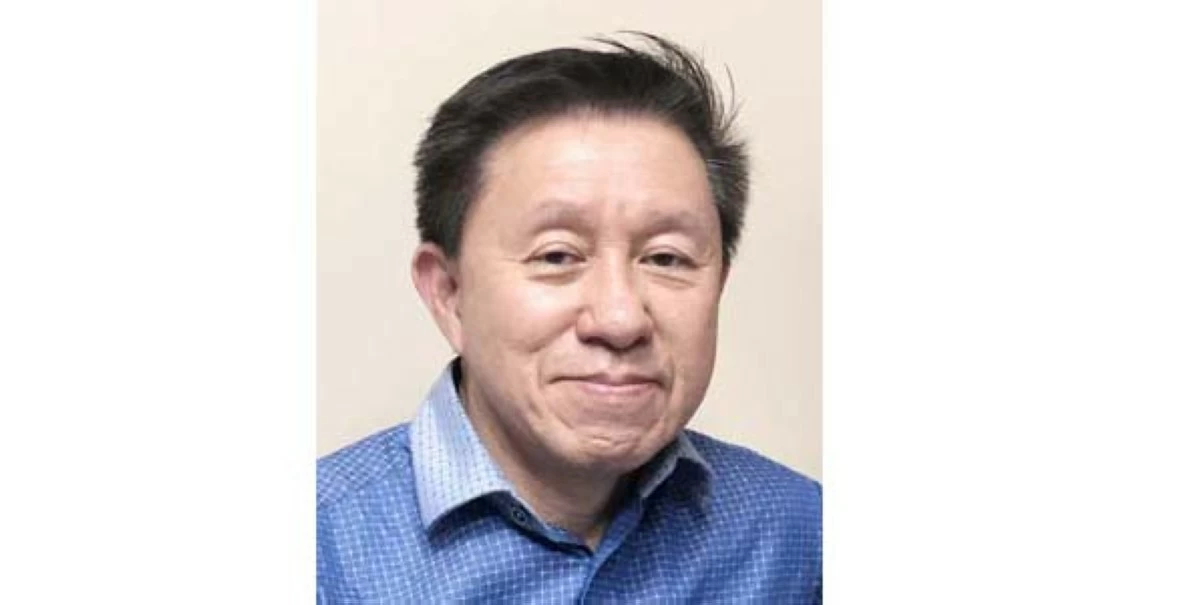
Back in 2004, Dr. Manuelito Madrid (breast pathology subspecialist) and I published a validation study of a CISH assay and offered it at a lower price. There were few requests and the assay was discontinued. It was a loss for the patients due to “branding” by oncologists. It’s time to bring CISH back to drive up HER2 ISH testing for the benefit of patients.
ADVERTISEMENT
.most-popular .layout-ratio{ padding-bottom: 79.13%; } @media (min-width: 768px) and (max-width: 1024px) { .widget-title { font-size: 15px !important; } }

{{ articles_filter_1561_widget.title }}

.most-popular .layout-ratio{ padding-bottom: 79.13%; } @media (min-width: 768px) and (max-width: 1024px) { .widget-title { font-size: 15px !important; } }

{{ articles_filter_1562_widget.title }}

.most-popular .layout-ratio{ padding-bottom: 79.13%; } @media (min-width: 768px) and (max-width: 1024px) { .widget-title { font-size: 15px !important; } }

{{ articles_filter_1563_widget.title }}

{{ articles_filter_1564_widget.title }}

.mb-article-details { position: relative; } .mb-article-details .article-body-preview, .mb-article-details .article-body-summary{ font-size: 17px; line-height: 30px; font-family: "Libre Caslon Text", serif; color: #000; } .mb-article-details .article-body-preview iframe , .mb-article-details .article-body-summary iframe{ width: 100%; margin: auto; } .read-more-background { background: linear-gradient(180deg, color(display-p3 1.000 1.000 1.000 / 0) 13.75%, color(display-p3 1.000 1.000 1.000 / 0.8) 30.79%, color(display-p3 1.000 1.000 1.000) 72.5%); position: absolute; height: 200px; width: 100%; bottom: 0; display: flex; justify-content: center; align-items: center; padding: 0; } .read-more-background a{ color: #000; } .read-more-btn { padding: 17px 45px; font-family: Inter; font-weight: 700; font-size: 18px; line-height: 16px; text-align: center; vertical-align: middle; border: 1px solid black; background-color: white; } .hidden { display: none; }
function initializeAllSwipers() { // Get all hidden inputs with cms_article_id document.querySelectorAll('[id^="cms_article_id_"]').forEach(function (input) { const cmsArticleId = input.value; const articleSelector = '#article-' + cmsArticleId + ' .body_images'; const swiperElement = document.querySelector(articleSelector); if (swiperElement && !swiperElement.classList.contains('swiper-initialized')) { new Swiper(articleSelector, { loop: true, pagination: false, navigation: { nextEl: '#article-' + cmsArticleId + ' .swiper-button-next', prevEl: '#article-' + cmsArticleId + ' .swiper-button-prev', }, }); } }); } setTimeout(initializeAllSwipers, 3000); const intersectionObserver = new IntersectionObserver( (entries) => { entries.forEach((entry) => { if (entry.isIntersecting) { const newUrl = entry.target.getAttribute("data-url"); if (newUrl) { history.pushState(null, null, newUrl); let article = entry.target; // Extract metadata const author = article.querySelector('.author-section').textContent.replace('By', '').trim(); const section = article.querySelector('.section-info ').textContent.replace(' ', ' '); const title = article.querySelector('.article-title h1').textContent; // Parse URL for Chartbeat path format const parsedUrl = new URL(newUrl, window.location.origin); const cleanUrl = parsedUrl.host + parsedUrl.pathname; // Update Chartbeat configuration if (typeof window._sf_async_config !== 'undefined') { window._sf_async_config.path = cleanUrl; window._sf_async_config.sections = section; window._sf_async_config.authors = author; } // Track virtual page view with Chartbeat if (typeof pSUPERFLY !== 'undefined' && typeof pSUPERFLY.virtualPage === 'function') { try { pSUPERFLY.virtualPage({ path: cleanUrl, title: title, sections: section, authors: author }); } catch (error) { console.error('ping error', error); } } // Optional: Update document title if (title && title !== document.title) { document.title = title; } } } }); }, { threshold: 0.1 } ); function showArticleBody(button) { const article = button.closest("article"); const summary = article.querySelector(".article-body-summary"); const body = article.querySelector(".article-body-preview"); const readMoreSection = article.querySelector(".read-more-background"); // Hide summary and read-more section summary.style.display = "none"; readMoreSection.style.display = "none"; // Show the full article body body.classList.remove("hidden"); } document.addEventListener("DOMContentLoaded", () => { let loadCount = 0; // Track how many times articles are loaded const offset = [1, 2, 3, 4, 5, 6, 7, 8, 9, 10]; // Offset values const currentUrl = window.location.pathname.substring(1); let isLoading = false; // Prevent multiple calls if (!currentUrl) { console.log("Current URL is invalid."); return; } const sentinel = document.getElementById("load-more-sentinel"); if (!sentinel) { console.log("Sentinel element not found."); return; } function isSentinelVisible() { const rect = sentinel.getBoundingClientRect(); return ( rect.top < window.innerHeight && rect.bottom >= 0 ); } function onScroll() { if (isLoading) return; if (isSentinelVisible()) { if (loadCount >= offset.length) { console.log("Maximum load attempts reached."); window.removeEventListener("scroll", onScroll); return; } isLoading = true; const currentOffset = offset[loadCount]; window.loadMoreItems().then(() => { let article = document.querySelector('#widget_1690 > div:nth-last-of-type(2) article'); intersectionObserver.observe(article) loadCount++; }).catch(error => { console.error("Error loading more items:", error); }).finally(() => { isLoading = false; }); } } window.addEventListener("scroll", onScroll); });

Sign up by email to receive news.