







Imported rice prices rise as 60-day ban takes effect
Published Sep 2, 2025 03:32 pm


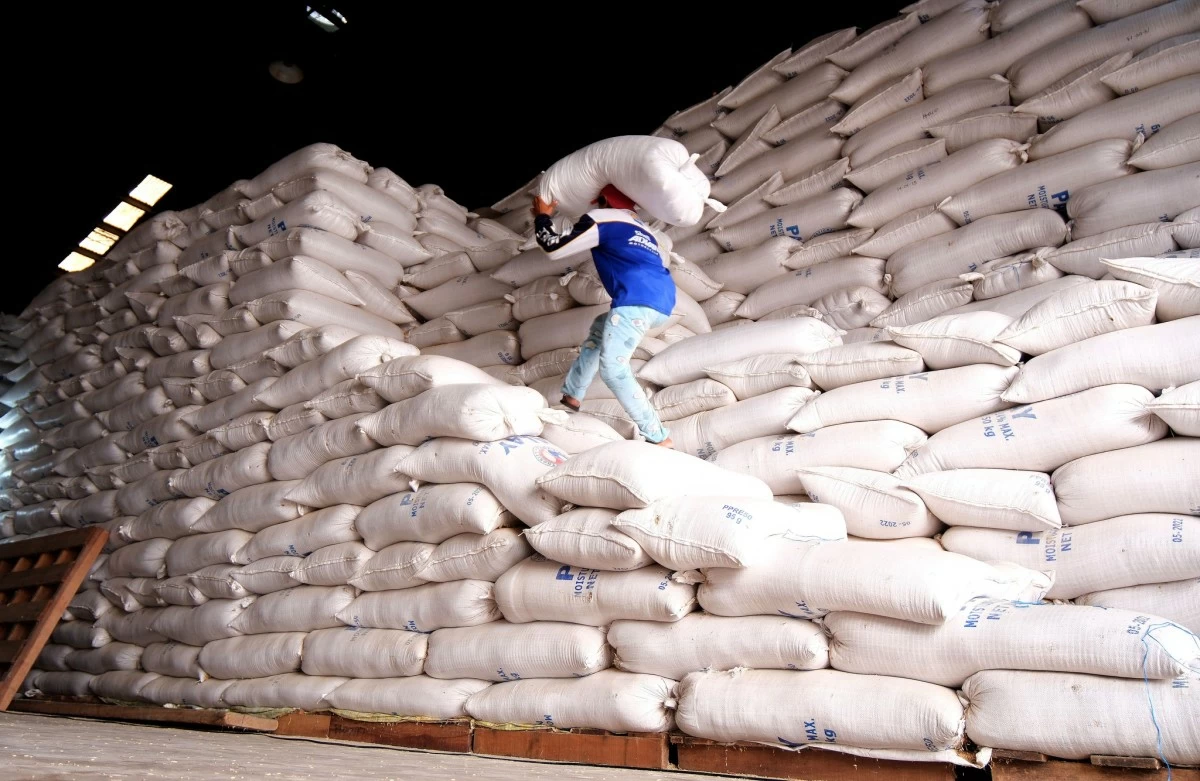
Department of Agriculture (DA) photo
The Department of Agriculture (DA) said prices of local commercial rice remain stable, while some imported rice slightly increased following the implementation of the 60-day import ban on the key staple.
While still on the second day of the two-month suspension, Agriculture Assistant Secretary Arnel de Mesa said consumers should not worry about potential hikes in locally produced rice.
“Ang maganda rito sa local commercial rice natin–para sa premium, well milled, regular milled–wala tayong mamonitor na pagtaas,” De Mesa said in a television interview.
(What’s good here with our local commercial rice—whether premium, well-milled, or regular-milled—is that we do not monitor any increase .)
Based on the DA’s latest monitoring in Metro Manila markets, the average retail prices of premium rice, well-milled rice, and regular milled rice are ₱50 per kilo, ₱43 per kilo, and ₱ 38 per kilo, respectively.
From Sept. 1 until Oct. 30, the government is enforcing a suspension of the importation of regular and well-milled rice.
President Ferdinand “Bongbong” Marcos Jr. earlier announced that the country will temporarily suspend foreign rice purchases for 60 days, citing the need to stabilize local farmgate prices and the wet harvest season.
During the 60-day period, specialty rice varieties not commonly produced by local farmers are excluded from the ban.
De Mesa noted that based on the agency’s market monitoring during the first two days of implementation, some imported rice varieties were reported to be costlier.
DA data showed that the average price for imported premium rice stands at ₱45 per kilo, well-milled at ₱44 per kilo, and regular milled at ₱37.
Agricultural group Sinag earlier blamed the “flooding” of cheaper imported rice for the sharp drop in the price of palay or unmilled rice.
The group said prices of palay in certain areas have reportedly fallen to as low as ₱8 per kilo, well below the production cost of ₱12 to ₱14 per kilo.
The DA echoed this sentiment, noting that the bumper rice harvests across exporting countries and the lifting of India’s rice export ban facilitated the influx of imported rice to local markets.
Based on Executive Order (EO) No. 93, which enforced the rice import ban, the 60-day period may be extended or shortened depending on the recommendation of the DA, as well as the Department of Trade and Industry (DTI) and the Department of Economy, Planning and Development (DepDev).
Marcos has directed the DA, DTI, and DepDev to convene within 30 days of the order's effectivity to review the impact of the import pause on the supply and prices of rice in the country.
De Mesa said the DA will exert its effort in the monitoring of retail prices in markets, given that it expects a strong production of palay in the harvest season.
“Bukod doon sa pag-iikot ay patuloy ang konsultasyon ng DA sa iba't ibang stakeholders ng bigas…para masigurado nga na walang pang-abuso pati ang price speculations dahil alam natin napakaganda ng stock inventory ng bigas sa ngayon,” said De Mesa, also the DA’s spokesperson.
(Aside from the monitoring, the DA continues its consultations with various rice stakeholders to ensure that there is no abuse as well as price speculation, since we know that the current rice stock inventory is very good.)
He said the DA is upbeat that the country will produce approximately 11 million metric tons (MT) of palay in the second half.
This comes after the record harvest of 9.08 million MT in the first six months of the year.
The agency recently estimated that the country may exceed the initial full-year target of producing 20.46 million MT of palay.