







AFP downplays reports of buildup in West Philippine Sea
Published Sep 2, 2025 03:48 pm


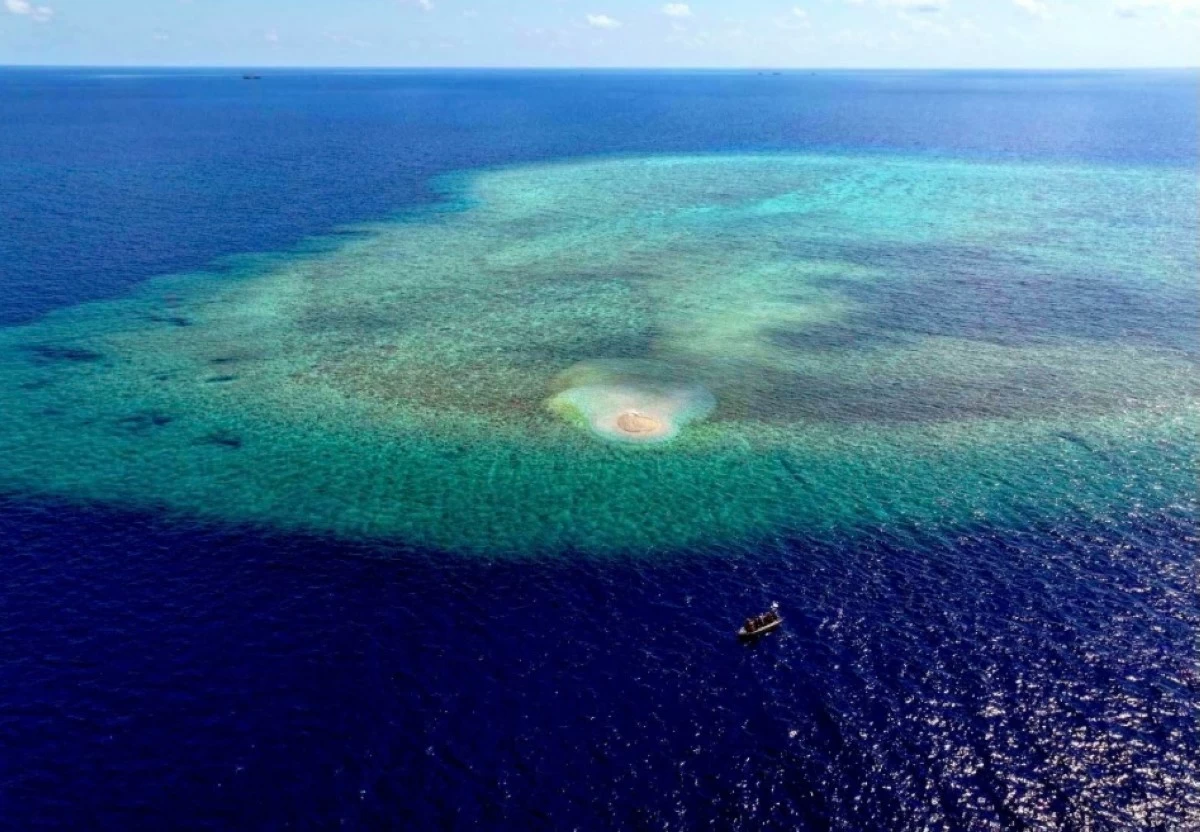
This photo handout by the Philippine Coast Guard (PCG) shows dead and crushed corals dumped on the sandbars of Escoda Shoal, 75 nautical miles from the coastline of Palawan, which resembles island-building activities in May 2024. (File photo: PCG)
The Armed Forces of the Philippines (AFP) said Tuesday, Sept. 2, that recent monitoring of a rise in surface elevation of some features of the West Philippine Sea (WPS) appears to be the result of natural causes rather than man-made intervention.
AFP spokesperson for WPS Rear Adm. Roy Vincent Trinidad said the military has not monitored any foreign vessel that could be linked to the dumping of crushed corals on Hasa-Hasa (Half Moon) Shoal, Escoda (Sabina) Shoal, and Pag-asa (Sandy) Cay near Pag-asa (Thitu) Island.
“There was no noted presence of any vessel that was dumping crushed corals. The rise, however, of the elevation of these features could be attributed to the weather disturbances that we encountered in the past months,” he said.
He explained that tidal movement or weather disturbances usually pile up crashed corals on shallow portions of the WPS.
China has undertaken large-scale reclamation in the South China Sea, including some features located within WPS, despite a 2016 arbitral ruling that invalidated its sweeping “dash line” claim, turning them into artificial islands equipped with military outposts and runways.
While the AFP has clarified that the recent build-up is not linked to any reclamation activity, Trinidad underscored the need for continued vigilance in the country’s western frontier.
“Regardless of the elevation of these low tide or high tide features, our posture has been the same. We are there to secure the integrity of our national territory,” the admiral said.