






Manila Bulletin
 Business
The Stock Market
PSEi drops for third straight day on inflation concerns, peso weakness
Business
The Stock Market
PSEi drops for third straight day on inflation concerns, peso weakness
Business
The Stock Market
PSEi drops for third straight day on inflation concerns, peso weakness
PSEi drops for third straight day on inflation concerns, peso weakness
Published Sep 1, 2025 04:56 pm


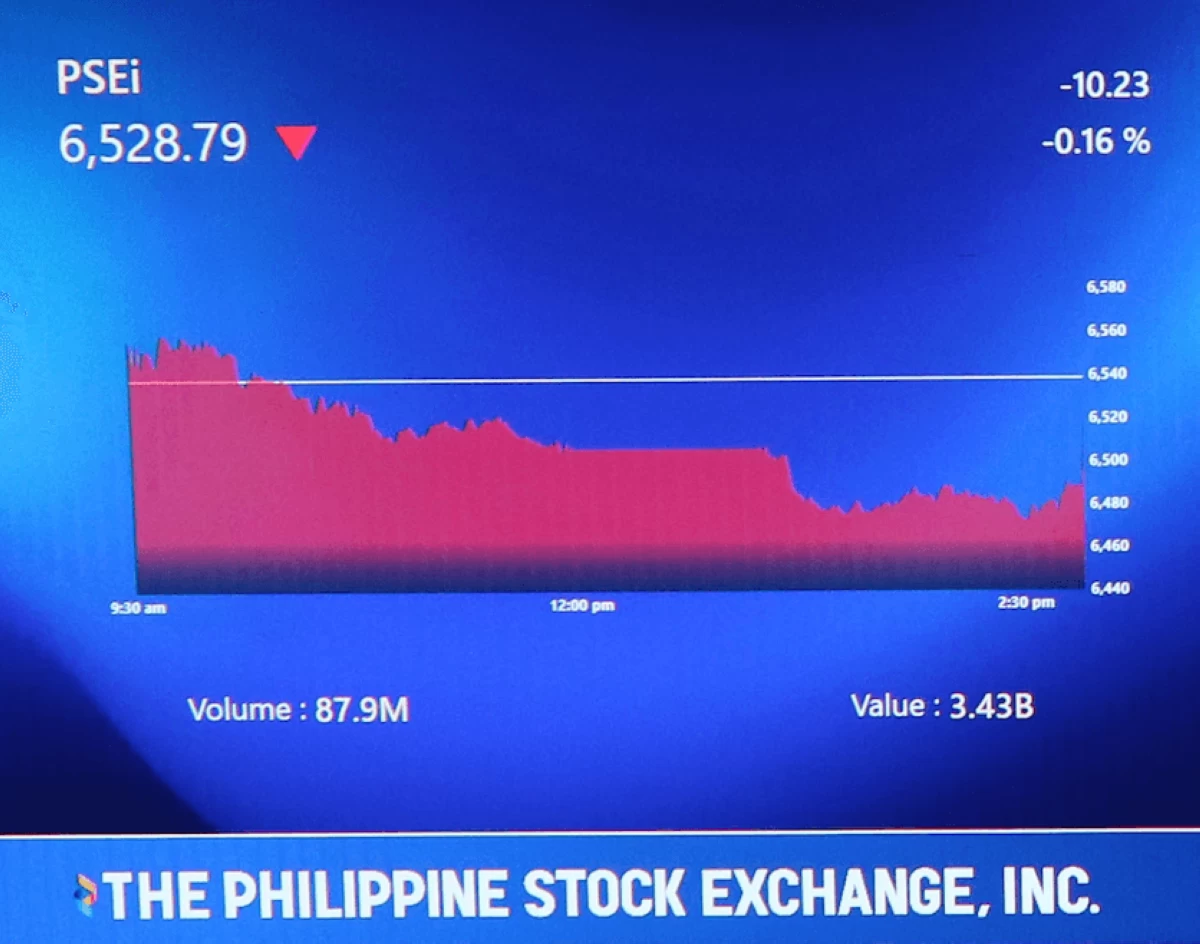
The Philippine Stock Exchange index (PSEi) fell for the third consecutive day amid expectations of a slight uptick in August inflation and the peso's recent weakness.
The main index shed 15.22 points, or 0.29 percent, to close at 6,140.35 on Monday, Sept. 1. Conglomerates led the retreat, while miners surged as gold prices rose. Volume fell to 1.15 billion shares worth ₱4.21 billion.
Despite the index’s decline, gainers outnumbered losers 110 to 96, with 55 unchanged.
“The PSEi further declined despite a series of declines in recent days as sellers continue to exert control over the market” said Luis Limlingan, Managing Director of Regina Capital Development Corp.
He added that “the downturn likely reflects sentiment driven by forecasts suggesting an inflation growth this month as it is affected by the bad weather that stormed the country last month.Æ
In the U.S., markets closed lower last Friday after a late-session sell-off and new economic indicators influenced sentiment. Investors are now focused on the upcoming US Federal Reserve meeting for clarity, as well as this week's key employment reports on initial jobless claims and the August unemployment rate.
Philstocks Financial Research Manager Japhet Tantiangco said, “Profit taking continued amid the lack of a positive catalyst. The peso’s weak position against the U.S. dollar also weighed on the bourse.”
He noted that “the local market was also dragged by foreign fund outflows, with net selling amounting to ₱148.55 million. The market is already on a six-day net foreign selling streak, with net outflows averaging ₱784.18 million per day.”
Rizal Commercial Banking Corp. Chief Economist Michael Ricafort said the PSEi declined after the “U.S. dollar/peso exchange rate corrected higher to near one-month highs lately”
He added that this is “also after BSP Governor Remolona recently gave less dovish signals on a possible one 0.25 percent BSP rate cut for the rest of 2025 but could be near the end of the monetary policy cycle wherein a nominal interest rate of four percent is a bit low and could reduce incentives for banks to place funds with the BSP.”