






Manila Bulletin
 Philippines
National
PAGASA details weather factors behind August 30 flash floods in Quezon City
Philippines
National
PAGASA details weather factors behind August 30 flash floods in Quezon City
Philippines
National
PAGASA details weather factors behind August 30 flash floods in Quezon City
PAGASA details weather factors behind August 30 flash floods in Quezon City
Published Aug 31, 2025 09:54 am


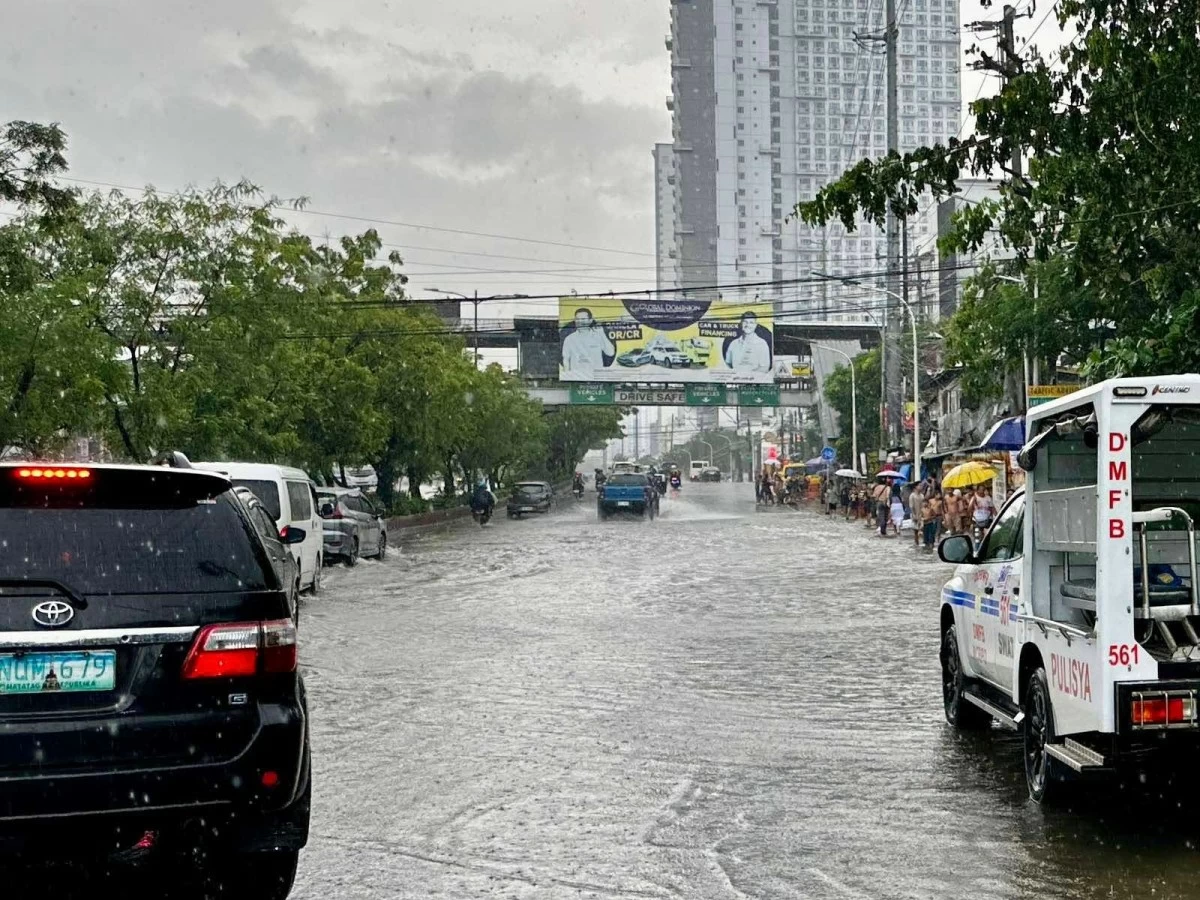
Commuters wade through gutter-deep floodwaters along Katipunan Avenue in Quezon City around 4 p.m. on Saturday, Aug. 30, 2025. (Contributed photo)
The sudden flooding that struck parts of Quezon City on Saturday, Aug. 30, was caused by severe thunderstorms that brought unusually heavy rainfall in a short period, the Philippine Atmospheric, Geophysical and Astronomical Services Administration (PAGASA) said on Sunday. Aug. 31.
In a phone interview, PAGASA weather specialist Veronica Torres said, based on rainfall data from the Science Garden monitoring station in Quezon City, a total of 135.6 millimeters (mm) of rain fell between 8 a.m. on Aug. 30 and 8 a.m. on Aug. 31.
The highest rainfall was recorded from 2 p.m. to 5 p.m. on Saturday, totalling 116 mm. This is nearly equivalent to one week’s worth of rain, based on the monthly normal of 568.5 mm.
The rainfall, classified as “intense to torrential,” caused water levels to rise rapidly, resulting in flash floods in some low-lying and flood-prone areas, Torres explained.
She also noted that unlike tropical cyclones, thunderstorms are localized and develop quickly, making them more difficult to forecast in advance.
PAGASA issues thunderstorm advisories two to three hours before the expected rainfall to alert the public.
While the flooding was severe, Torres noted that it receded relatively quickly compared to historic events like Typhoon Ondoy in 2009, which unleashed more than 300 millimeters of rain within just six hours, causing widespread and prolonged flooding across Metro Manila.
The Quezon City government reported that 36 of the city’s 142 barangays, particularly in Districts 1, 3, and 4, were affected by the heavy rains on Saturday.
PAGASA urged the public to remain vigilant during the rainy season, particularly in the afternoons and evenings when thunderstorms are more likely to occur.
Torres advised that when a thunderstorm advisory is issued, particularly when intense to torrential rainfall is expected, residents should stay indoors if possible.
She also encouraged those living near rivers or in mountainous areas to evacuate to safer, flood- and landslide-free locations and to maintain close coordination with their local disaster risk reduction and management councils.