






Manila Bulletin
 Philippines
National
NSC affirms peaceful stance in WPS: 'We aren't the ones doing intimidation'
Philippines
National
NSC affirms peaceful stance in WPS: 'We aren't the ones doing intimidation'
Philippines
National
NSC affirms peaceful stance in WPS: 'We aren't the ones doing intimidation'
NSC affirms peaceful stance in WPS: 'We aren't the ones doing intimidation'
Published Aug 31, 2025 11:35 am
|
Updated Aug 31, 2025 01:08 pm


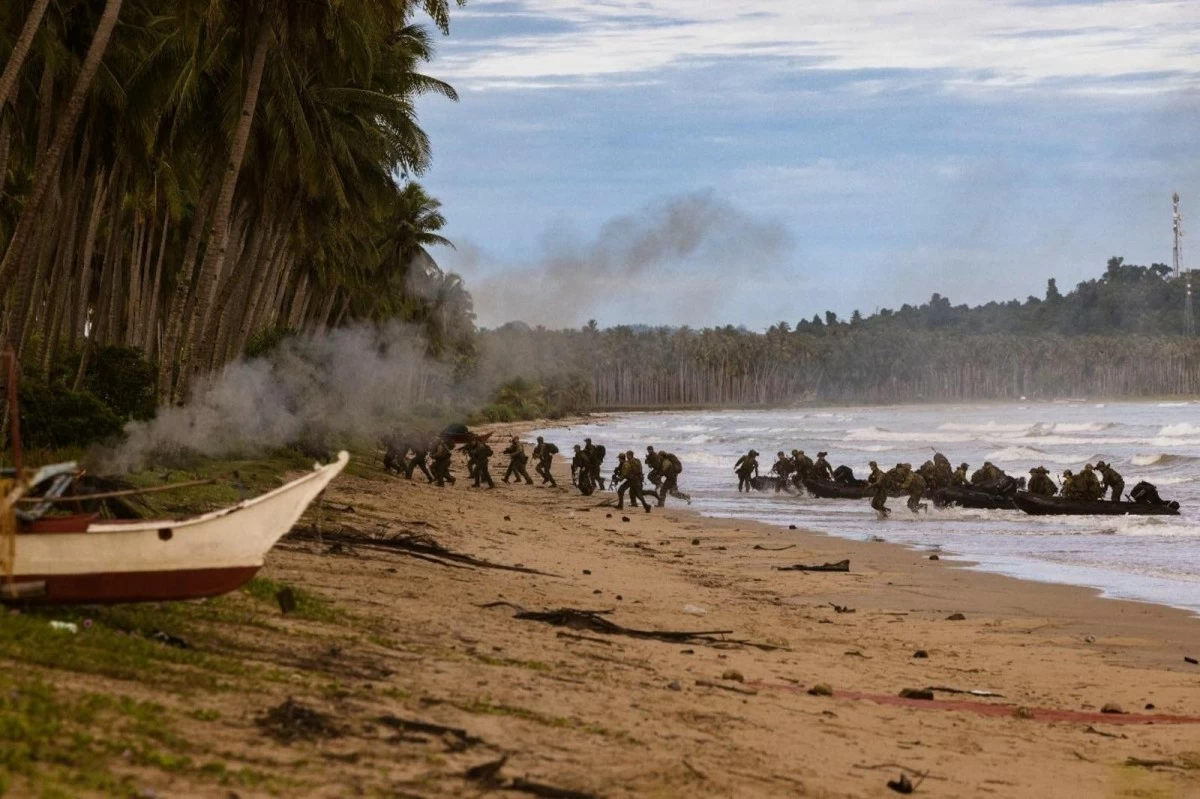
Philippine and Australian troops conduct an amphibious assault as part of Exercise ALON 2025 in San Vicente, Palawan, on August 23, 2025. (Photo: Armed Forces of the Philippines)
The National Security Council (NSC) emphasized that the Philippines’ actions in the West Philippine Sea (WPS) should not be seen as a danger to regional peace and security, pushing back against narratives that portray the country’s defense measures as provocative.
“The actions of the Philippines are never threats to regional peace and security. Our navy, coast guard, and BFAR (Bureau of Fisheries and Aquatic Resources) vessels are not the ones doing intimidation, harassment, and aggression against other vessels,” National Security Adviser (NSA) Eduardo Año said on Saturday, Aug. 30.
Año cited the results of a recent OCTA Research survey which showed that 76 percent of Filipinos strongly support efforts to assert the country’s maritime entitlements in the WPS.
“This is a powerful expression of unity and patriotism. Our people are resolute in standing up for what is rightfully ours,” he said.
The same survey also showed 85 percent of Filipinos distrust China and 74 percent identify Beijing as the greatest threat to the Philippines. The respondents said the aggressive actions of Chinese forces in the WPS as well as the influx of smuggled goods and crimes involving Chinese nationals were the main reasons for the distrust.
“This only strengthens the call for vigilance and national solidarity. It affirms that the Filipino people understand the challenges we face and are firmly behind the government’s efforts to defend our sovereignty, sovereign rights, and territorial integrity,” Año noted.
He said the government will never waver in upholding the country’s rights and jurisdiction under international law, particularly the United Nations Convention on the Law of the Sea (UNCLOS), and domestic law such as the Philippine Maritime Zones Act.
The UNCLOS was used as the basis for the 2016 arbitral ruling that invalidated China’s claims in the South China Sea while the Philippine Maritime Zones Act implements UNCLOS and sets the boundaries of the Philippines’ waters and rights at sea.
Año added that the government will also continue to beef up the country’s defense and maritime capabilities, deepen its alliances with like-minded partners, and “work tirelessly for peace and stability in the region.”
He then clarified that joint air and sea patrols and multilateral exercises with allies and partners, such as the recently concluded Exercise Amphibious and Land Operations (ALON) 2025, were routinary activities with security partners in defense of a free and open Indo-Pacific and the rule of law.
“It demonstrates that our commitment to regional peace and stability is reinforced by joint readiness to address contemporary security challenges and is capable of responding to any and all emerging threats,” he said.
“The voice of the people is clear: asserting our rights in the West Philippine Sea is not only a matter of government policy, it is a national cause. With the strong and unequivocal support of the Filipino people, we remain steadfast and determined,” he added.
The remarks came as China’s Ministry of National Defense warned Manila of “consequences” over what it called “provocations” in the WPS.
“The Philippines should immediately stop making provocations and infringements and stop hyping up incidents. Otherwise, all consequences arising therefrom should be borne by itself,” Chinese defense spokesperson Senior Colonel Zhang Xiaogang said in a press conference in Beijing last week.
On Aug. 11, a Chinese coast guard and navy warship collided in Bajo de Masinloc while chasing a Philippine Coast Guard (PCG) vessel.
Days after, China increased its presence in Ayungin Shoal, sending coast guard and fast boats armed with mounted weapons while conducting exercises, as well as tugboat for towing, in what defense and security officials believe was part of intimidation tactics to personnel manning the BRP Sierra Madre post.