

ADVERTISEMENT

Israeli airstrike kills Houthi rebel prime minister in Yemen's capital

Published Aug 31, 2025 08:33 am
CAIRO (AP) — An Israeli airstrike killed the prime minister of the Houthi rebel-controlled government in Yemen's capital Sanaa, the Houthis said Saturday. He was the most senior Houthi official killed in the Israeli-U.S. campaign against the Iranian-backed rebels.
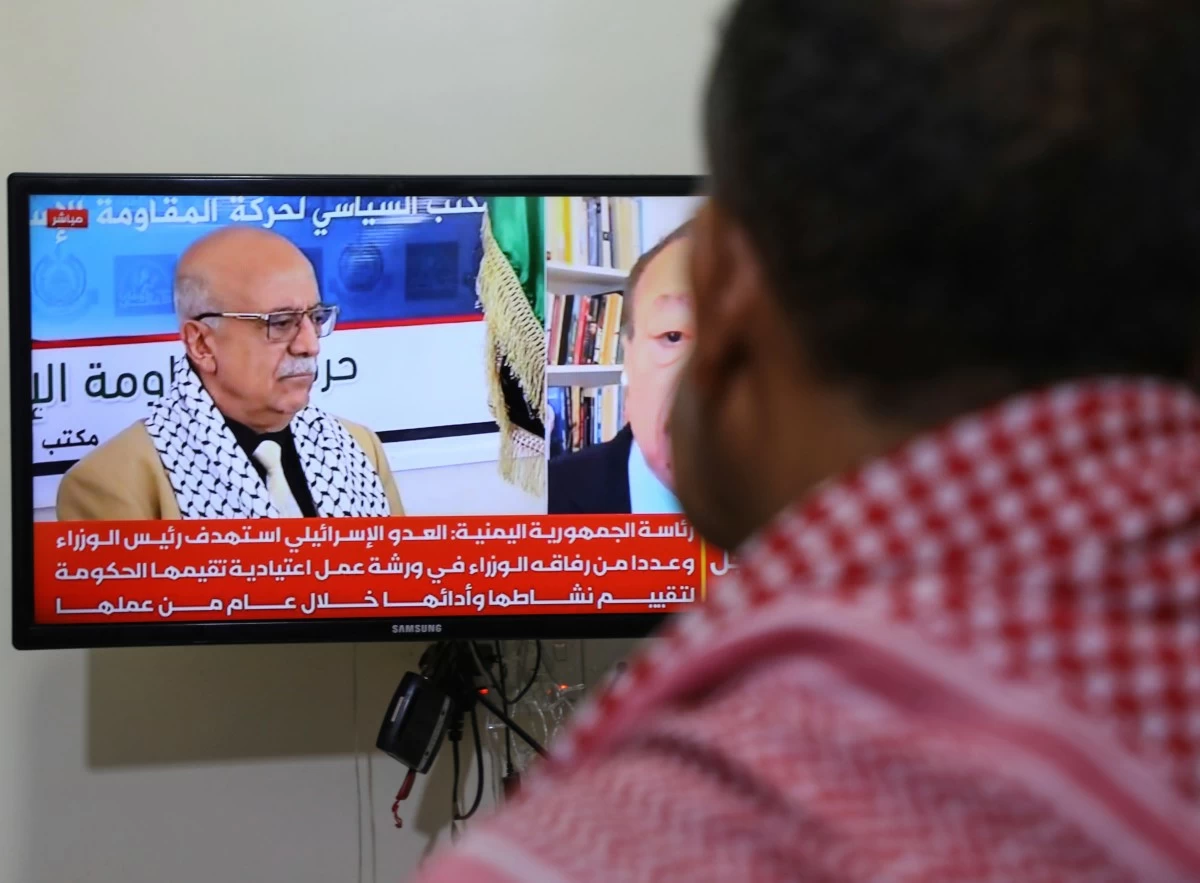
A man watches the news on TV, displaying footage of Ahmed al-Rahawi, the prime minister of the Houthi-controlled government, who was killed, along with others, in Thursday's Israeli strikes on the capital, in Sanaa, Yemen, Saturday, Aug. 30, 2025. (AP Photo/Osamah Abdulrahman)
Ahmed al-Rahawi was killed in Thursday's strike in Sanaa along with a number of ministers, the rebels said in a statement. Other ministers and officials were wounded, the statement added without providing details.
The premier was targeted along with other members of his Houthi-controlled government during a "routine workshop held by the government to evaluate its activities and performance over the past year," the Houthi statement said.
Thursday's strike took place as the rebel-owned television station was broadcasting a speech by Abdul Malik al-Houthi, the secretive leader of the rebel group, in which he was sharing updates on the latest Gaza developments and vowing retaliation against Israel. Senior Houthi officials used to gather to watch al-Houthi's prerecorded speeches.
Al-Rahawi wasn't part of the inner circle around al-Houthi that runs the military and strategic affairs of the group. His government, like the previous ones, was tasked with running the day-to-day civilian affairs in Sanaa and other Houthi-held areas.
The strike that killed the prime minister targeted a meeting for Houthi leaders in a villa in Beit Baws, an ancient village in southern Sanaa, three tribal leaders told The Associated Press. They spoke on condition of anonymity because they feared repercussions.
On Thursday, the Israeli military said it "precisely struck a Houthi terrorist regime military target in the area of Sanaa in Yemen." Late on Saturday, the military in a statement confirmed killing al-Rahawi "along with additional senior officials." It said senior officials among the dozens at the facility struck were responsible for "terror actions" against Israel.
"Yemen endures a lot for the victory of the Palestinian people," al-Rahawi had said following an Israeli strike last week that struck an facility owned by the country's main oil company, which is controlled by the rebels in Sanaa, as well as a power plant.
The Aug. 24 strike came three days after the Houthis launched a ballistic missile toward Israel that its military described as the first cluster bomb the rebels had launched at it since 2023.
The prime minister hailed from the southern province of Abyan, and was an ally to former Yemeni President Ali Abdullah Saleh. He allied himself with the Houthis when the rebels overran Sanaa, and much of the north and center of the country in 2014, initiating the country's long-running civil war. He was appointed as prime minister in August 2024.
The United States and Israel began their air and naval campaign against the Houthis in response to the rebels' missile and drone attacks on Israel and on ships in the Red Sea. The Houthis targeted ships in response to the war in Gaza, saying they were acting in solidarity with the Palestinians. Their attacks over the past two years have upended shipping in the Red Sea, through which about $1 trillion of goods pass each year.
The U.S. and Israeli strikes killed dozens of people in Yemen. One U.S. strike in April hit a prison holding African migrants in northern Sadaa province, killing at least 68 people and wounding 47 others.
Ahmed Nagi, a senior Yemen analyst with the Crisis Group International, a Brussels-based think tank, called the killing of the Houthi prime minister a "serious setback" for the rebels.
He said it marks an Israeli shift from striking the rebels' infrastructure to targeting their leaders, including senior military figures, which "poses a greater threat to their command structure."
In May, the Trump administration announced a deal with the Houthis to end the airstrikes in return for an end to attacks on shipping. The rebels, however, said the agreement did not include halting attacks on targets it believed were aligned with Israel.

Related Tags

World news
ADVERTISEMENT
.most-popular .layout-ratio{ padding-bottom: 79.13%; } @media (min-width: 768px) and (max-width: 1024px) { .widget-title { font-size: 15px !important; } }

{{ articles_filter_1561_widget.title }}

.most-popular .layout-ratio{ padding-bottom: 79.13%; } @media (min-width: 768px) and (max-width: 1024px) { .widget-title { font-size: 15px !important; } }

{{ articles_filter_1562_widget.title }}

.most-popular .layout-ratio{ padding-bottom: 79.13%; } @media (min-width: 768px) and (max-width: 1024px) { .widget-title { font-size: 15px !important; } }

{{ articles_filter_1563_widget.title }}

{{ articles_filter_1564_widget.title }}

.mb-article-details { position: relative; } .mb-article-details .article-body-preview, .mb-article-details .article-body-summary{ font-size: 17px; line-height: 30px; font-family: "Libre Caslon Text", serif; color: #000; } .mb-article-details .article-body-preview iframe , .mb-article-details .article-body-summary iframe{ width: 100%; margin: auto; } .read-more-background { background: linear-gradient(180deg, color(display-p3 1.000 1.000 1.000 / 0) 13.75%, color(display-p3 1.000 1.000 1.000 / 0.8) 30.79%, color(display-p3 1.000 1.000 1.000) 72.5%); position: absolute; height: 200px; width: 100%; bottom: 0; display: flex; justify-content: center; align-items: center; padding: 0; } .read-more-background a{ color: #000; } .read-more-btn { padding: 17px 45px; font-family: Inter; font-weight: 700; font-size: 18px; line-height: 16px; text-align: center; vertical-align: middle; border: 1px solid black; background-color: white; } .hidden { display: none; }
function initializeAllSwipers() { // Get all hidden inputs with cms_article_id document.querySelectorAll('[id^="cms_article_id_"]').forEach(function (input) { const cmsArticleId = input.value; const articleSelector = '#article-' + cmsArticleId + ' .body_images'; const swiperElement = document.querySelector(articleSelector); if (swiperElement && !swiperElement.classList.contains('swiper-initialized')) { new Swiper(articleSelector, { loop: true, pagination: false, navigation: { nextEl: '#article-' + cmsArticleId + ' .swiper-button-next', prevEl: '#article-' + cmsArticleId + ' .swiper-button-prev', }, }); } }); } setTimeout(initializeAllSwipers, 3000); const intersectionObserver = new IntersectionObserver( (entries) => { entries.forEach((entry) => { if (entry.isIntersecting) { const newUrl = entry.target.getAttribute("data-url"); if (newUrl) { history.pushState(null, null, newUrl); let article = entry.target; // Extract metadata const author = article.querySelector('.author-section').textContent.replace('By', '').trim(); const section = article.querySelector('.section-info ').textContent.replace(' ', ' '); const title = article.querySelector('.article-title h1').textContent; // Parse URL for Chartbeat path format const parsedUrl = new URL(newUrl, window.location.origin); const cleanUrl = parsedUrl.host + parsedUrl.pathname; // Update Chartbeat configuration if (typeof window._sf_async_config !== 'undefined') { window._sf_async_config.path = cleanUrl; window._sf_async_config.sections = section; window._sf_async_config.authors = author; } // Track virtual page view with Chartbeat if (typeof pSUPERFLY !== 'undefined' && typeof pSUPERFLY.virtualPage === 'function') { try { pSUPERFLY.virtualPage({ path: cleanUrl, title: title, sections: section, authors: author }); } catch (error) { console.error('ping error', error); } } // Optional: Update document title if (title && title !== document.title) { document.title = title; } } } }); }, { threshold: 0.1 } ); function showArticleBody(button) { const article = button.closest("article"); const summary = article.querySelector(".article-body-summary"); const body = article.querySelector(".article-body-preview"); const readMoreSection = article.querySelector(".read-more-background"); // Hide summary and read-more section summary.style.display = "none"; readMoreSection.style.display = "none"; // Show the full article body body.classList.remove("hidden"); } document.addEventListener("DOMContentLoaded", () => { let loadCount = 0; // Track how many times articles are loaded const offset = [1, 2, 3, 4, 5, 6, 7, 8, 9, 10]; // Offset values const currentUrl = window.location.pathname.substring(1); let isLoading = false; // Prevent multiple calls if (!currentUrl) { console.log("Current URL is invalid."); return; } const sentinel = document.getElementById("load-more-sentinel"); if (!sentinel) { console.log("Sentinel element not found."); return; } function isSentinelVisible() { const rect = sentinel.getBoundingClientRect(); return ( rect.top < window.innerHeight && rect.bottom >= 0 ); } function onScroll() { if (isLoading) return; if (isSentinelVisible()) { if (loadCount >= offset.length) { console.log("Maximum load attempts reached."); window.removeEventListener("scroll", onScroll); return; } isLoading = true; const currentOffset = offset[loadCount]; window.loadMoreItems().then(() => { let article = document.querySelector('#widget_1690 > div:nth-last-of-type(2) article'); intersectionObserver.observe(article) loadCount++; }).catch(error => { console.error("Error loading more items:", error); }).finally(() => { isLoading = false; }); } } window.addEventListener("scroll", onScroll); });

Sign up by email to receive news.