






Manila Bulletin
 Philippines
National
Colombia hails PH as global model for successful peace processes
Philippines
National
Colombia hails PH as global model for successful peace processes
Philippines
National
Colombia hails PH as global model for successful peace processes
Colombia hails PH as global model for successful peace processes
Published Aug 31, 2025 01:34 pm


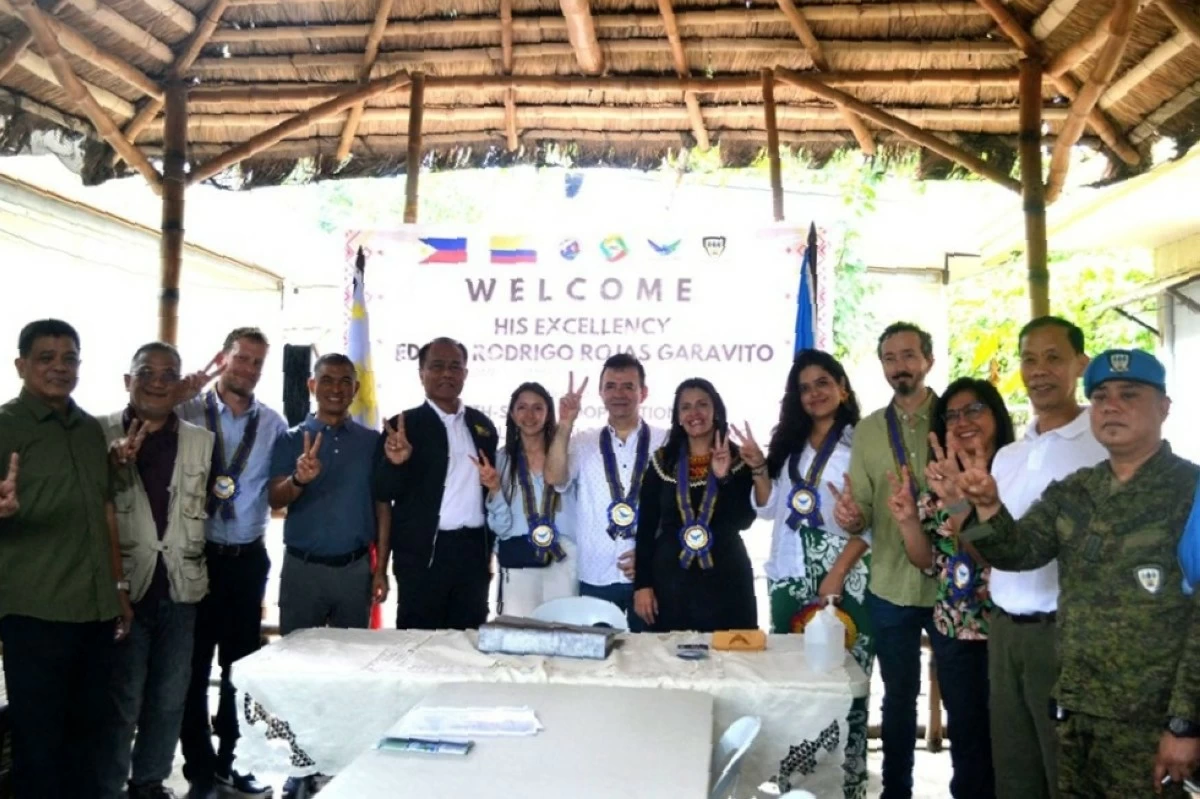
Colombian Ambassador to the Philippines Edgar Rodrigo Rojas Garavito (center) joines Colombian delegates, led by Ms. Suang Caterine Moreno Gutiérrez, advisor to the CEO of Colombia’s Agency for the Renewal of the Territories (ART), and local officials during a visit to the Bangsamoro Autonomous Region in Muslim Mindanao (BARMM). The study tour, which aims to foster direct interaction between teams from partner countries so that they can learn from each other's successes and challenges in implementing peace processes, concluded on Aug. 8, 2025. (Photo: Office of the Presidential Adviser on Peace, Reconciliation and Unity)
Colombia has recognized the Philippines as a global model for the successful implementation of peace processes, citing Manila’s experience in resolving long-standing conflicts as a source of inspiration for nations facing similar challenges, the Office of the Presidential Adviser on Peace, Reconciliation and Unity (OPAPRU) said Saturday, Aug. 30.
The acknowledgement was made as Colombian delegates ended their peacebuilding study tour in the Philippines earlier this month. The study tour was part of the First Peacebuilding Learning Route under the South-South Cooperation between Manila and Bogota.
Launched in November 2024 in Bogota, the South-South Cooperation Learning Route is an innovative platform for countries in the Global South to collaborate and share their knowledge, experiences, and best practices in peace and development.
The Philippines, through the OPAPRU, was among the four countries that participated in the program which also included Cameroon, the Democratic Republic of the Congo, and Nigeria. After a series of webinars and online exchanges, Colombian teams visited each participating country, with the Philippines as the final stop of their multi-country tour.
The study tour aims to “foster direct interaction between teams from partner countries so that they can learn from each other's successes and challenges, fostering mutual support and capacity development.” Such routes focus on various sectors like agriculture, health, and education, often involving both governmental and non-governmental actors.
“The Philippines continues to serve as a model and a source of inspiration for other countries across the globe due to the successful implementation of its peace processes,” the OPAPRU said, citing the findings of the Colombian delegates.
The Colombian delegation, led by Ms. Suang Caterine Moreno Gutiérrez, advisor to the CEO of Colombia’s Agency for the Renewal of the Territories (ART), met with the Philippine side, represented by OPAPRU Senior Undersecretary Isidro L. Purisima, on Aug. 8 for the presentation of the report.
The private sector was represented by Mr. Jonathan Joson, of Kennemer Eco Solutions, a partner of the OPAPRU in empowering former combatants, indigenous peoples (IPs), and other marginalized groups.
Study tour
The Colombian delegation began its study tour in Ibajay, Aklan where they learned about OPAPRU’s conflict transformation efforts, observed an amnesty activity, engaged local leaders, and toured sites highlighting the province’s shift from a conflict zone to an area of peace and development.
Joined by Colombian Ambassador to the Philippines Edgar Rodrigo Rojas Garavito, the delegates continued their study tour in the Bangsamoro Autonomous Region in Muslim Mindanao (BARMM) where they participated in dialogues, field visits, and peer learning activities on implementing the Philippine Innovation Plan, a 10-year roadmap that aims to build a more inclusive, sustainable, and innovation-driven economy.
The group also met with BARMM officials, the Government Peace Implementing Panel, and other normalization bodies. Briefings and discussions highlighted lessons from the peace process, the Bangsamoro’s history and challenges, and the role of community participation in sustaining peace.
In Barira, Maguindanao del Norte, officials shared how the former Moro Islamic Liberation Front (MILF) stronghold has transformed into a thriving town with national and donor-supported projects. The delegation also visited various livelihood initiatives, educational and religious institutions, and cultural landmarks, underscoring the region’s ongoing transition to peace and development.
At the closing meeting, OPAPRU’s Purisima noted the shared Hispanic heritage of Colombia and the Philippines and how the two nations’ historical ties create natural avenues for cooperation.
“Not only do we share the Hispanic culture, we also now share the culture of peace,” he said.
The country’s peace process has been defined by key milestones, including the 1996 Final Peace Agreement with the Moro National Liberation Front (MNLF) and the 2014 Comprehensive Agreement on the Bangsamoro (CAB) with the MILF.
The two accords opened the path for the creation of the Bangsamoro region and advanced normalization efforts through combatant decommissioning, livelihood support, and governance reforms.
Parallel to these, the national government has also engaged in negotiations with the Communist Party of the Philippines–New People’s Army–National Democratic Front (CPP-NPA-NDF), with localized peace initiatives seeking to end one of Asia’s longest-running insurgencies.