






Manila Bulletin
 Philippines
National
Trough of LPA, 'habagat' to bring rains across the Philippines on August 30 — PAGASA
Philippines
National
Trough of LPA, 'habagat' to bring rains across the Philippines on August 30 — PAGASA
Philippines
National
Trough of LPA, 'habagat' to bring rains across the Philippines on August 30 — PAGASA
Trough of LPA, 'habagat' to bring rains across the Philippines on August 30 — PAGASA
Published Aug 30, 2025 11:49 am
|
Updated Aug 30, 2025 01:22 pm


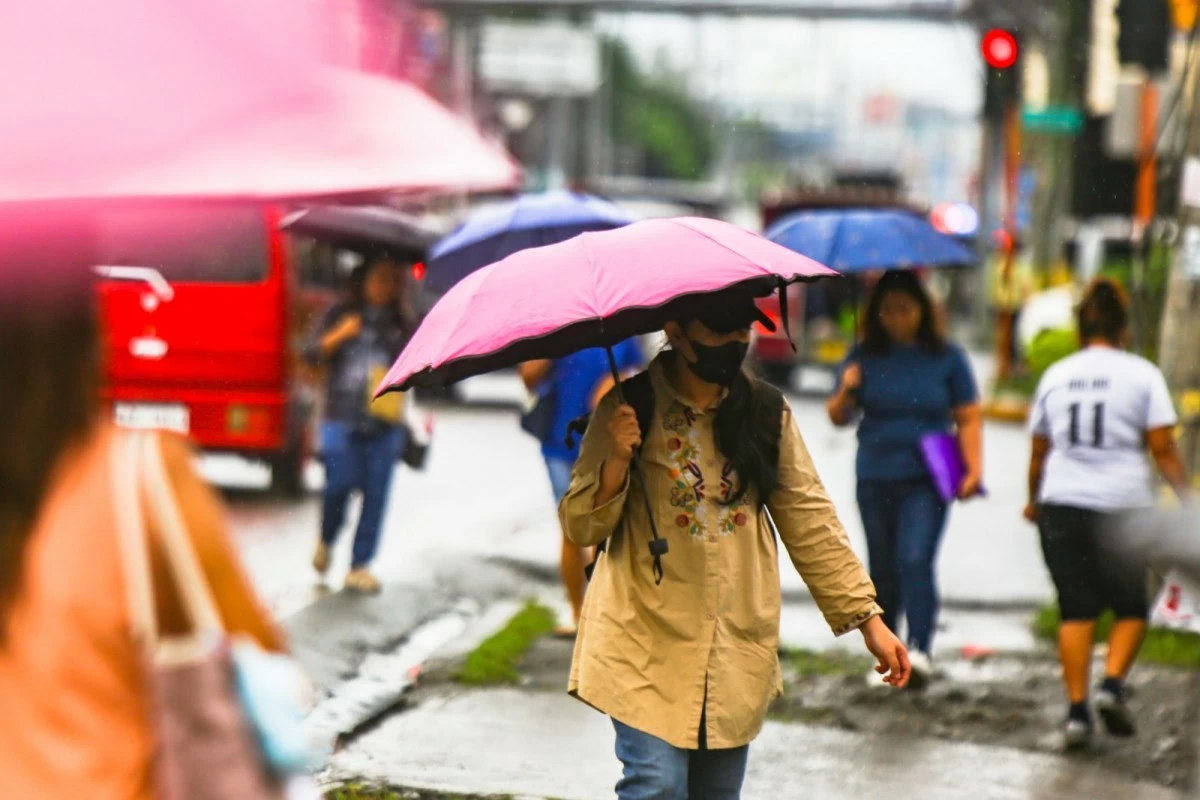
PAGASA warns of rains from the trough of a Low Pressure Area (LPA) and the southwest monsoon affecting Visayas, Mindanao, and parts of Luzon on August 30, 2025. (MANILA BULLETIN / FILE)
The Philippine Atmospheric, Geophysical and Astronomical Services Administration (PAGASA) said that the trough of a Low Pressure Area (LPA) and the southwest monsoon (habagat) will continue to bring rains and thunderstorms to many parts of the country on Saturday, August 30.
In its latest weather forecast, PAGASA reported that the trough of the LPA is affecting the eastern sections of Visayas and Mindanao, while the southwest monsoon is affecting Southern Luzon and the rest of Visayas and Mindanao.
Weather forecast
PAGASA said the trough of the LPA will bring cloudy skies with scattered rains and thunderstorms over Eastern Visayas, Caraga, and the Davao Region.
Batanes, Cagayan, and Ilocos Norte will also experience cloudy skies with scattered rains and thunderstorms due to the trough of the tropical storm.
Mimaropa, Zamboanga Peninsula, Northern Mindanao, and the rest of Visayas will have cloudy skies with scattered rains and thunderstorms brought by the southwest monsoon.
The “habagat” will also bring partly cloudy to cloudy skies with isolated rainshowers or thunderstorms over Metro Manila, CALABARZON, Bicol Region, and the rest of Mindanao.
Localized thunderstorms will cause partly cloudy to cloudy skies with isolated rainshowers or thunderstorms in the rest of Luzon.
PAGASA warned of possible flash floods or landslides due to moderate to heavy rains, especially during severe thunderstorms.
Residents were also advised to prepare for possible flooding and landslides due to heavy rainfall.
Fisherfolk and operators of small sea vessels were urged by PAGASA to take extra precautions as rough seas may be experienced in affected coastal waters.
PAGASA also reminded residents in affected areas to remain alert for flooding and landslides, especially in vulnerable communities, and to follow updates from local disaster risk reduction and management offices (DRRMOs).