ADVERTISEMENT

President Marcos' lifestyle check order is a necessary start

Published Aug 30, 2025 12:05 am  |  Updated Aug 29, 2025 06:31 pm
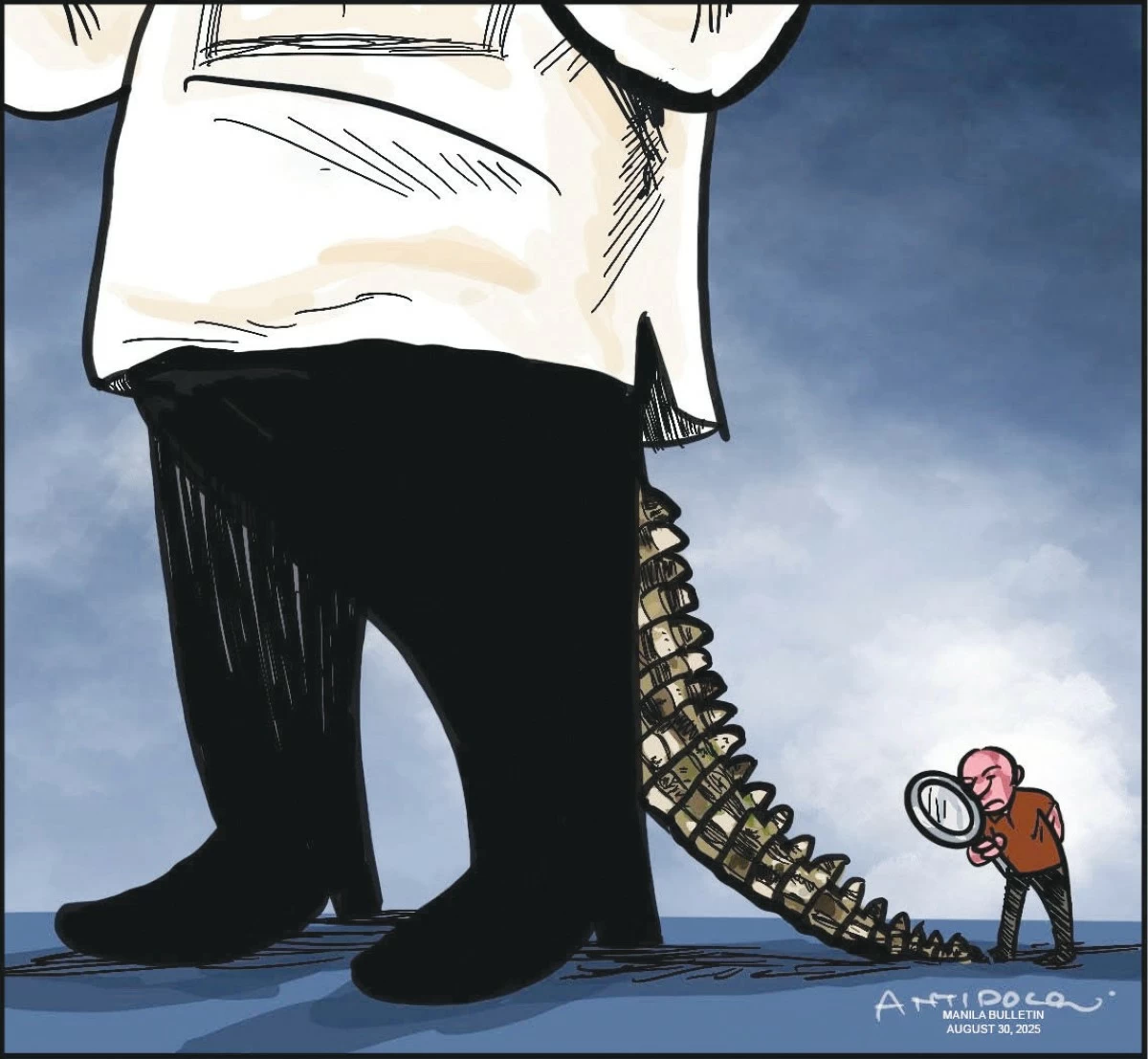
President Ferdinand Marcos Jr.'s directive to conduct lifestyle checks on government officials—starting with the Department of Public Works and Highways (DPWH)—is a long-overdue step in addressing one of the country’s most persistent cancers – systemic corruption. But for this move to yield meaningful results, it must go beyond symbolism. It must be deep, wide-reaching, and unflinching—even if it means confronting the most powerful figures in Philippine politics.
The President’s order came amid the growing controversy over anomalous flood control projects, which are once again under public scrutiny after the President’s State of the Nation Address where he exposed the substandard projects, saying “Mahiya naman kayo” to those involved. And recently, a Senate hearing had uncovered ghost projects.
In a country regularly battered by monsoon rains and typhoons, flood control infrastructure is a lifeline. When billions are poured into projects that fail to deliver—or worse, never get built at all—this isn’t just corruption. It’s criminal negligence that endangers lives and livelihoods.
Malacañang confirmed that the checks would begin with DPWH officials. But this must not stop there. Communications Undersecretary Claire Castro clarified that the President’s instruction covers "all those involved in anomalous flood control projects," and could extend to other agencies as necessary. That’s the right signal—but the real test lies in the follow-through.
A lifestyle check is a powerful tool to expose the glaring mismatch between a public servant’s official salary and their actual wealth. If an official who earns ₱80,000 a month lives in a multi-million peso mansion in an exclusive village, drives a convoy of luxury cars, and sends children to elite schools abroad, there are questions to answer.
These questions should be asked not just of the DPWH, but across all levels of government—from local officials to national legislators, from regulatory agencies to the judiciary. The checks must include members of Congress, the Senate, and even the judiciary. No branch of government should be immune from scrutiny.
The lifestyle check process must begin with the basics: residential addresses in luxury subdivisions, vehicles registered under officials or their immediate families, business permits issued to their companies or dummies, and actual income taxes paid. The Bureau of Internal Revenue (BIR), Bureau of Customs (BOC), and Commission on Audit (COA) must cross-check declared income with actual property and vehicle ownership. Sudden acquisition of expensive cars, or entry into profitable businesses with no clear capital, should immediately raise red flags.
As the President has made clear, the time for blind eyes and excuses is over.
Contractors working with the government should not be spared either. Local governments and the BIR must ensure that companies handling multi-million peso projects have the capacity, track record, and tax records to match. Ghost projects and fly-by-night contractors thrive when regulatory bodies fall asleep—or worse, collude.
But even as lifestyle checks are launched, the public must remain watchful. The Philippines has seen too many anti-corruption campaigns fizzle out once the headlines fade. This time, what’s needed is sustained political will backed by institutional reform and public transparency. Lifestyle check results must not be buried in confidential reports. Officials found to have unexplained wealth must face administrative and criminal proceedings.
President Marcos has opened a door. Now he must walk through it, along with the rest of government. This lifestyle check campaign cannot be a one-time PR exercise. It must become the new standard of governance—fearless, relentless, and fair.
Only then can Filipinos begin to believe that public office is truly a public trust—and not a personal business venture.
ADVERTISEMENT
.most-popular .layout-ratio{ padding-bottom: 79.13%; } @media (min-width: 768px) and (max-width: 1024px) { .widget-title { font-size: 15px !important; } }

{{ articles_filter_1561_widget.title }}

.most-popular .layout-ratio{ padding-bottom: 79.13%; } @media (min-width: 768px) and (max-width: 1024px) { .widget-title { font-size: 15px !important; } }

{{ articles_filter_1562_widget.title }}

.most-popular .layout-ratio{ padding-bottom: 79.13%; } @media (min-width: 768px) and (max-width: 1024px) { .widget-title { font-size: 15px !important; } }

{{ articles_filter_1563_widget.title }}

{{ articles_filter_1564_widget.title }}

.mb-article-details { position: relative; } .mb-article-details .article-body-preview, .mb-article-details .article-body-summary{ font-size: 17px; line-height: 30px; font-family: "Libre Caslon Text", serif; color: #000; } .mb-article-details .article-body-preview iframe , .mb-article-details .article-body-summary iframe{ width: 100%; margin: auto; } .read-more-background { background: linear-gradient(180deg, color(display-p3 1.000 1.000 1.000 / 0) 13.75%, color(display-p3 1.000 1.000 1.000 / 0.8) 30.79%, color(display-p3 1.000 1.000 1.000) 72.5%); position: absolute; height: 200px; width: 100%; bottom: 0; display: flex; justify-content: center; align-items: center; padding: 0; } .read-more-background a{ color: #000; } .read-more-btn { padding: 17px 45px; font-family: Inter; font-weight: 700; font-size: 18px; line-height: 16px; text-align: center; vertical-align: middle; border: 1px solid black; background-color: white; } .hidden { display: none; }
function initializeAllSwipers() { // Get all hidden inputs with cms_article_id document.querySelectorAll('[id^="cms_article_id_"]').forEach(function (input) { const cmsArticleId = input.value; const articleSelector = '#article-' + cmsArticleId + ' .body_images'; const swiperElement = document.querySelector(articleSelector); if (swiperElement && !swiperElement.classList.contains('swiper-initialized')) { new Swiper(articleSelector, { loop: true, pagination: false, navigation: { nextEl: '#article-' + cmsArticleId + ' .swiper-button-next', prevEl: '#article-' + cmsArticleId + ' .swiper-button-prev', }, }); } }); } setTimeout(initializeAllSwipers, 3000); const intersectionObserver = new IntersectionObserver( (entries) => { entries.forEach((entry) => { if (entry.isIntersecting) { const newUrl = entry.target.getAttribute("data-url"); if (newUrl) { history.pushState(null, null, newUrl); let article = entry.target; // Extract metadata const author = article.querySelector('.author-section').textContent.replace('By', '').trim(); const section = article.querySelector('.section-info ').textContent.replace(' ', ' '); const title = article.querySelector('.article-title h1').textContent; // Parse URL for Chartbeat path format const parsedUrl = new URL(newUrl, window.location.origin); const cleanUrl = parsedUrl.host + parsedUrl.pathname; // Update Chartbeat configuration if (typeof window._sf_async_config !== 'undefined') { window._sf_async_config.path = cleanUrl; window._sf_async_config.sections = section; window._sf_async_config.authors = author; } // Track virtual page view with Chartbeat if (typeof pSUPERFLY !== 'undefined' && typeof pSUPERFLY.virtualPage === 'function') { try { pSUPERFLY.virtualPage({ path: cleanUrl, title: title, sections: section, authors: author }); } catch (error) { console.error('ping error', error); } } // Optional: Update document title if (title && title !== document.title) { document.title = title; } } } }); }, { threshold: 0.1 } ); function showArticleBody(button) { const article = button.closest("article"); const summary = article.querySelector(".article-body-summary"); const body = article.querySelector(".article-body-preview"); const readMoreSection = article.querySelector(".read-more-background"); // Hide summary and read-more section summary.style.display = "none"; readMoreSection.style.display = "none"; // Show the full article body body.classList.remove("hidden"); } document.addEventListener("DOMContentLoaded", () => { let loadCount = 0; // Track how many times articles are loaded const offset = [1, 2, 3, 4, 5, 6, 7, 8, 9, 10]; // Offset values const currentUrl = window.location.pathname.substring(1); let isLoading = false; // Prevent multiple calls if (!currentUrl) { console.log("Current URL is invalid."); return; } const sentinel = document.getElementById("load-more-sentinel"); if (!sentinel) { console.log("Sentinel element not found."); return; } function isSentinelVisible() { const rect = sentinel.getBoundingClientRect(); return ( rect.top < window.innerHeight && rect.bottom >= 0 ); } function onScroll() { if (isLoading) return; if (isSentinelVisible()) { if (loadCount >= offset.length) { console.log("Maximum load attempts reached."); window.removeEventListener("scroll", onScroll); return; } isLoading = true; const currentOffset = offset[loadCount]; window.loadMoreItems().then(() => { let article = document.querySelector('#widget_1690 > div:nth-last-of-type(2) article'); intersectionObserver.observe(article) loadCount++; }).catch(error => { console.error("Error loading more items:", error); }).finally(() => { isLoading = false; }); } } window.addEventListener("scroll", onScroll); });

Sign up by email to receive news.